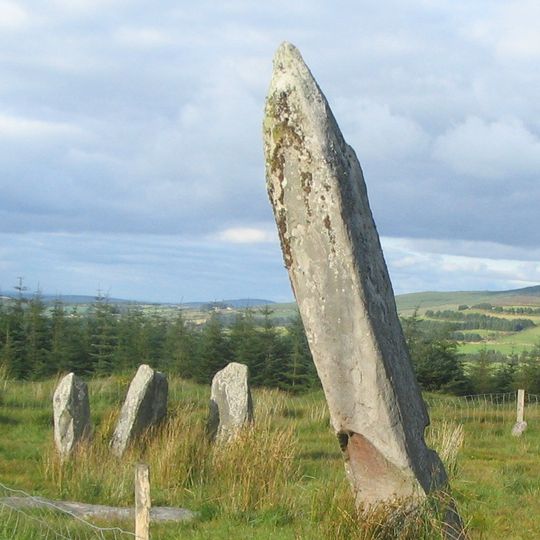
Knocknakilla, Prehistoric stone complex in County Cork, Ireland
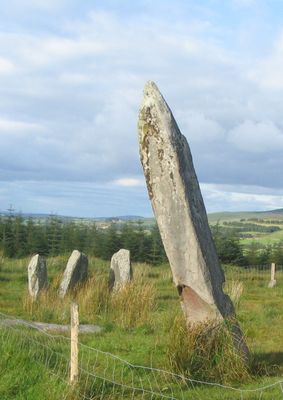
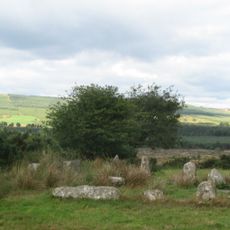
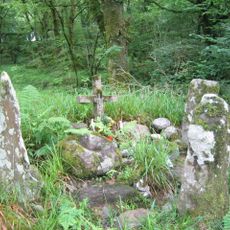
Knocknakilla is a Bronze Age stone complex on the slopes of Musherabeg Mountain in County Cork, made up of a five-stone circle, a radial cairn, and two upright portal stones. The site sits on a level patch of bogland that opens onto a wide valley view.
The complex was built during the Middle Bronze Age, roughly between 1800 and 1600 BCE, by communities who used stone arrangements for ceremonies and gatherings. Similar sites across County Cork suggest this was part of a wider regional tradition of building in stone.
The name Knocknakilla comes from the Irish Cnoc na Cille, meaning Hill of the Church, which points to a long-standing link between this landscape and sacred use. Visitors today can still observe how the stones are arranged in relation to the surrounding hills, suggesting the site was chosen with care.
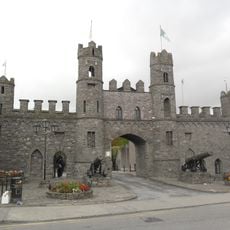
The site is freely accessible and sits between the towns of Macroom and Millstreet, making it a reasonable stop when exploring this part of rural Cork. Sturdy footwear is recommended, as the boggy ground can be uneven, especially after rain.
One stone in the circle stands noticeably taller than the rest, and this appears to be an intentional choice rather than a coincidence. The same pattern shows up at other stone circles in County Cork, suggesting it was a shared building practice across the region.
The community of curious travelers
AroundUs brings together thousands of curated places, local tips, and hidden gems, enriched daily by 92,390 contributors worldwide.