Macroom Castle, Medieval castle ruins in Macroom, Ireland
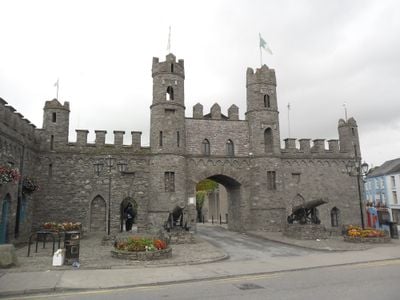
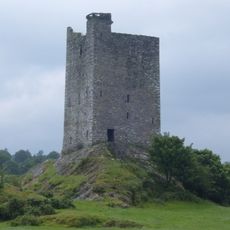
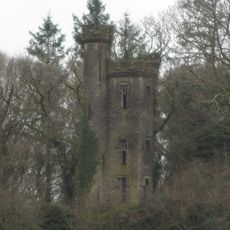
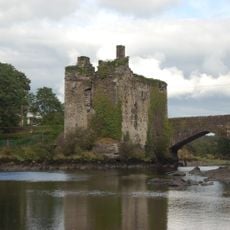
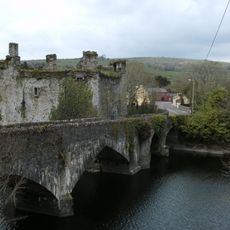
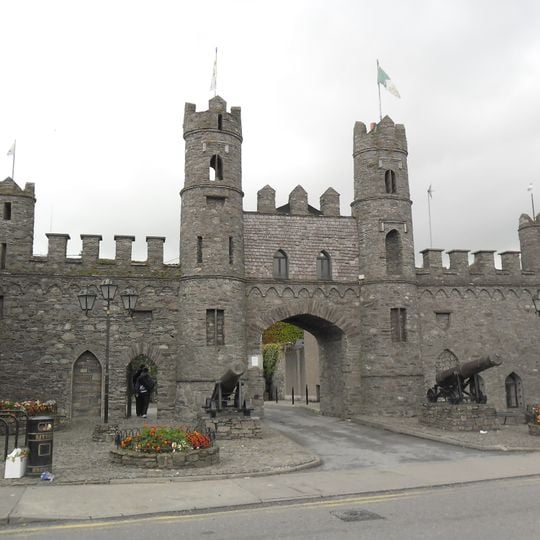
Macroom Castle consists of two separate remains in the town centre: a gatehouse on the West Square and a ruin by the River Sullane. The gatehouse, built before 1824 by Robert Hedges Eyre, has a pointed arch flanked by two round crenellated turrets, with grey rubble stone walls and two cannons on pedestals in front. The ruin comprises a square three-level tower and the five-bay west facade of the former west-wing, with a crow-stepped gable and pointed arch gate.
The castle probably originated in the 12th century, possibly built by the O'Flynns, whose old Irish name for it was Caisleán Uí Fhloinn. In 1353 Muskerry was granted to Dermot MacCarthy, 1st Lord of Muskerry, and his family held the castle until 1691, when Donogh MacCarthy, 4th Earl of Clancarty, lost it. It was besieged and burned several times, notably in 1602, 1650 and 1922.
The castle served as a diplomatic meeting place when a papal envoy stayed there in 1645 to conduct negotiations with the local ruling family. This connection to religious and noble circles shaped how the place was understood as a center of local power.
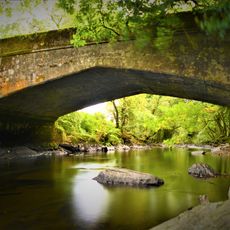
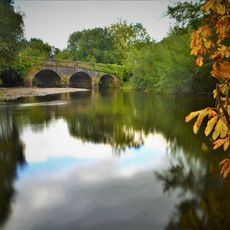
The gatehouse stands on the west side of the town square, facing the Market House; the castle ruin lies further west on the steep right bank of the River Sullane, just upstream of the bridge and reached by a short walk along the riverbank. The two pieces are separate, with houses, businesses and Bishop McEgan College occupying the former castle grounds between them.
Admiral William Penn, the father of Pennsylvania's founder, once received the castle from Oliver Cromwell during the English occupation. This brief episode in the castle's story reflects the shifting control of Ireland during the 1600s.
The community of curious travelers
AroundUs brings together thousands of curated places, local tips, and hidden gems, enriched daily by 92,722 contributors worldwide.