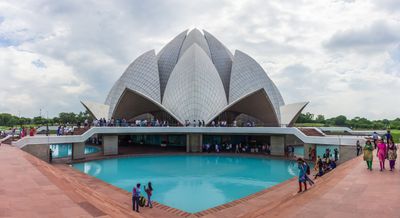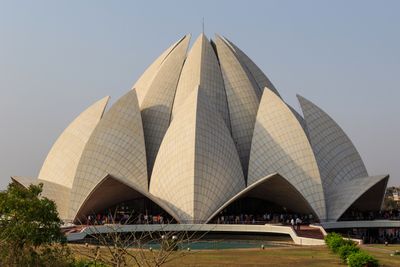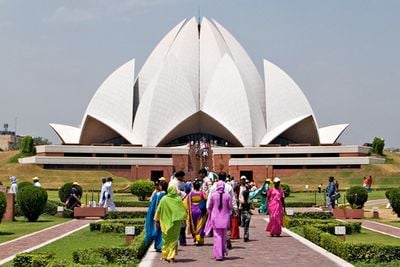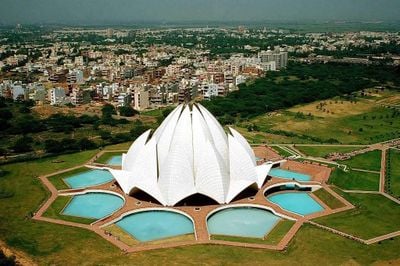
Lotus Temple, Bahá'í temple in South East Delhi, India
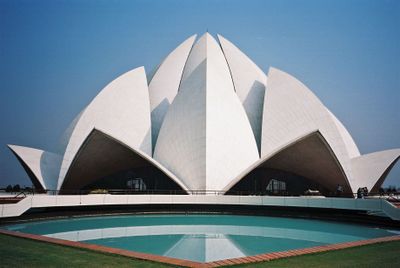
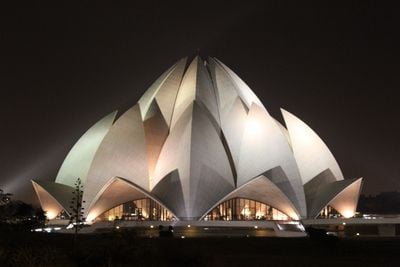
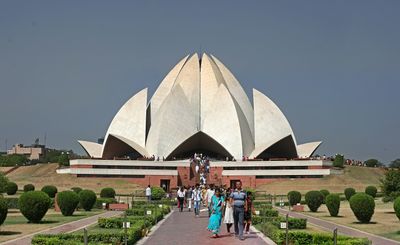
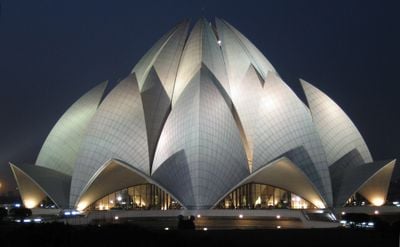
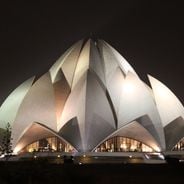
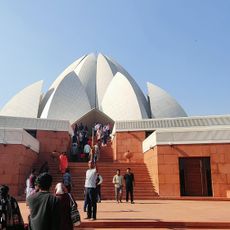
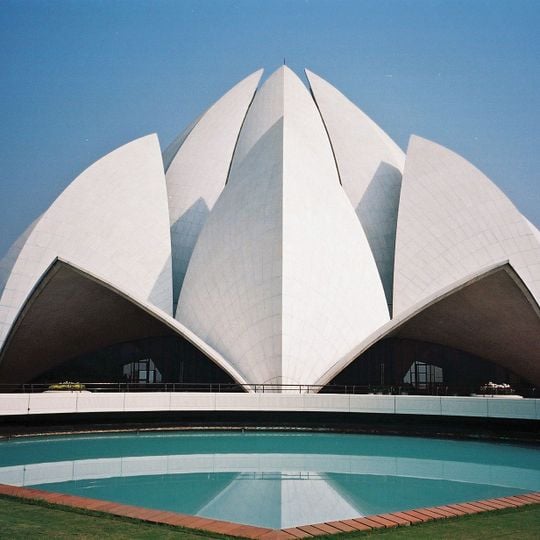
Nine curved white marble petals form a flower structure reaching 40 meters in height, surrounded by pools that reflect daylight. The central prayer hall measures 34 meters across and accommodates roughly 2,500 people. The outer surfaces use Pentelic marble from Greece, the same material as the Parthenon.
The temple opened on December 24, 1986, following completion of the expressionist design by Iranian architect Fariborz Sahba. Construction began in 1980 under supervision of the National Spiritual Assembly of the Bahais of India. Within a few years, the structure became one of India's most visited buildings, drawing over four million visitors annually.
The temple receives daily visitors of all faiths for silent worship without fixed liturgy, making it a symbol of religious tolerance in the Indian capital. Prayer times are open to everyone regardless of background or belief. This openness reflects Bahai principles and draws people from across Delhi.
Kalkaji Mandir metro station sits roughly 200 meters from the main entrance. The temple is open daily from 9:00 AM to 7:00 PM, extended to 7:30 PM during summer months. Admission is free. Visitors must remove shoes and maintain silence. Audio guides are available in several languages. Bag storage is provided at the entrance.
Natural light flows through the double-layered marble petals, creating shifting light patterns inside that change throughout the day. The architecture uses no artificial lighting during daylight hours. Each petal consists of two layers with an air gap between them, helping regulate temperature while flooding the building with soft light.
The community of curious travelers
AroundUs brings together thousands of curated places, local tips, and hidden gems, enriched daily by 90,739 contributors worldwide.