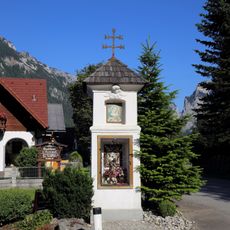
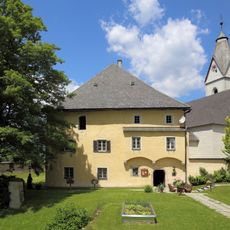
Grüner See, Karst lake in Tragöß-Sankt Katharein, Austria
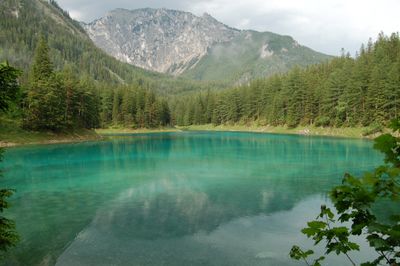
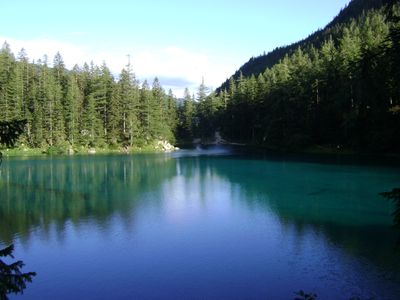
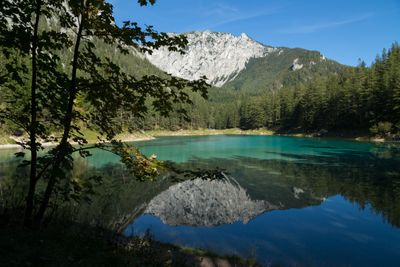
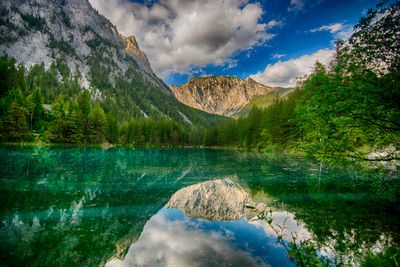
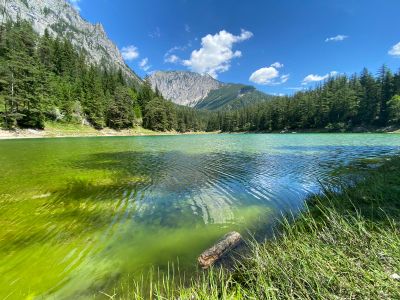
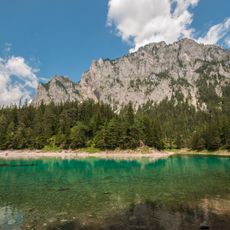
Grüner See lies at the foot of the Hochschwab range in Styria, dammed behind a prehistoric rockslide from the Meßnerin's southern flank. Each spring, snowmelt fills the basin to a maximum depth of about 10 to 12 meters, submerging meadows, trails and benches. The water is cold, 5 to 7 °C, and nearly still, with visibility up to 50 meters.
The basin was originally a grazing meadow that became a local recreation area in the 19th century. In 2016, authorities introduced a complete ban on water activities to protect the natural cycle.
The name Grüner See refers to the emerald-green appearance of the water, caused by fine rock dust suspended in it, which reflects the blue-green parts of light. The lake lies in a hollow sheltered from wind, so its surface stays almost wave-free and the visibility reaches up to 50 metres. A wooden plaque by the shore recalls Johann Hafner, found hanged here on 20 October 1951.
Visitors who want to see the flooded landscape should arrive between mid-May and June when snowmelt reaches its peak. Outside these months, the area appears as a dry park with walking trails.
In winter, the water level drops to 1 or 2 meters, and the surrounding area turns back into a walkable park with dry paths. This seasonal transformation makes the lake an unusual natural phenomenon in the Alps.
The community of curious travelers
AroundUs brings together thousands of curated places, local tips, and hidden gems, enriched daily by 93,357 contributors worldwide.