See the monuments around you in AROpen chests in the app
Around Us is built for your phone — point your camera at the streets and discover the monuments and places around you in augmented reality.Around Us is built for your phone — chests unlock when you walk, explore and capture nearby places.
Styria: Graz, mountain ranges, castles and vineyards
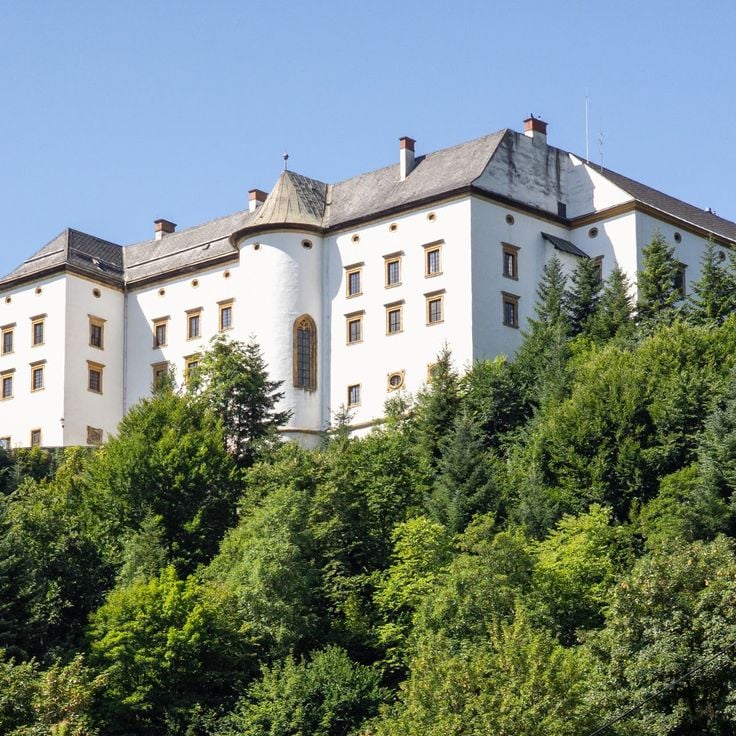
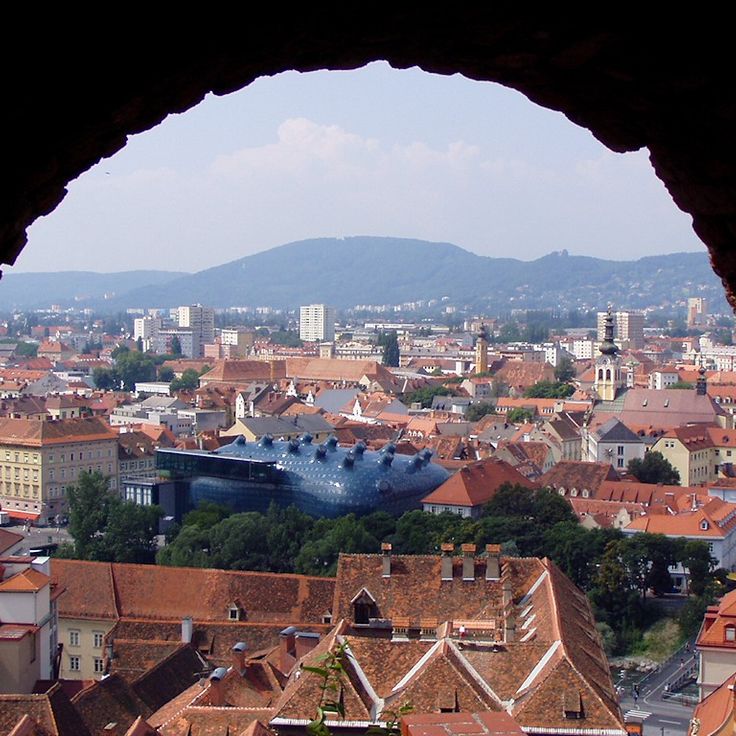
Styria: Graz, mountain ranges, castles and vineyards. In Graz, the old center is easy to walk through. You see narrow streets, the church of Saint Aegidius and the Eggenberg Palace. The Palace is old and has gardens. On the hill called Schlossberg, the clock tower gives a view over the rooftops. The Kunsthaus is a modern building with rounded shapes. It is different from the older buildings. There are many castles around, like Riegersburg on a volcanic rock and Herberstein with a zoo.
Styria: Graz, mountain ranges, castles and vineyards
Styria: Graz, mountain ranges, castles and vineyards. In Graz, the old center is easy to walk through. You see narrow streets, the church of Saint Aegidius and the Eggenberg Palace. The Palace is old and has gardens. On the hill called Schlossberg, the clock tower gives a view over the rooftops. The Kunsthaus is a modern building with rounded shapes. It is different from the older buildings. There are many castles around, like Riegersburg on a volcanic rock and Herberstein with a zoo.
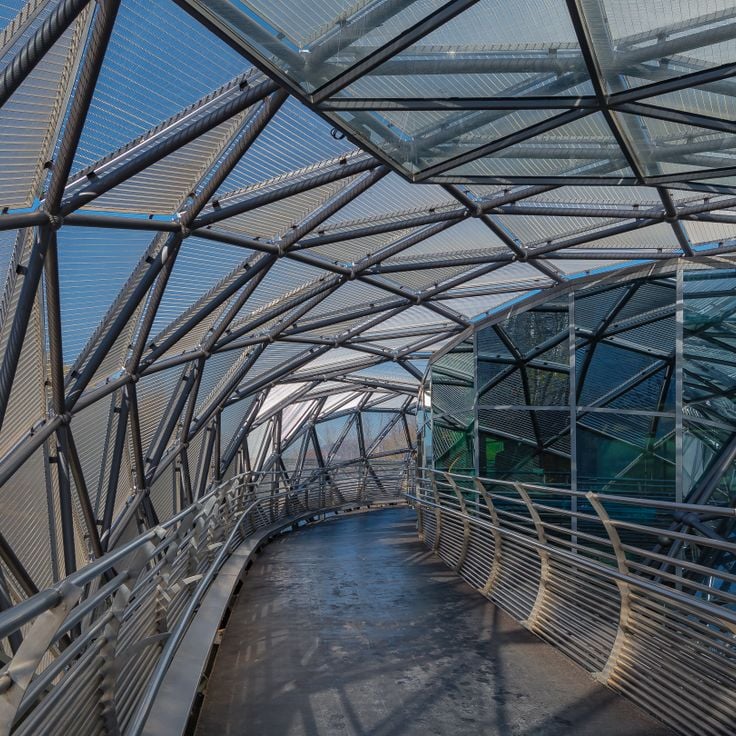
The Murinsel is an artificial island on the Mur River in Graz that serves as a public meeting place and leisure spot. The structure with its distinctive pavilion offers space to sit, have a coffee, and watch the city from the water. The island connects both riverbanks and is accessed by pedestrian bridges. It shapes the image of modern Graz and is used daily by residents and visitors.
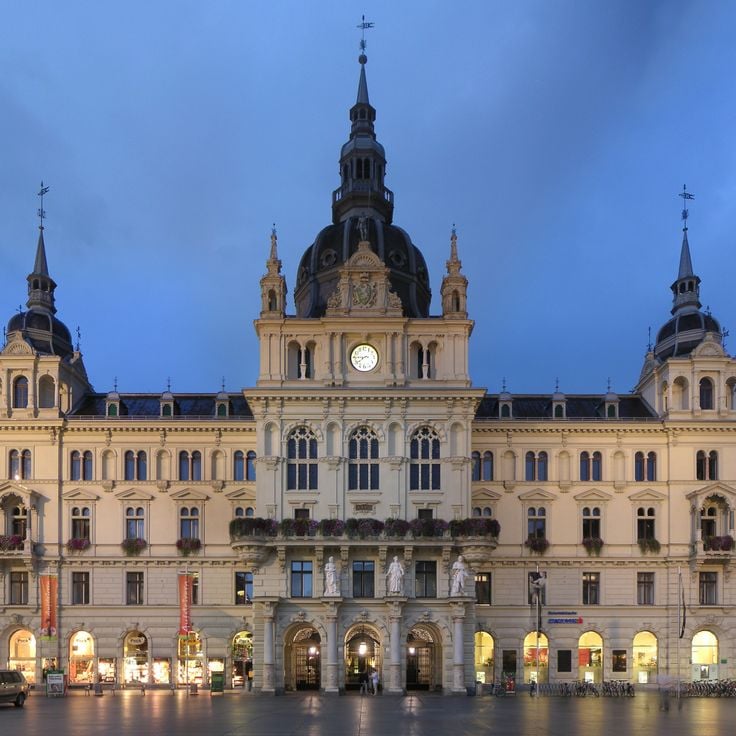
The historic center of Graz shows the medieval past of the city through old buildings and public squares. The old town is a UNESCO World Heritage site and extends along the Mur river. When walking through it, you find narrow streets, churches from different centuries, and houses with inner courtyards. Cathedral Square and Main Square are the places where the city's activity concentrates. From the city center, paths lead to Graz Castle, which rises above the rooftops.
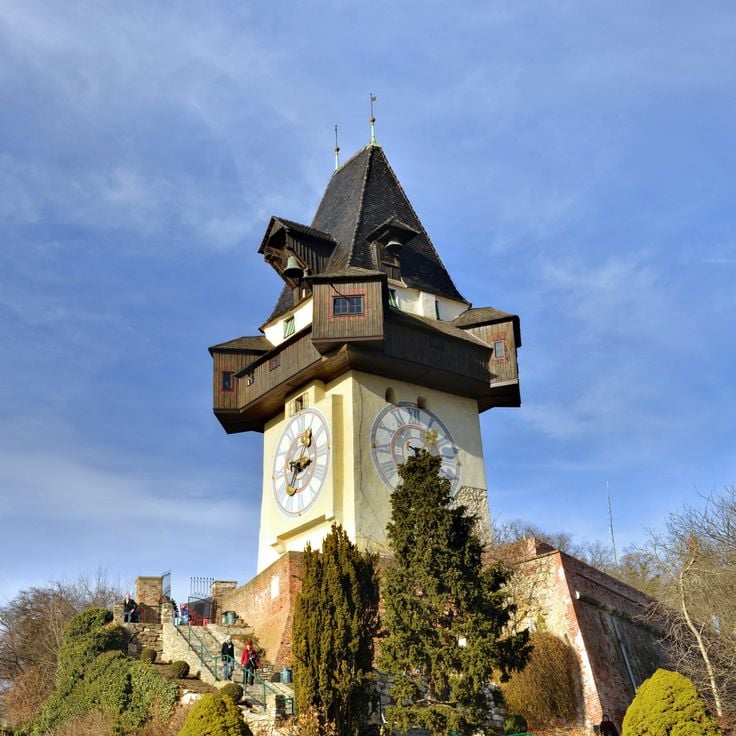
The Schlossberg is a hill that rises above Graz and serves as a focal point in the city. At the top stands the Uhrturm, a clock tower that has been part of the city's skyline for centuries. From this vantage point, the entire old town spreads out below, revealing its rooftops, streets, and layout. On clear days, the view extends far beyond the city to the surrounding alpine mountains. The hill itself is a place where people walk, rest, and take in the panorama of Graz and its surroundings.
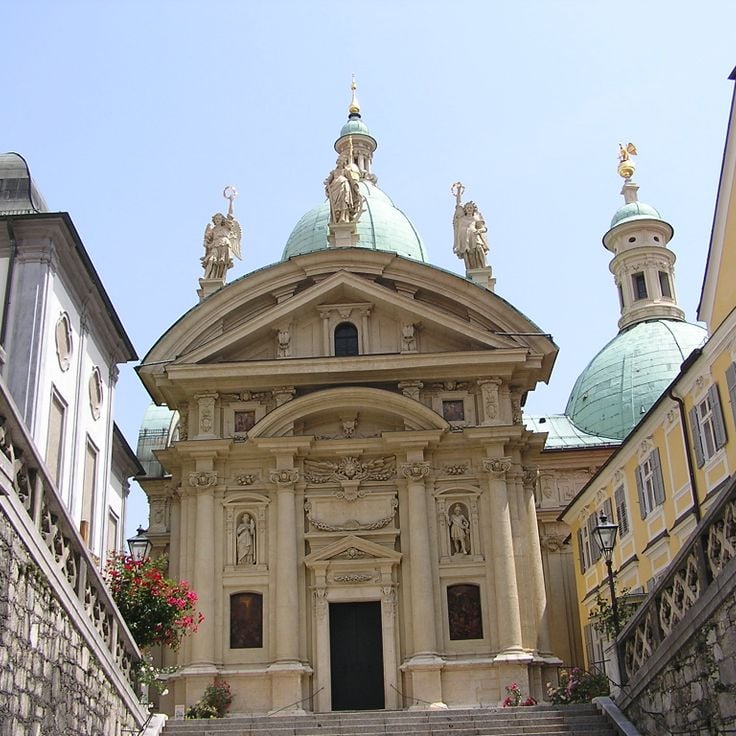
The Mausoleum of Emperor Ferdinand II. is located in Graz and stands as a 17th-century Renaissance burial monument attached to the cathedral. It holds an important place in the city's history and displays architectural details of the period. Inside, visitors can see ornate sculptures and decorations that reflect the power of the Habsburg dynasty. This building demonstrates the religious and political significance Graz held during this era.
Trautenfels Castle is a fortress from the 11th century standing in the Ennstal gorge. This castle tells the story of the region through its museum. The fortress sits at a strategic point where the Enns river passes through narrow mountain terrain. Trautenfels is one of many historical structures scattered across Styria that reveal the region's rich past.
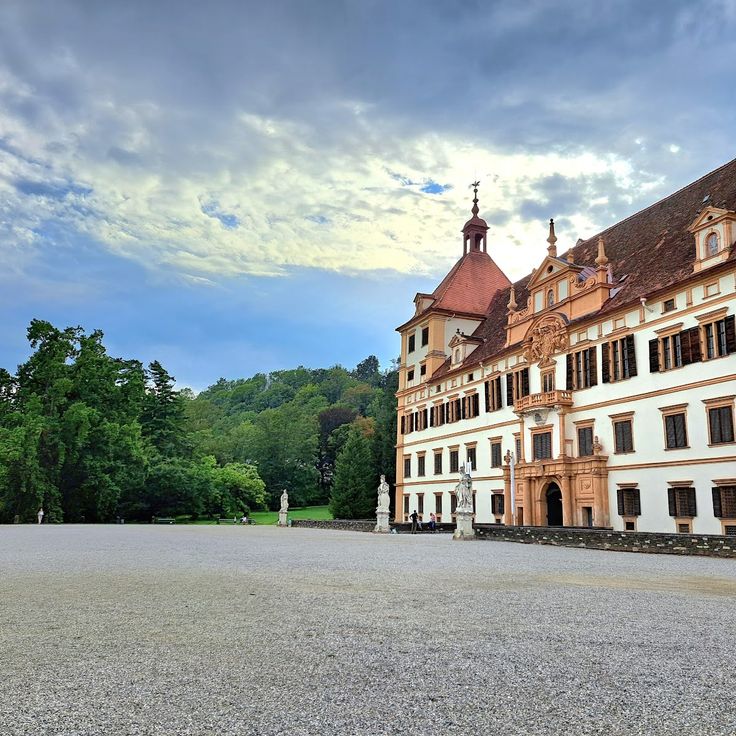
The Eggenberg Palace is a 17th-century baroque residence in Graz that is part of the UNESCO World Heritage collection. The palace stands out for its grand halls and rich collection of paintings. The buildings are surrounded by gardens that invite leisurely walks. Inside, visitors can explore the ornate rooms and connect with the region's history. The palace reflects the craftsmanship and wealth of the Baroque era. Today it serves as a major cultural landmark, offering insight into princely life from centuries past.
Herberstein Castle in Pernegg an der Mur is a Baroque castle with a historic animal park and gardens in eastern Styria. It sits in a region shaped by medieval cities, alpine mountains, and vineyards. The castle itself displays architecture from past centuries, while the animal park houses creatures from various parts of the world. Gardens surround the building and invite visitors to walk through them. The location is easy to reach and offers insight into the life of Austrian nobility.
Riegersburg Castle is a fortress that sits on top of a volcanic rock 11 centuries ago. It rises high above the eastern plains of Styria. The castle has been rebuilt and expanded many times over the centuries. Today it houses a museum where visitors can see weapons, furniture, and artworks from different periods. The path to the castle crosses a long bridge and passes through several gates. Once at the top, you can look out over the land from the fortress walls.
Kunsthaus Graz is a contemporary art museum with distinctive architecture that stretches along the Mur River. The building stands out for its rounded forms and contrasts with the traditional architecture of the old town. Inside, visitors find exhibitions of modern art and contemporary works. Located in the heart of Graz, it is easily accessible on foot. The museum offers a chance to explore modern art movements while experiencing the unusual architecture of the building itself.
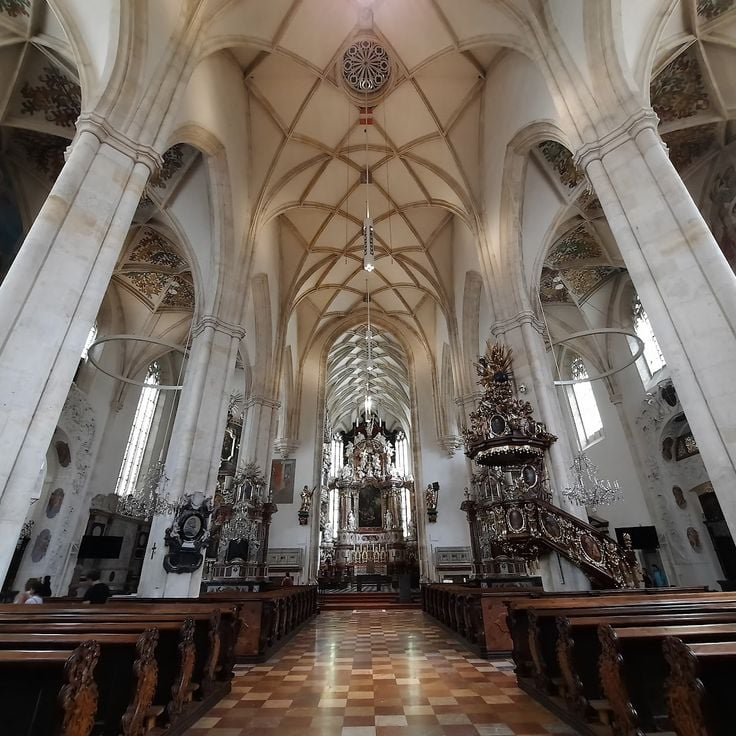
The Cathedral of St. Aegidius stands in the heart of Graz, its Gothic architecture rising from the medieval center of the city. Inside, the cathedral holds religious ornaments and artwork from the 15th century. Narrow streets surround the building, connecting it to the old town. Visitors step into a space shaped by centuries of worship and daily life in the city.
Oberkapfenberg Castle rises above Kapfenberg and dates from the 12th century. This fortified castle displays typical features of medieval military architecture with thick walls and defensive towers. From its position, the castle overlooks the town and the surrounding valley. It served as a residence for noble families for centuries and continues to shape the landscape of the Styria region.
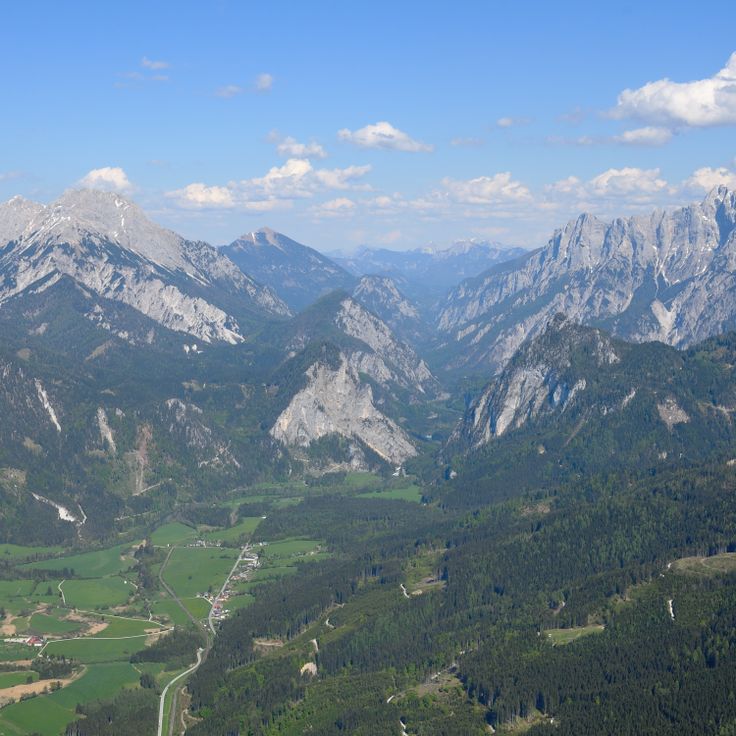
The Gesäuse National Park protects a narrow gorge carved by the Enns River in Styria. Vertical limestone cliffs rise steeply on both sides of the water, creating a dramatic passage through the mountains. Hiking trails lead through the gorge, offering views of waterfalls and towering rock walls. This park shows how water shapes the landscape over time.
Ramsau am Dachstein is an alpine village in Styria, situated on the slopes of the Dachstein massif. This village serves as a starting point for hikes into the surrounding mountain landscape. Trails lead through mountain meadows where cattle graze and ascend to higher elevations. The Dachstein massif, with its glaciers and peaks rising above 9500 feet (2900 meters), dominates the view. The area remains rugged and shaped by nature. In winter, the village transforms into a ski resort with marked slopes.
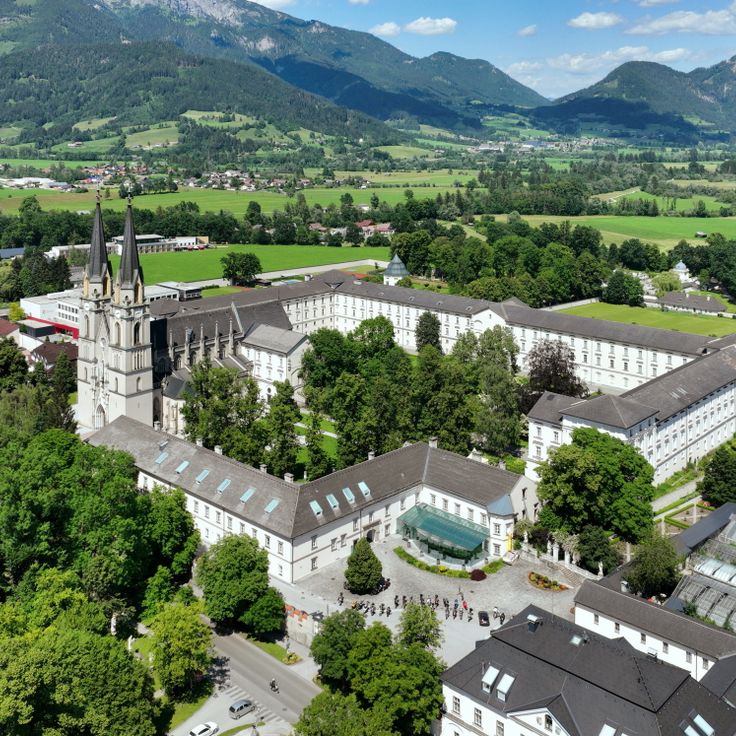
Admont Abbey is a Benedictine monastery founded in the 11th century in Styria. Its Baroque library is one of the largest of its kind. The abbey preserves historical collections and sits in a valley surrounded by Alpine mountains and rivers that cut through narrow gorges. Monks have lived and worked here for centuries.
Hochtor is a mountain summit in the Gesäuse National Park, accessible by alpine roads. From the top, you look down at the surrounding limestone walls and the Enns Gorge below. The mountain sits on a route that hikers and motorcycle riders use to cross the ridge and reach the other side of the mountains. The view shows the steep cliffs of the Gesäuse Gorge and further peaks of the eastern Alps in the distance.
The Dachstein Massif is a major mountain range in Styria that rises above 2,900 meters and shapes the landscape of the eastern Alps. Its glaciers, steep rock walls, and high plateaus attract hikers of all abilities. Walking routes range from gentle paths through meadows to challenging ridge trails. The mountain shows different faces depending on the season: exposed rock, snow fields, and grassy slopes. Small lakes nestle in the valleys with cold water year-round. The surrounding villages like Schladming serve as starting points for exploring this mountainous terrain.
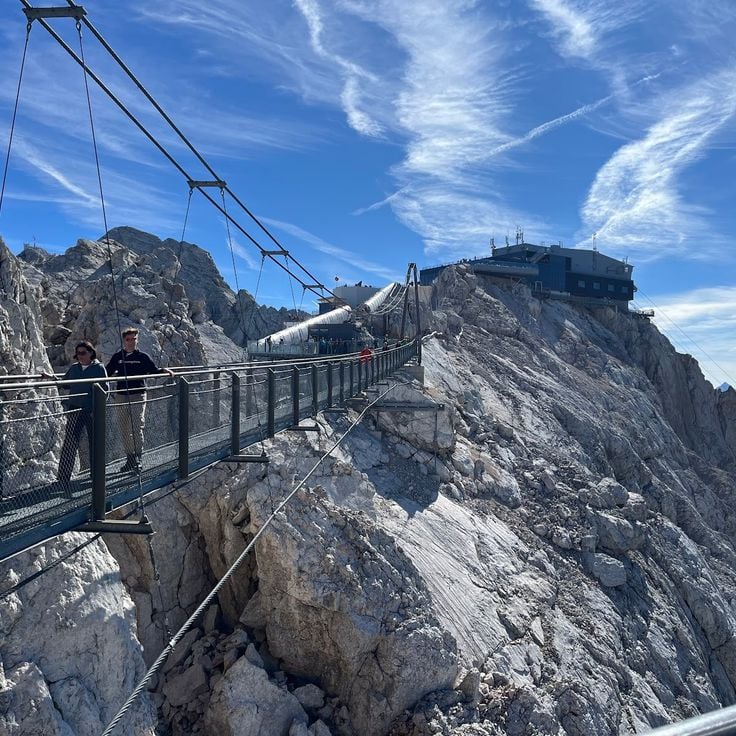
The Dachstein glacier area is a key feature of the Styrian Alpine landscape. A cable car takes visitors up to this high-altitude glacier, where a suspended observation platform overlooks the surrounding peaks. An ice tunnel runs below the surface and shows the internal structure of the glacier. From the Skywalk, the view reaches across the mountain ranges of the region and illustrates the height and scale of this glacier system that rises over 9500 feet (2900 meters).
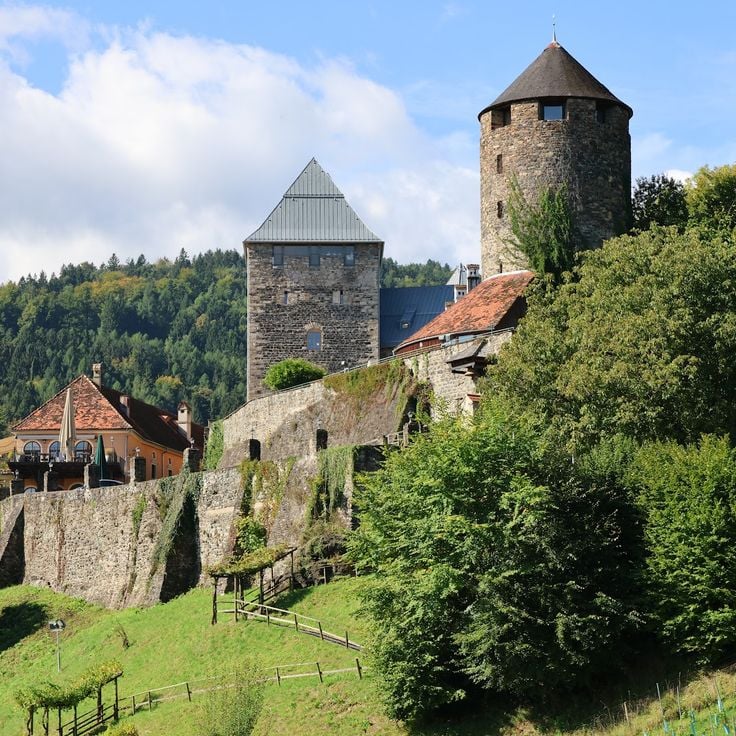
Deutschlandsberg Castle watches over the vineyards and villages of western Styria. This fortress from the 13th century sits on a hill surrounded by grapevines and farmland. From its walls, you look out across the landscape - the slopes planted with vines, the villages scattered below, and gentle hills beyond. The castle tells the story of this region, where wine has been made for hundreds of years and trade has brought prosperity to local communities.
The Almenland Nature Reserve in Styria features gently rolling hills with open pastures and traditional villages. This protected area serves as a gateway to hiking trails through alpine meadows where livestock graze. Paths wind through rural settlements that reflect the agricultural character of the region. The landscape connects the mountain terrain north of Graz with the softer hills to the south.
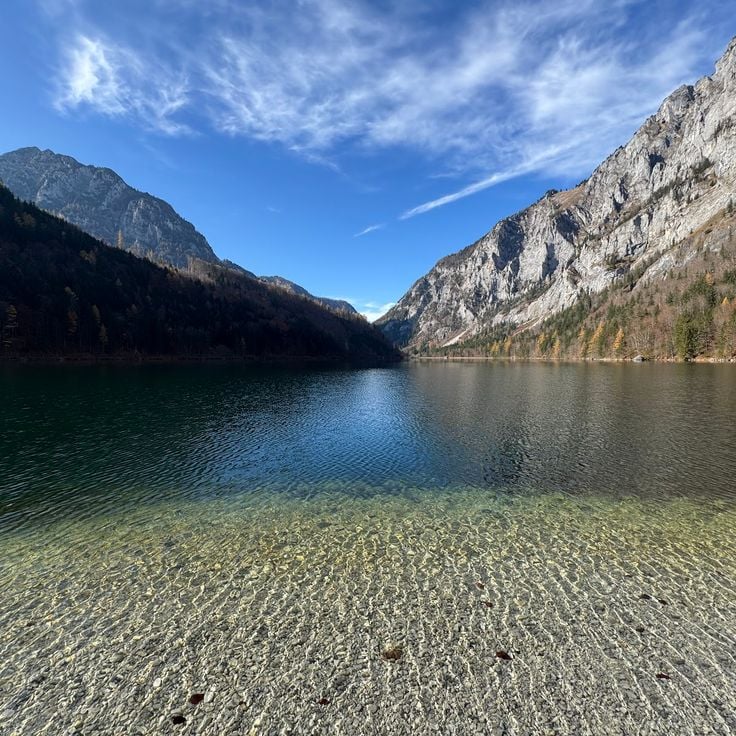
Leopoldsteiner See is a mountain lake near Eisenerz surrounded by steep rocky cliffs and dense forests. The water sits deep between high limestone walls that rise almost vertically. The lake is part of the Gesäuse Gorge landscape, a narrow passage cut by the Enns River. Visitors come here to walk and experience the quiet of the mountains. The water stays cold even in warm weather.
Schladming is a mountain village in western Styria, nestled in a valley between high peaks. The town serves as a starting point for hiking and mountain activities. In winter, skiers use the slopes of nearby mountains. In summer, trails lead up to alpine meadows and mountain lakes. Just a few kilometers away, the Enns River flows through the narrow Gesäuse Gorge, where rock walls rise vertically. The Dachstein Massif with its glaciers looms nearby. The surrounding area also offers hiking across mountain pastures where cattle and sheep graze.
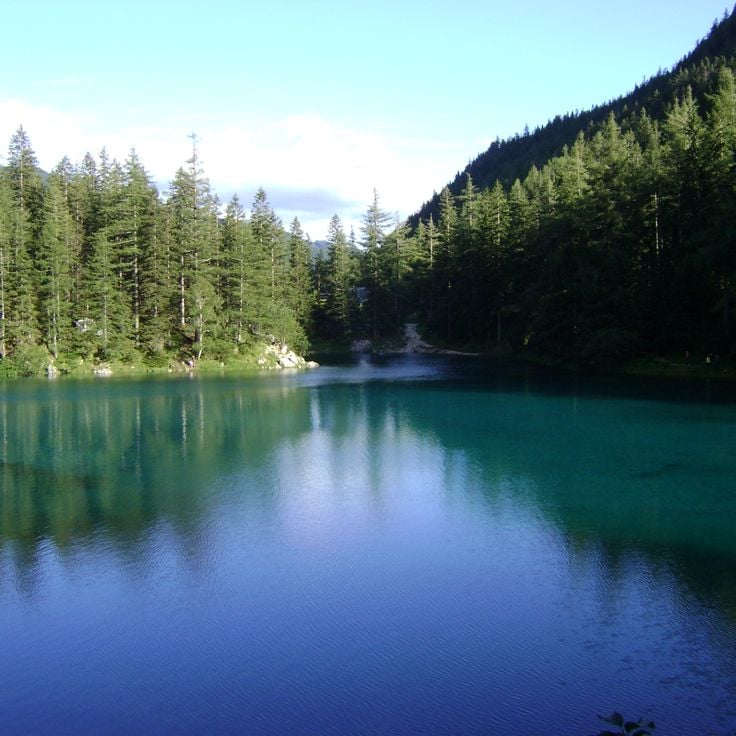
Grüner See near Tragöss is a mountain lake in Styria where the water turns transparent and green during summer months. The lake sits in an alpine landscape surrounded by forests and mountains. The water remains cool even in warm weather. Visitors come here to swim and dive, making it a destination for those seeking mountain lakes in the region.
Altaussee is a mountain village in the Salzkammergut region with its namesake lake. The village sits along the shores of a clear mountain lake surrounded by steep rock walls. The water of Altaussee Lake remains cool and clear throughout the year. Walking paths wind around the lake through forests and meadows. The village itself features traditional houses with steep roofs typical of this Alpine region. The lake attracts swimmers, sailors, and rowers in summer months. When winter temperatures drop, the frozen surface allows people to walk across the ice. The village serves as a starting point for many hikers exploring the surrounding mountains.
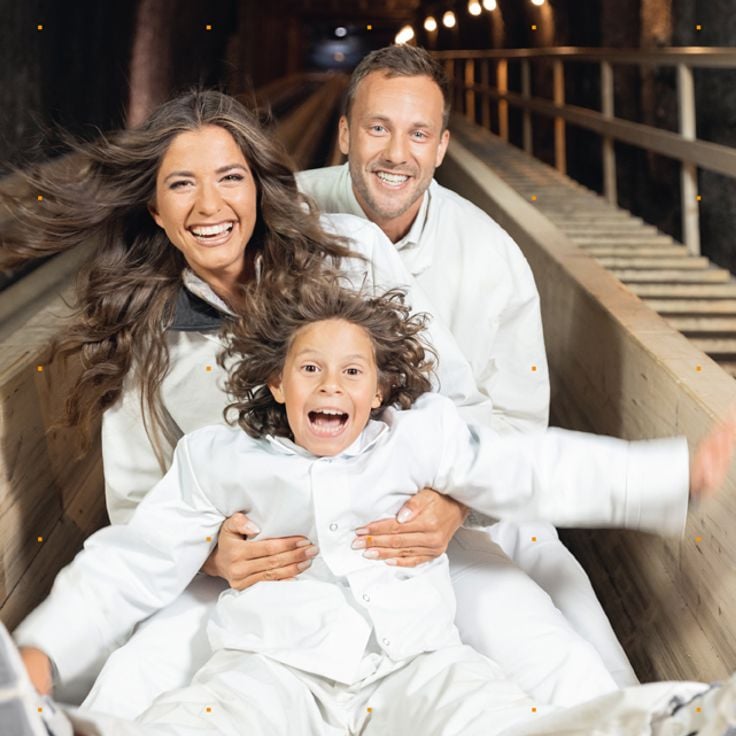
Salzwelten Altaussee is an underground museum in the Alpine region of Styria that takes visitors into the history of salt mining. In the old shafts, visitors can explore historical extraction chambers and learn how salt was harvested over the centuries. The galleries lead deep into the mountain and show the working conditions of the miners. The museum connects the industrial past of the region with the striking landscape of the Alps.
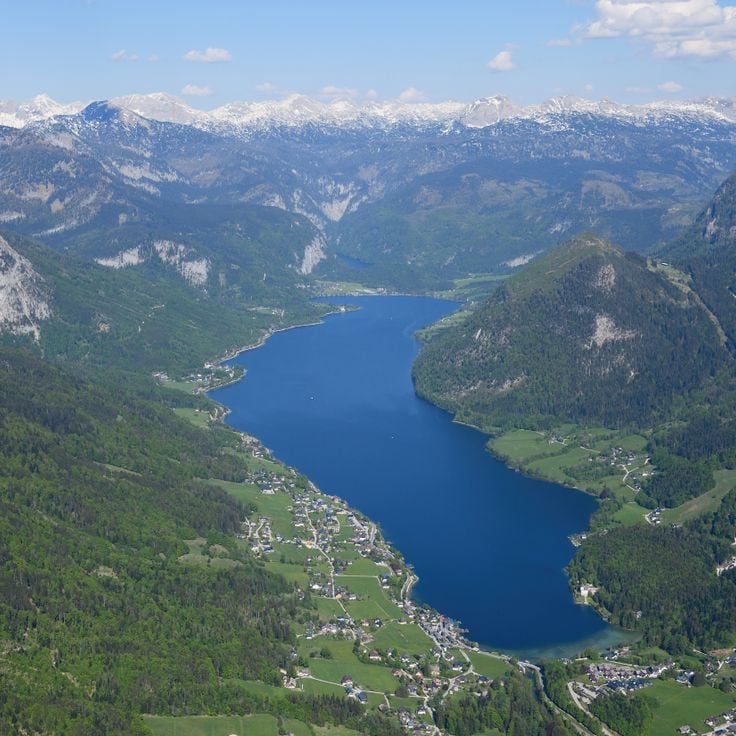
Grundlsee is a large alpine lake in Styria surrounded by mountains. The water stays cool even in summer. Paths circle the lake for walking and hiking. You can swim in the water. The landscape shows typical alpine scenery with forests and mountain views. Some areas of the shore are natural, while others have small beaches. People come here to spend time outdoors.
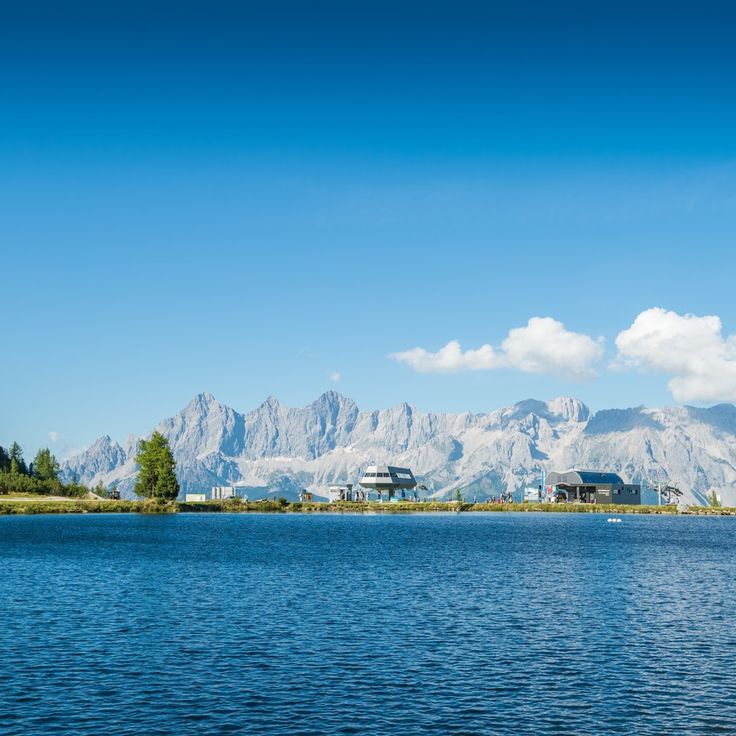
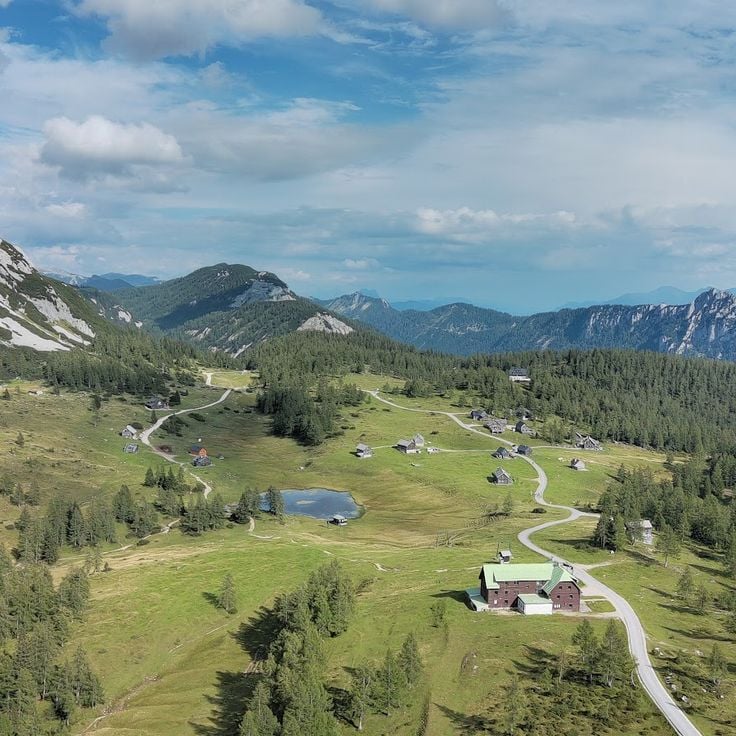
Tauplitzalm is an alpine plateau in Styria that features high mountain pastures and small mountain lakes. The location serves as a starting point for hiking in the alpine landscape. In summer, trails cross the plateau through grazing lands where herds pass. The area offers views of the surrounding mountain peaks and allows visitors to explore the highland landscape of the Eastern Alps. Tauplitzalm is part of the regions that define Styria with their varied terrain.
Bad Aussee is a spa town in the Austrian Alps with a history of natural salt springs that attracted visitors in the 19th century. The architecture reflects this period of spa tourism, with buildings designed for comfort and leisure. The town keeps alive regional Alpine traditions, visible in local costumes worn during festivals and celebrations. The surrounding mountains and nearby lakes shape daily life and offer opportunities for walks and outdoor activities. Bad Aussee remains connected to the customs and lifestyle of the Alpine region.
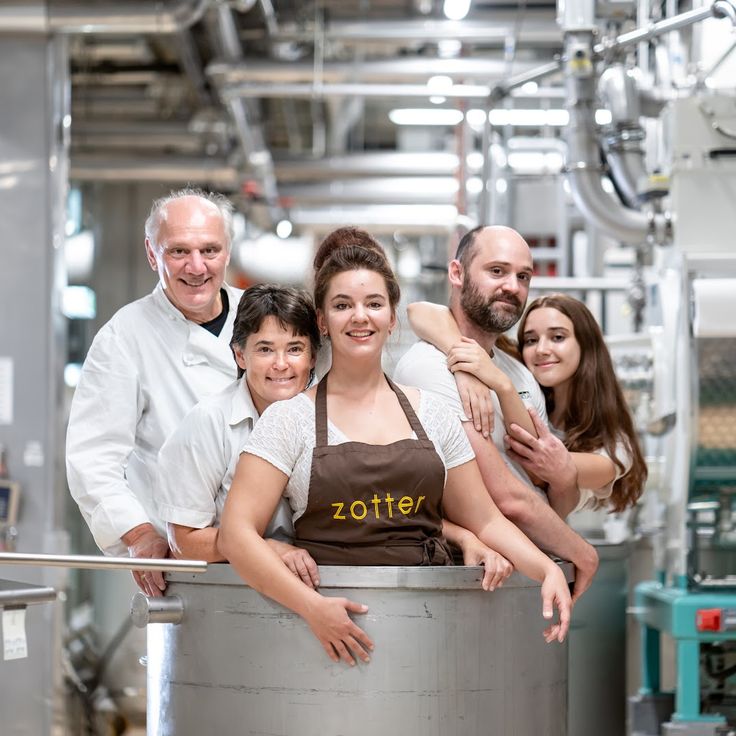
The Zotter chocolate manufactory is a working artisanal production facility in Riegersburg where visitors can watch chocolate being made and taste the products. The manufactory shows how traditional techniques combine with modern methods to create quality chocolate. During a tour, you see the different production steps from raw cocoa beans to the finished product. In the tasting area, you can sample various types of chocolate and learn about where the ingredients come from.
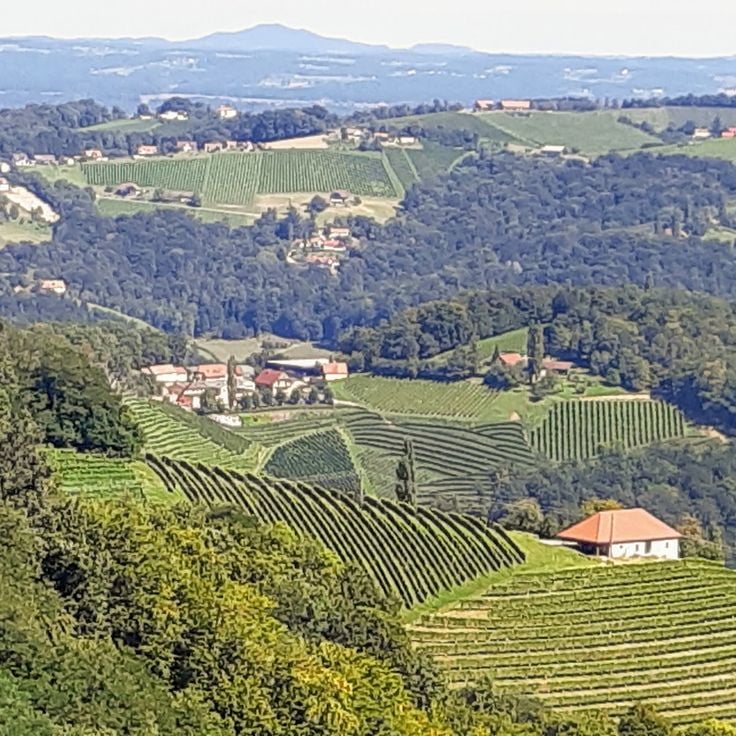
The South Styrian Wine Road passes through rolling hills where vineyards cover the slopes. Along the route, you will find wineries and tasting cellars where local producers present their wines. Small villages are scattered throughout this wine region, where mainly white wines are produced. The road takes you through areas like Sausal and Gamlitz, where rows of vines shape the landscape and visitors can taste regional specialties.
Murau is a medieval town in southern Styria with a compact historic center and traditional architecture. Murau Castle rises above the old town, while the surrounding region serves as a starting point for walks through rolling hills and vineyards. The town preserves the character of a historical settlement from the Middle Ages with its narrow streets and local craft traditions.
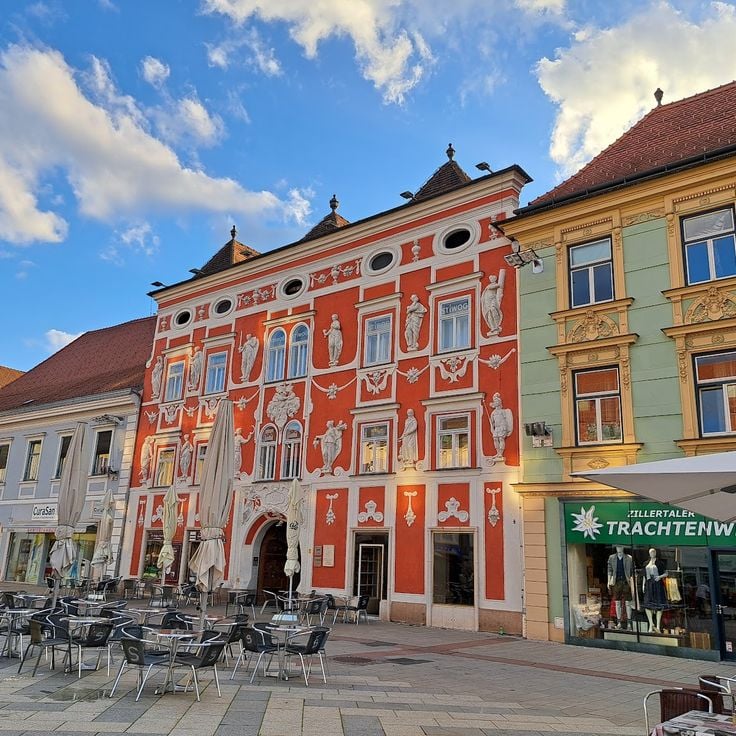
Bruck an der Mur is a historical town where two rivers meet, shaped by its past as a trading hub. The medieval old town features Renaissance buildings with painted facades and narrow streets that reflect centuries of commerce and exchange. The town center invites wandering through its architecture and learning about how merchants once moved goods through this crossing point. Castle Landskron overlooks the town and the surrounding valleys. Bruck an der Mur stands at the crossroads between the mountains to the west and the gentler hills to the east in Styria.
Kitzeck im Sausal is a wine village in the Styria region of Austria, located at a higher elevation than most wine regions in the country. Vineyards cover the steep hillsides surrounding the village. From these slopes, views extend across the rolling hills and valleys of the wine region. The local producers focus mainly on white wines, and visitors can tour the cellars and taste the wines. The landscape is shaped by orderly rows of grapevines that follow the contours of the terrain. The village itself has a rural character and sits within these vineyard lands.
Leoben is a town in Styria with a deep connection to mining history. The historic center holds old buildings and narrow streets from different periods. A university brings students to the city and shapes daily life. The town sits on the Mur River and serves as a link between Graz and the Alpine region. Historic churches and merchant houses display the architecture of past centuries.
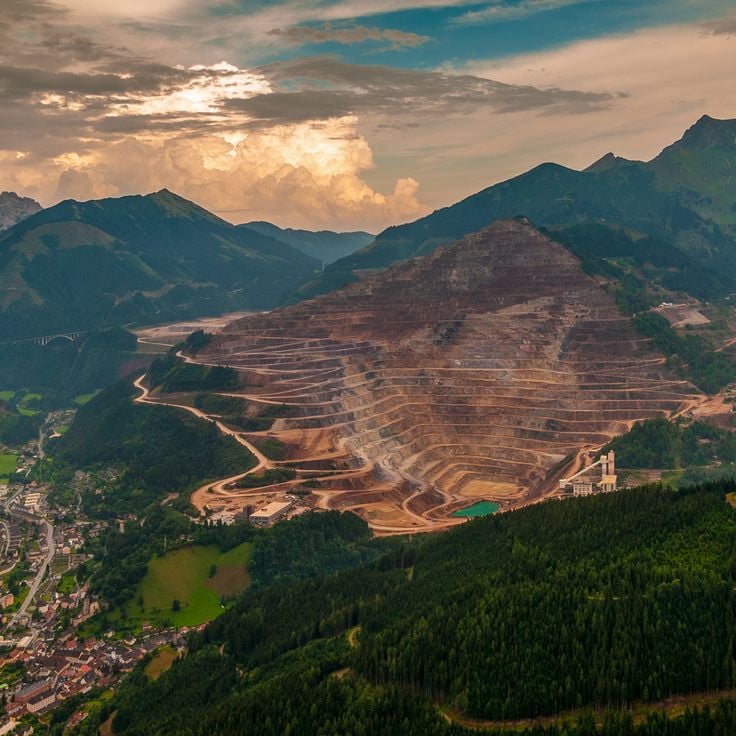
Erzberg in Eisenerz is an iron ore deposit that has been mined for centuries. Visitors can see how mining has shaped this mountain's landscape. The mountain displays different layers and colors created by centuries of extraction. A museum tells the story of mining in this region. The landscape around Erzberg looks different from typical mountains because of the open cuts and reddish-gray rock formations. Today, people can walk across the mountain and understand the changes that human activity has left on the natural environment.
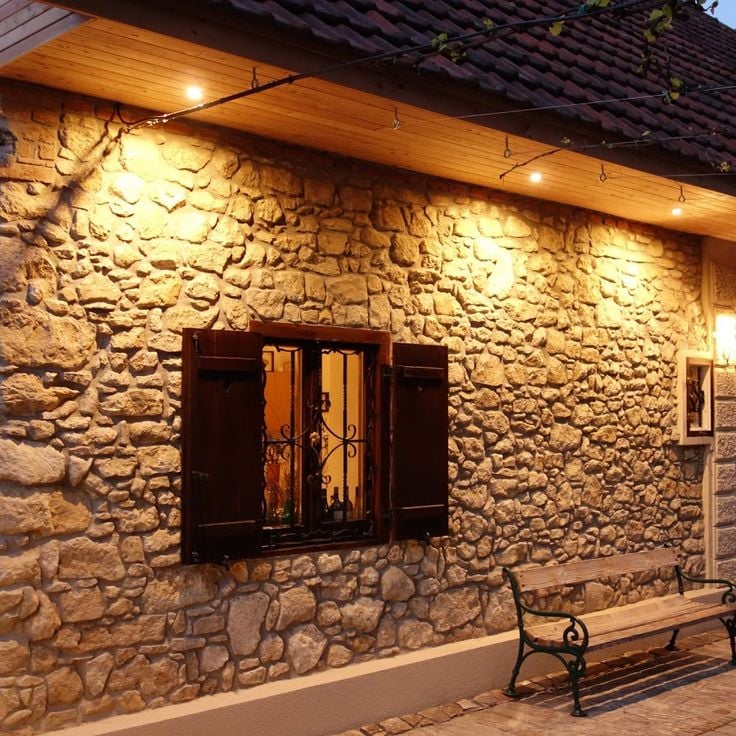
Gamlitz is a village in southern Styria surrounded by vineyards and wine estates. The town sits among rolling hills where white wines are produced. Local wineries welcome visitors to taste their wines in cellars carved into the landscape. Rows of grapevines shape the hillsides in regular patterns.
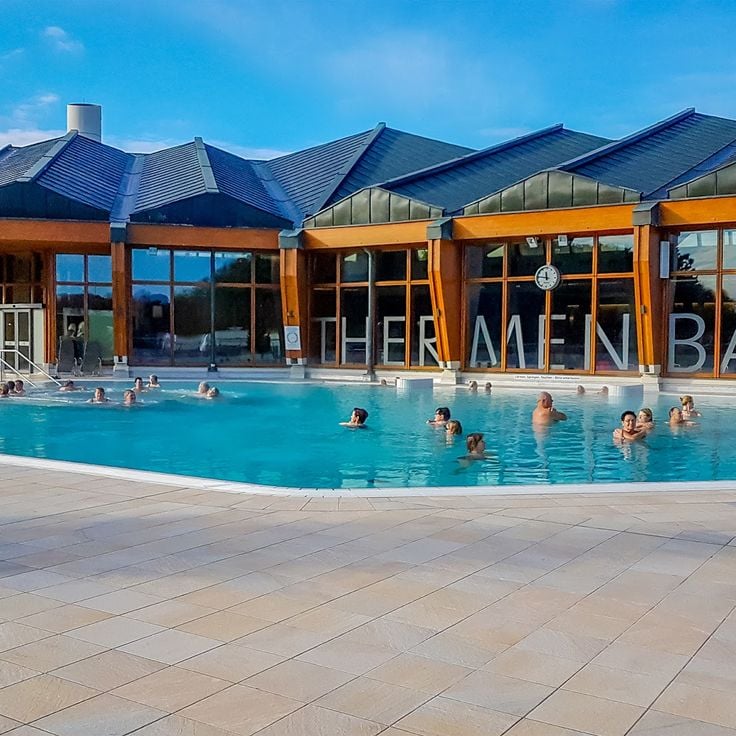
The thermal baths of Loipersdorf are a wellness facility with natural hot springs. The center features indoor and outdoor pools filled with hot water that flows naturally from the ground. Located in southern Styria, a region known for its thermal springs, this facility serves visitors seeking relaxation and therapeutic benefits.
The Murinsel is an artificial island on the Mur River in Graz that serves as a public meeting place and leisure spot. The structure with its distinctive pavilion offers space to sit, have a coffee, and watch the city from the water. The island connects both riverbanks and is accessed by pedestrian bridges. It shapes the image of modern Graz and is used daily by residents and visitors.
The historic center of Graz shows the medieval past of the city through old buildings and public squares. The old town is a UNESCO World Heritage site and extends along the Mur river. When walking through it, you find narrow streets, churches from different centuries, and houses with inner courtyards. Cathedral Square and Main Square are the places where the city's activity concentrates. From the city center, paths lead to Graz Castle, which rises above the rooftops.
The Schlossberg is a hill that rises above Graz and serves as a focal point in the city. At the top stands the Uhrturm, a clock tower that has been part of the city's skyline for centuries. From this vantage point, the entire old town spreads out below, revealing its rooftops, streets, and layout. On clear days, the view extends far beyond the city to the surrounding alpine mountains. The hill itself is a place where people walk, rest, and take in the panorama of Graz and its surroundings.
The Mausoleum of Emperor Ferdinand II. is located in Graz and stands as a 17th-century Renaissance burial monument attached to the cathedral. It holds an important place in the city's history and displays architectural details of the period. Inside, visitors can see ornate sculptures and decorations that reflect the power of the Habsburg dynasty. This building demonstrates the religious and political significance Graz held during this era.
Trautenfels Castle is a fortress from the 11th century standing in the Ennstal gorge. This castle tells the story of the region through its museum. The fortress sits at a strategic point where the Enns river passes through narrow mountain terrain. Trautenfels is one of many historical structures scattered across Styria that reveal the region's rich past.
The Eggenberg Palace is a 17th-century baroque residence in Graz that is part of the UNESCO World Heritage collection. The palace stands out for its grand halls and rich collection of paintings. The buildings are surrounded by gardens that invite leisurely walks. Inside, visitors can explore the ornate rooms and connect with the region's history. The palace reflects the craftsmanship and wealth of the Baroque era. Today it serves as a major cultural landmark, offering insight into princely life from centuries past.
Herberstein Castle in Pernegg an der Mur is a Baroque castle with a historic animal park and gardens in eastern Styria. It sits in a region shaped by medieval cities, alpine mountains, and vineyards. The castle itself displays architecture from past centuries, while the animal park houses creatures from various parts of the world. Gardens surround the building and invite visitors to walk through them. The location is easy to reach and offers insight into the life of Austrian nobility.
Riegersburg Castle is a fortress that sits on top of a volcanic rock 11 centuries ago. It rises high above the eastern plains of Styria. The castle has been rebuilt and expanded many times over the centuries. Today it houses a museum where visitors can see weapons, furniture, and artworks from different periods. The path to the castle crosses a long bridge and passes through several gates. Once at the top, you can look out over the land from the fortress walls.
Kunsthaus Graz is a contemporary art museum with distinctive architecture that stretches along the Mur River. The building stands out for its rounded forms and contrasts with the traditional architecture of the old town. Inside, visitors find exhibitions of modern art and contemporary works. Located in the heart of Graz, it is easily accessible on foot. The museum offers a chance to explore modern art movements while experiencing the unusual architecture of the building itself.
The Cathedral of St. Aegidius stands in the heart of Graz, its Gothic architecture rising from the medieval center of the city. Inside, the cathedral holds religious ornaments and artwork from the 15th century. Narrow streets surround the building, connecting it to the old town. Visitors step into a space shaped by centuries of worship and daily life in the city.
Oberkapfenberg Castle rises above Kapfenberg and dates from the 12th century. This fortified castle displays typical features of medieval military architecture with thick walls and defensive towers. From its position, the castle overlooks the town and the surrounding valley. It served as a residence for noble families for centuries and continues to shape the landscape of the Styria region.
The Gesäuse National Park protects a narrow gorge carved by the Enns River in Styria. Vertical limestone cliffs rise steeply on both sides of the water, creating a dramatic passage through the mountains. Hiking trails lead through the gorge, offering views of waterfalls and towering rock walls. This park shows how water shapes the landscape over time.
Ramsau am Dachstein is an alpine village in Styria, situated on the slopes of the Dachstein massif. This village serves as a starting point for hikes into the surrounding mountain landscape. Trails lead through mountain meadows where cattle graze and ascend to higher elevations. The Dachstein massif, with its glaciers and peaks rising above 9500 feet (2900 meters), dominates the view. The area remains rugged and shaped by nature. In winter, the village transforms into a ski resort with marked slopes.
Admont Abbey is a Benedictine monastery founded in the 11th century in Styria. Its Baroque library is one of the largest of its kind. The abbey preserves historical collections and sits in a valley surrounded by Alpine mountains and rivers that cut through narrow gorges. Monks have lived and worked here for centuries.
Hochtor is a mountain summit in the Gesäuse National Park, accessible by alpine roads. From the top, you look down at the surrounding limestone walls and the Enns Gorge below. The mountain sits on a route that hikers and motorcycle riders use to cross the ridge and reach the other side of the mountains. The view shows the steep cliffs of the Gesäuse Gorge and further peaks of the eastern Alps in the distance.
The Dachstein Massif is a major mountain range in Styria that rises above 2,900 meters and shapes the landscape of the eastern Alps. Its glaciers, steep rock walls, and high plateaus attract hikers of all abilities. Walking routes range from gentle paths through meadows to challenging ridge trails. The mountain shows different faces depending on the season: exposed rock, snow fields, and grassy slopes. Small lakes nestle in the valleys with cold water year-round. The surrounding villages like Schladming serve as starting points for exploring this mountainous terrain.
The Dachstein glacier area is a key feature of the Styrian Alpine landscape. A cable car takes visitors up to this high-altitude glacier, where a suspended observation platform overlooks the surrounding peaks. An ice tunnel runs below the surface and shows the internal structure of the glacier. From the Skywalk, the view reaches across the mountain ranges of the region and illustrates the height and scale of this glacier system that rises over 9500 feet (2900 meters).
Deutschlandsberg Castle watches over the vineyards and villages of western Styria. This fortress from the 13th century sits on a hill surrounded by grapevines and farmland. From its walls, you look out across the landscape - the slopes planted with vines, the villages scattered below, and gentle hills beyond. The castle tells the story of this region, where wine has been made for hundreds of years and trade has brought prosperity to local communities.
The Almenland Nature Reserve in Styria features gently rolling hills with open pastures and traditional villages. This protected area serves as a gateway to hiking trails through alpine meadows where livestock graze. Paths wind through rural settlements that reflect the agricultural character of the region. The landscape connects the mountain terrain north of Graz with the softer hills to the south.
Leopoldsteiner See is a mountain lake near Eisenerz surrounded by steep rocky cliffs and dense forests. The water sits deep between high limestone walls that rise almost vertically. The lake is part of the Gesäuse Gorge landscape, a narrow passage cut by the Enns River. Visitors come here to walk and experience the quiet of the mountains. The water stays cold even in warm weather.
Schladming is a mountain village in western Styria, nestled in a valley between high peaks. The town serves as a starting point for hiking and mountain activities. In winter, skiers use the slopes of nearby mountains. In summer, trails lead up to alpine meadows and mountain lakes. Just a few kilometers away, the Enns River flows through the narrow Gesäuse Gorge, where rock walls rise vertically. The Dachstein Massif with its glaciers looms nearby. The surrounding area also offers hiking across mountain pastures where cattle and sheep graze.
Grüner See near Tragöss is a mountain lake in Styria where the water turns transparent and green during summer months. The lake sits in an alpine landscape surrounded by forests and mountains. The water remains cool even in warm weather. Visitors come here to swim and dive, making it a destination for those seeking mountain lakes in the region.
Altaussee is a mountain village in the Salzkammergut region with its namesake lake. The village sits along the shores of a clear mountain lake surrounded by steep rock walls. The water of Altaussee Lake remains cool and clear throughout the year. Walking paths wind around the lake through forests and meadows. The village itself features traditional houses with steep roofs typical of this Alpine region. The lake attracts swimmers, sailors, and rowers in summer months. When winter temperatures drop, the frozen surface allows people to walk across the ice. The village serves as a starting point for many hikers exploring the surrounding mountains.
Salzwelten Altaussee is an underground museum in the Alpine region of Styria that takes visitors into the history of salt mining. In the old shafts, visitors can explore historical extraction chambers and learn how salt was harvested over the centuries. The galleries lead deep into the mountain and show the working conditions of the miners. The museum connects the industrial past of the region with the striking landscape of the Alps.
Grundlsee is a large alpine lake in Styria surrounded by mountains. The water stays cool even in summer. Paths circle the lake for walking and hiking. You can swim in the water. The landscape shows typical alpine scenery with forests and mountain views. Some areas of the shore are natural, while others have small beaches. People come here to spend time outdoors.
Tauplitzalm is an alpine plateau in Styria that features high mountain pastures and small mountain lakes. The location serves as a starting point for hiking in the alpine landscape. In summer, trails cross the plateau through grazing lands where herds pass. The area offers views of the surrounding mountain peaks and allows visitors to explore the highland landscape of the Eastern Alps. Tauplitzalm is part of the regions that define Styria with their varied terrain.
Bad Aussee is a spa town in the Austrian Alps with a history of natural salt springs that attracted visitors in the 19th century. The architecture reflects this period of spa tourism, with buildings designed for comfort and leisure. The town keeps alive regional Alpine traditions, visible in local costumes worn during festivals and celebrations. The surrounding mountains and nearby lakes shape daily life and offer opportunities for walks and outdoor activities. Bad Aussee remains connected to the customs and lifestyle of the Alpine region.
The Zotter chocolate manufactory is a working artisanal production facility in Riegersburg where visitors can watch chocolate being made and taste the products. The manufactory shows how traditional techniques combine with modern methods to create quality chocolate. During a tour, you see the different production steps from raw cocoa beans to the finished product. In the tasting area, you can sample various types of chocolate and learn about where the ingredients come from.
The South Styrian Wine Road passes through rolling hills where vineyards cover the slopes. Along the route, you will find wineries and tasting cellars where local producers present their wines. Small villages are scattered throughout this wine region, where mainly white wines are produced. The road takes you through areas like Sausal and Gamlitz, where rows of vines shape the landscape and visitors can taste regional specialties.
Murau is a medieval town in southern Styria with a compact historic center and traditional architecture. Murau Castle rises above the old town, while the surrounding region serves as a starting point for walks through rolling hills and vineyards. The town preserves the character of a historical settlement from the Middle Ages with its narrow streets and local craft traditions.
Bruck an der Mur is a historical town where two rivers meet, shaped by its past as a trading hub. The medieval old town features Renaissance buildings with painted facades and narrow streets that reflect centuries of commerce and exchange. The town center invites wandering through its architecture and learning about how merchants once moved goods through this crossing point. Castle Landskron overlooks the town and the surrounding valleys. Bruck an der Mur stands at the crossroads between the mountains to the west and the gentler hills to the east in Styria.
Kitzeck im Sausal is a wine village in the Styria region of Austria, located at a higher elevation than most wine regions in the country. Vineyards cover the steep hillsides surrounding the village. From these slopes, views extend across the rolling hills and valleys of the wine region. The local producers focus mainly on white wines, and visitors can tour the cellars and taste the wines. The landscape is shaped by orderly rows of grapevines that follow the contours of the terrain. The village itself has a rural character and sits within these vineyard lands.
Leoben is a town in Styria with a deep connection to mining history. The historic center holds old buildings and narrow streets from different periods. A university brings students to the city and shapes daily life. The town sits on the Mur River and serves as a link between Graz and the Alpine region. Historic churches and merchant houses display the architecture of past centuries.
Erzberg in Eisenerz is an iron ore deposit that has been mined for centuries. Visitors can see how mining has shaped this mountain's landscape. The mountain displays different layers and colors created by centuries of extraction. A museum tells the story of mining in this region. The landscape around Erzberg looks different from typical mountains because of the open cuts and reddish-gray rock formations. Today, people can walk across the mountain and understand the changes that human activity has left on the natural environment.
Gamlitz is a village in southern Styria surrounded by vineyards and wine estates. The town sits among rolling hills where white wines are produced. Local wineries welcome visitors to taste their wines in cellars carved into the landscape. Rows of grapevines shape the hillsides in regular patterns.
The thermal baths of Loipersdorf are a wellness facility with natural hot springs. The center features indoor and outdoor pools filled with hot water that flows naturally from the ground. Located in southern Styria, a region known for its thermal springs, this facility serves visitors seeking relaxation and therapeutic benefits.
The Murinsel is an artificial island on the Mur River in Graz that serves as a public meeting place and leisure spot. The structure with its distinctive pavilion offers space to sit, have a coffee, and watch the city from the water. The island connects both riverbanks and is accessed by pedestrian bridges. It shapes the image of modern Graz and is used daily by residents and visitors.
The historic center of Graz shows the medieval past of the city through old buildings and public squares. The old town is a UNESCO World Heritage site and extends along the Mur river. When walking through it, you find narrow streets, churches from different centuries, and houses with inner courtyards. Cathedral Square and Main Square are the places where the city's activity concentrates. From the city center, paths lead to Graz Castle, which rises above the rooftops.
The Schlossberg is a hill that rises above Graz and serves as a focal point in the city. At the top stands the Uhrturm, a clock tower that has been part of the city's skyline for centuries. From this vantage point, the entire old town spreads out below, revealing its rooftops, streets, and layout. On clear days, the view extends far beyond the city to the surrounding alpine mountains. The hill itself is a place where people walk, rest, and take in the panorama of Graz and its surroundings.
The Mausoleum of Emperor Ferdinand II. is located in Graz and stands as a 17th-century Renaissance burial monument attached to the cathedral. It holds an important place in the city's history and displays architectural details of the period. Inside, visitors can see ornate sculptures and decorations that reflect the power of the Habsburg dynasty. This building demonstrates the religious and political significance Graz held during this era.
Trautenfels Castle is a fortress from the 11th century standing in the Ennstal gorge. This castle tells the story of the region through its museum. The fortress sits at a strategic point where the Enns river passes through narrow mountain terrain. Trautenfels is one of many historical structures scattered across Styria that reveal the region's rich past.
The Eggenberg Palace is a 17th-century baroque residence in Graz that is part of the UNESCO World Heritage collection. The palace stands out for its grand halls and rich collection of paintings. The buildings are surrounded by gardens that invite leisurely walks. Inside, visitors can explore the ornate rooms and connect with the region's history. The palace reflects the craftsmanship and wealth of the Baroque era. Today it serves as a major cultural landmark, offering insight into princely life from centuries past.
Herberstein Castle in Pernegg an der Mur is a Baroque castle with a historic animal park and gardens in eastern Styria. It sits in a region shaped by medieval cities, alpine mountains, and vineyards. The castle itself displays architecture from past centuries, while the animal park houses creatures from various parts of the world. Gardens surround the building and invite visitors to walk through them. The location is easy to reach and offers insight into the life of Austrian nobility.
Riegersburg Castle is a fortress that sits on top of a volcanic rock 11 centuries ago. It rises high above the eastern plains of Styria. The castle has been rebuilt and expanded many times over the centuries. Today it houses a museum where visitors can see weapons, furniture, and artworks from different periods. The path to the castle crosses a long bridge and passes through several gates. Once at the top, you can look out over the land from the fortress walls.
Kunsthaus Graz is a contemporary art museum with distinctive architecture that stretches along the Mur River. The building stands out for its rounded forms and contrasts with the traditional architecture of the old town. Inside, visitors find exhibitions of modern art and contemporary works. Located in the heart of Graz, it is easily accessible on foot. The museum offers a chance to explore modern art movements while experiencing the unusual architecture of the building itself.
The Cathedral of St. Aegidius stands in the heart of Graz, its Gothic architecture rising from the medieval center of the city. Inside, the cathedral holds religious ornaments and artwork from the 15th century. Narrow streets surround the building, connecting it to the old town. Visitors step into a space shaped by centuries of worship and daily life in the city.
Oberkapfenberg Castle rises above Kapfenberg and dates from the 12th century. This fortified castle displays typical features of medieval military architecture with thick walls and defensive towers. From its position, the castle overlooks the town and the surrounding valley. It served as a residence for noble families for centuries and continues to shape the landscape of the Styria region.
The Gesäuse National Park protects a narrow gorge carved by the Enns River in Styria. Vertical limestone cliffs rise steeply on both sides of the water, creating a dramatic passage through the mountains. Hiking trails lead through the gorge, offering views of waterfalls and towering rock walls. This park shows how water shapes the landscape over time.
Ramsau am Dachstein is an alpine village in Styria, situated on the slopes of the Dachstein massif. This village serves as a starting point for hikes into the surrounding mountain landscape. Trails lead through mountain meadows where cattle graze and ascend to higher elevations. The Dachstein massif, with its glaciers and peaks rising above 9500 feet (2900 meters), dominates the view. The area remains rugged and shaped by nature. In winter, the village transforms into a ski resort with marked slopes.
Admont Abbey is a Benedictine monastery founded in the 11th century in Styria. Its Baroque library is one of the largest of its kind. The abbey preserves historical collections and sits in a valley surrounded by Alpine mountains and rivers that cut through narrow gorges. Monks have lived and worked here for centuries.
Hochtor is a mountain summit in the Gesäuse National Park, accessible by alpine roads. From the top, you look down at the surrounding limestone walls and the Enns Gorge below. The mountain sits on a route that hikers and motorcycle riders use to cross the ridge and reach the other side of the mountains. The view shows the steep cliffs of the Gesäuse Gorge and further peaks of the eastern Alps in the distance.
The Dachstein Massif is a major mountain range in Styria that rises above 2,900 meters and shapes the landscape of the eastern Alps. Its glaciers, steep rock walls, and high plateaus attract hikers of all abilities. Walking routes range from gentle paths through meadows to challenging ridge trails. The mountain shows different faces depending on the season: exposed rock, snow fields, and grassy slopes. Small lakes nestle in the valleys with cold water year-round. The surrounding villages like Schladming serve as starting points for exploring this mountainous terrain.
The Dachstein glacier area is a key feature of the Styrian Alpine landscape. A cable car takes visitors up to this high-altitude glacier, where a suspended observation platform overlooks the surrounding peaks. An ice tunnel runs below the surface and shows the internal structure of the glacier. From the Skywalk, the view reaches across the mountain ranges of the region and illustrates the height and scale of this glacier system that rises over 9500 feet (2900 meters).
Deutschlandsberg Castle watches over the vineyards and villages of western Styria. This fortress from the 13th century sits on a hill surrounded by grapevines and farmland. From its walls, you look out across the landscape - the slopes planted with vines, the villages scattered below, and gentle hills beyond. The castle tells the story of this region, where wine has been made for hundreds of years and trade has brought prosperity to local communities.
The Almenland Nature Reserve in Styria features gently rolling hills with open pastures and traditional villages. This protected area serves as a gateway to hiking trails through alpine meadows where livestock graze. Paths wind through rural settlements that reflect the agricultural character of the region. The landscape connects the mountain terrain north of Graz with the softer hills to the south.
Leopoldsteiner See is a mountain lake near Eisenerz surrounded by steep rocky cliffs and dense forests. The water sits deep between high limestone walls that rise almost vertically. The lake is part of the Gesäuse Gorge landscape, a narrow passage cut by the Enns River. Visitors come here to walk and experience the quiet of the mountains. The water stays cold even in warm weather.
Schladming is a mountain village in western Styria, nestled in a valley between high peaks. The town serves as a starting point for hiking and mountain activities. In winter, skiers use the slopes of nearby mountains. In summer, trails lead up to alpine meadows and mountain lakes. Just a few kilometers away, the Enns River flows through the narrow Gesäuse Gorge, where rock walls rise vertically. The Dachstein Massif with its glaciers looms nearby. The surrounding area also offers hiking across mountain pastures where cattle and sheep graze.
Grüner See near Tragöss is a mountain lake in Styria where the water turns transparent and green during summer months. The lake sits in an alpine landscape surrounded by forests and mountains. The water remains cool even in warm weather. Visitors come here to swim and dive, making it a destination for those seeking mountain lakes in the region.
Altaussee is a mountain village in the Salzkammergut region with its namesake lake. The village sits along the shores of a clear mountain lake surrounded by steep rock walls. The water of Altaussee Lake remains cool and clear throughout the year. Walking paths wind around the lake through forests and meadows. The village itself features traditional houses with steep roofs typical of this Alpine region. The lake attracts swimmers, sailors, and rowers in summer months. When winter temperatures drop, the frozen surface allows people to walk across the ice. The village serves as a starting point for many hikers exploring the surrounding mountains.
Salzwelten Altaussee is an underground museum in the Alpine region of Styria that takes visitors into the history of salt mining. In the old shafts, visitors can explore historical extraction chambers and learn how salt was harvested over the centuries. The galleries lead deep into the mountain and show the working conditions of the miners. The museum connects the industrial past of the region with the striking landscape of the Alps.
Grundlsee is a large alpine lake in Styria surrounded by mountains. The water stays cool even in summer. Paths circle the lake for walking and hiking. You can swim in the water. The landscape shows typical alpine scenery with forests and mountain views. Some areas of the shore are natural, while others have small beaches. People come here to spend time outdoors.
Tauplitzalm is an alpine plateau in Styria that features high mountain pastures and small mountain lakes. The location serves as a starting point for hiking in the alpine landscape. In summer, trails cross the plateau through grazing lands where herds pass. The area offers views of the surrounding mountain peaks and allows visitors to explore the highland landscape of the Eastern Alps. Tauplitzalm is part of the regions that define Styria with their varied terrain.
Bad Aussee is a spa town in the Austrian Alps with a history of natural salt springs that attracted visitors in the 19th century. The architecture reflects this period of spa tourism, with buildings designed for comfort and leisure. The town keeps alive regional Alpine traditions, visible in local costumes worn during festivals and celebrations. The surrounding mountains and nearby lakes shape daily life and offer opportunities for walks and outdoor activities. Bad Aussee remains connected to the customs and lifestyle of the Alpine region.
The Zotter chocolate manufactory is a working artisanal production facility in Riegersburg where visitors can watch chocolate being made and taste the products. The manufactory shows how traditional techniques combine with modern methods to create quality chocolate. During a tour, you see the different production steps from raw cocoa beans to the finished product. In the tasting area, you can sample various types of chocolate and learn about where the ingredients come from.
The South Styrian Wine Road passes through rolling hills where vineyards cover the slopes. Along the route, you will find wineries and tasting cellars where local producers present their wines. Small villages are scattered throughout this wine region, where mainly white wines are produced. The road takes you through areas like Sausal and Gamlitz, where rows of vines shape the landscape and visitors can taste regional specialties.
Murau is a medieval town in southern Styria with a compact historic center and traditional architecture. Murau Castle rises above the old town, while the surrounding region serves as a starting point for walks through rolling hills and vineyards. The town preserves the character of a historical settlement from the Middle Ages with its narrow streets and local craft traditions.
Bruck an der Mur is a historical town where two rivers meet, shaped by its past as a trading hub. The medieval old town features Renaissance buildings with painted facades and narrow streets that reflect centuries of commerce and exchange. The town center invites wandering through its architecture and learning about how merchants once moved goods through this crossing point. Castle Landskron overlooks the town and the surrounding valleys. Bruck an der Mur stands at the crossroads between the mountains to the west and the gentler hills to the east in Styria.
Kitzeck im Sausal is a wine village in the Styria region of Austria, located at a higher elevation than most wine regions in the country. Vineyards cover the steep hillsides surrounding the village. From these slopes, views extend across the rolling hills and valleys of the wine region. The local producers focus mainly on white wines, and visitors can tour the cellars and taste the wines. The landscape is shaped by orderly rows of grapevines that follow the contours of the terrain. The village itself has a rural character and sits within these vineyard lands.
Leoben is a town in Styria with a deep connection to mining history. The historic center holds old buildings and narrow streets from different periods. A university brings students to the city and shapes daily life. The town sits on the Mur River and serves as a link between Graz and the Alpine region. Historic churches and merchant houses display the architecture of past centuries.
Erzberg in Eisenerz is an iron ore deposit that has been mined for centuries. Visitors can see how mining has shaped this mountain's landscape. The mountain displays different layers and colors created by centuries of extraction. A museum tells the story of mining in this region. The landscape around Erzberg looks different from typical mountains because of the open cuts and reddish-gray rock formations. Today, people can walk across the mountain and understand the changes that human activity has left on the natural environment.
Gamlitz is a village in southern Styria surrounded by vineyards and wine estates. The town sits among rolling hills where white wines are produced. Local wineries welcome visitors to taste their wines in cellars carved into the landscape. Rows of grapevines shape the hillsides in regular patterns.
The thermal baths of Loipersdorf are a wellness facility with natural hot springs. The center features indoor and outdoor pools filled with hot water that flows naturally from the ground. Located in southern Styria, a region known for its thermal springs, this facility serves visitors seeking relaxation and therapeutic benefits.