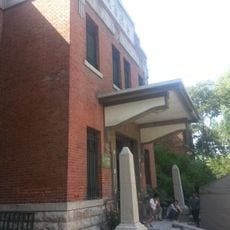
魏氏庄园, Cultural heritage compound in Huimin County, China.
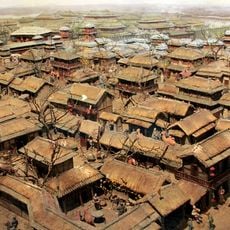
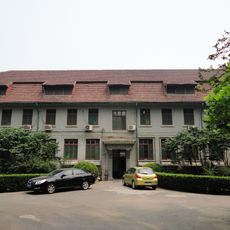
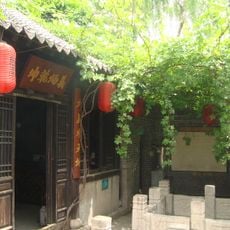
The Wei Family Manor is a large residential complex with numerous courtyards and traditional buildings arranged in classical Chinese architectural style. The compound contains multiple interconnected sections designed to serve different functions for the family and their household.
The manor was founded during the Qing Dynasty when the Wei family built their residence, establishing a center for family gatherings and daily operations. The preservation of the complex documents how Chinese households and social structures functioned during that historical period.
The three building groups are named Shude Hall, Fushou Hall and Xiyi Hall. Shude Hall is the main complex, covering 27,613 square metres and begun in 1890, the 16th year of the Guangxu reign. Fushou Hall, built in 1865 under the Tongzhi emperor, stands about 200 metres away, while Xiyi Hall lies about 100 metres from Shude Hall.
The complex covers a large area, so wear comfortable shoes and allow time to explore all sections thoroughly. The pathways lead through multiple courtyards, and it helps to follow a logical route to view the different sections systematically.
The three halls are not clustered together: Fushou Hall stands about 200 metres from the main Shude Hall, and Xiyi Hall about 100 metres away, so the manor is really a scattered group of separate compounds in Weiji village rather than one walled enclosure.
The community of curious travelers
AroundUs brings together thousands of curated places, local tips, and hidden gems, enriched daily by 94,381 contributors worldwide.