Ancient Linzi, Archaeological site in Zibo, China
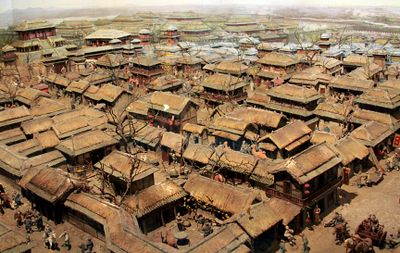
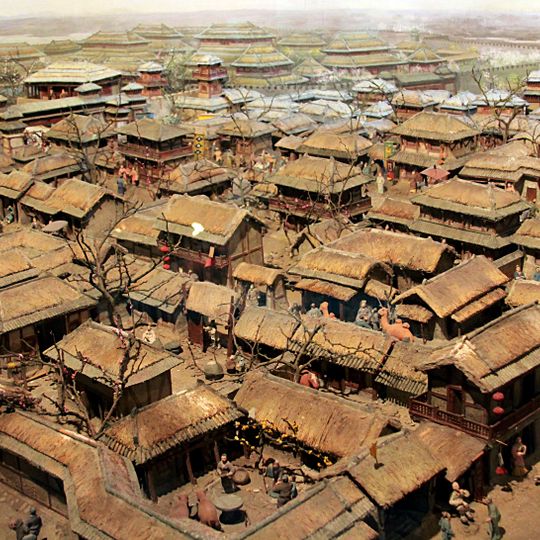
Ancient Linzi is an archaeological site in Zibo, Shandong, made up of a large outer city and a smaller inner city in its southwestern corner. The outer wall runs about 14 km, and the inner wall about 7.3 km; both were built of rammed earth. Inside, seven broad avenues formed a grid, and the Duke Huan platform, a rammed-earth base 86 by 70 metres and 14 metres high, stands in the inner city.
This site served as the capital of the Qi state during the Eastern Zhou Dynasty, from 770 to 221 BC, until King Ying Zheng conquered it. The city flourished for centuries as a major political and economic center before eventually being abandoned.
Linzi's name is linked to the Qi capital, and the city gate called Ji is thought to have given the Jixia Academy its name. The academy, patronised by Qi kings around 315-285 BC, paid chosen scholars a stipend to advise on government, rites and philosophy. Mencius, Xun Zi and Shen Dao are among those associated with it; Xun Zi taught Han Fei Zi and Li Si.
The ruins lie in Linzi District, Zibo, split between a large outer city and a smaller inner city to its southwest; the Duke Huan platform stands in the inner city. The earth walls and mounds are scattered across open farmland, so allow several hours and wear sturdy shoes. Excavations in 1926 and 1964 uncovered the street grid and drainage channels.
More than 100 tumuli surround the ruins, some up to 10 kilometres away, and many were looted in antiquity. In pits near the presumed tomb of Duke Jing of Qi, over 600 sacrificed horses lie arranged in two rows. A 1920s mitochondrial DNA study of Linzi graves first suggested European links; re-examination found the result was wrong.
The community of curious travelers
AroundUs brings together thousands of curated places, local tips, and hidden gems, enriched daily by 93,736 contributors worldwide.