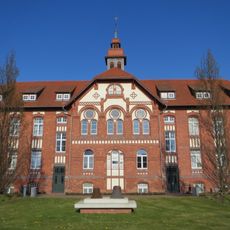
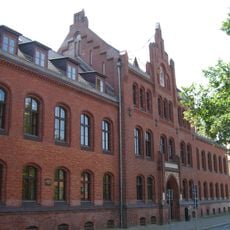
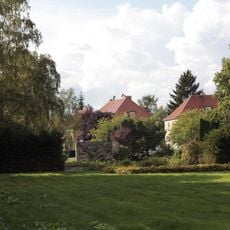
Botanical Museum Greifswald, Botanical museum at University of Greifswald, Germany.
The Botanical Museum Greifswald is the botanical collection of the University of Greifswald's botany department, founded around 1850 by Julius Münter. It is the largest botanical collection in Mecklenburg-Vorpommern and serves as the state herbarium. Its core is a herbarium of roughly 300,000 specimens, including 250,000 ferns and seed plants, 30,000 algae, 17,000 mosses and 8,000 lichens, alongside a teaching collection of botanical models.
Julius Münter founded the museum between 1845 and 1855, collecting mainly objects from the region of New Western Pomerania with his assistants Hermann Zabel and Ludwig Holtz. The oldest evidence of a herbarium in Greifswald dates to the 18th century, when Samuel Gustav Wilcke established the Botanical Garden. Objects from other regions arrived through exchange, and a large model collection was created for teaching.
The museum houses Arnold's fruit cabinet, a collection of porcelain fruit models made in Gotha between 1856 and 1899. These handcrafted pieces show how botanists once documented and studied the diversity of fruits.
The museum is not open to the public, so visits and use of the herbarium must be arranged in advance with the botany department of the University of Greifswald. The Herbarium Higher Plants (GFW) serves as the state herbarium of Mecklenburg-Vorpommern and is consulted for research on endangered and extinct species.
The museum is not open to the public, so the models are seen mainly by researchers and students. The porcelain fruit models of the Arnoldsche Obst-Cabinet were made in Gotha between 1856 and 1899; only 214 of the original 455 survive. The herbarium holds about 250,000 fern and flowering plant specimens.
The community of curious travelers
AroundUs brings together thousands of curated places, local tips, and hidden gems, enriched daily by 94,590 contributors worldwide.