Antikolonialdenkmal, Memorial monument in Schwachhausen, Germany.
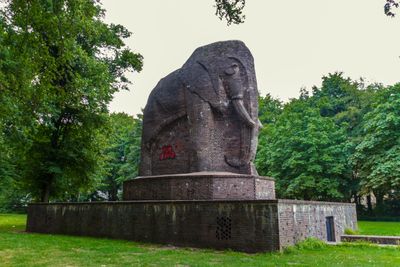
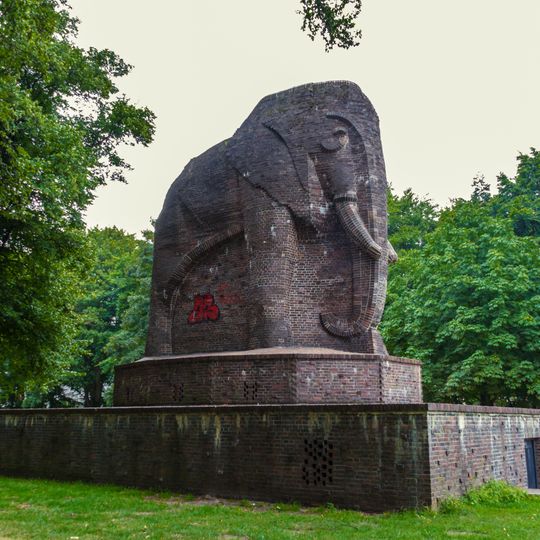
The Antikolonialdenkmal is a ten-metre-high elephant built of dark red Oldenburg clinker brick, designed by sculptor Fritz Behn and executed by architect Otto Blendermann. The figure rests on a twelve-sided pedestal above a 15 by 11.2 metre base, with red painted marks resembling "35" and "76" on its flank. A band of brickwork arcs along its side, and its trunk curves down toward the chest.
The elephant-shaped monument, designed by sculptor Fritz Behn and built by architect Otto Blendermann, was inaugurated on 6 July 1932 as the Reichskolonialehrendenkmal. It was rededicated as an anti-colonial memorial on 18 May 1990, shortly after Namibia's independence, and in 1996 President Sam Nuyoma unveiled a plaque commemorating the victims of German colonial rule.
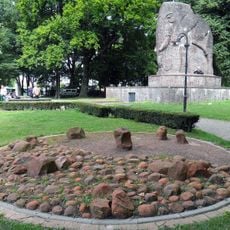
The monument's name reflects a critical stance toward Germany's colonial past. Visitors can see memorial plaques honoring those who suffered under German colonial rule in Africa.
The site is accessible by public transportation from Bremen Central Station via Gustav-Deetjen-Allee. It sits within Nelson Mandela Park, allowing visitors to spend time in a green setting for contemplation.
The crypt was not sealed: six steps at the elephant's head side led down to a bronze door, and three windows on each long side lit the vault. The memorial book with 1,490 names lay on a stone table inside; it was later moved to the Bremen State Archives when the room became a storage space.
The community of curious travelers
AroundUs brings together thousands of curated places, local tips, and hidden gems, enriched daily by 93,634 contributors worldwide.