Apostle Church, Gothic Revival church building in the Oststadt, Hanover, Germany
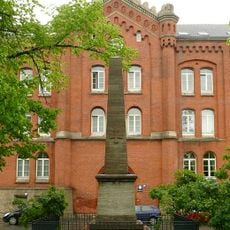
The Apostelkirche is a red brick Gothic Revival basilica on a triangular plot in Hanover's Oststadt, built 1880–1884 to plans by Conrad Wilhelm Hase and executed by Karl Börgemann. Its three-aisled, cross-shaped interior is covered by ribbed brick vaulting carried on clustered piers, with pointed arches along both sides. The west tower's brick spire was later given a copper covering; the brickwork was left without glaze or plaster, with only a few moulded stones.
Construction began in 1880 under architect Conrad Wilhelm Hase and the church opened officially on May 1, 1884. The building emerged during a period when Hanover's population expanded and new communities needed religious spaces.
The church name references the apostles, and its role as a community worship space shaped how the local Evangelical-Lutheran congregation gathered for over a century. The interior arrangement reflects traditional Protestant church design with its focus on the sermon and communal singing.
The church sits on Gretchenstraße in central Hanover and is recognizable from the street when walking through the surrounding area. The interior is arranged to accommodate worship gatherings and visitors can enter to experience the space firsthand.
The church was largely spared in the World War II air raids on Hanover; only its windows were destroyed. The five windows above the altar were made in 1957 to a design by Fritz Mannewitz, showing the Twelve Apostles below and symbols of the four Evangelists above, with three Trinity symbols in the middle window.
The community of curious travelers
AroundUs brings together thousands of curated places, local tips, and hidden gems, enriched daily by 93,309 contributors worldwide.