Burg Arnshaugk, Medieval castle ruins in Neustadt an der Orla, Germany
Burg Arnshaugk is a ruined spur castle on a westward-projecting ridge southwest of Neustadt an der Orla. Only economic buildings remain in the eastern part of the former outer bailey, dated by dendrochronology to the 16th and 17th centuries (1517, 1592, 1615). The core castle was demolished after the keep collapsed on 1 August 1700; a 1721 watercolour by J. A. Zwaad still shows a palace-like remnant with window openings.
The Lords of Lobdeburg built the spur castle, and a branch of the family took the name Otto von Lobdeburg-Arnshaugk around the middle of the 13th century. The Arnshaugk line died out in December 1289 or January 1290, when Otto and his son Hartman disappeared from the records. In 1485 the castle stayed with the Ernestine line; in 1567 it passed as security to the Albertine line and was fully ceded in 1660, forming the Amt Arnshaugk until 1815.
The name Arnshaugk appears in documents from 1252 in forms such as Marnshoge, Arnshogge and Arinsschowe. Interpretations link it either to Old High German arn (eagle) or to a personal name Arn, combined with houg (hill). The Merian engraving of 1650 labels the site "Schloß Arnsburg".
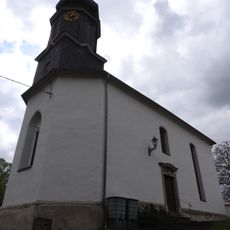
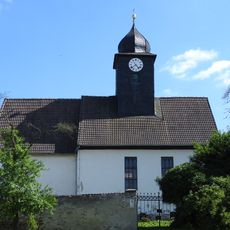
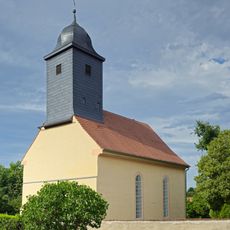
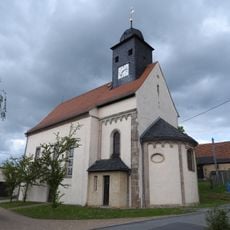
The site is accessible to visitors who can explore the ruins and the chapel building. Sturdy footwear is recommended as the ground is uneven and structures are scattered across the hillside.
The keep collapsed on 1 August 1700, as a contemporary account records, in bright sunshine. The last buildings of the core castle were then quickly demolished. A 1721 watercolour by J. A. Zwaad still shows a remnant of a palace-like building with window openings on a rise in the terrain.
The community of curious travelers
AroundUs brings together thousands of curated places, local tips, and hidden gems, enriched daily by 94,819 contributors worldwide.