Schwetzingen Palace, Palace and museum in Schwetzingen, Germany.
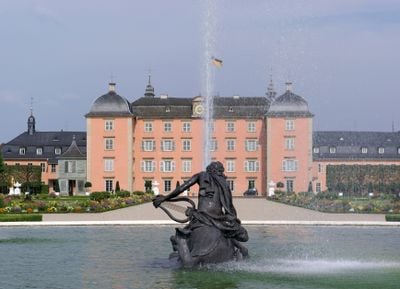
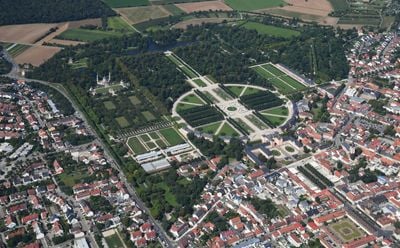
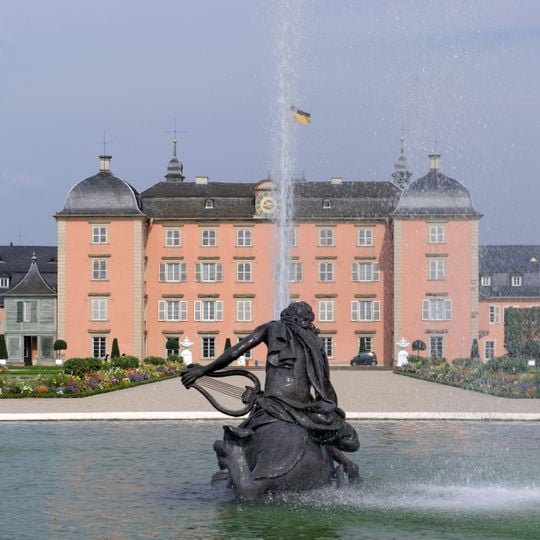
Schwetzingen Palace is a rococo residence with two symmetrical wings arranged around a central courtyard. The building sits within expansive gardens that flow across the surrounding landscape, featuring carefully designed pathways and planted areas that provide a calm setting for the architecture.
Schwetzingen Palace was first documented in 1350 as a medieval water castle. It passed to Elector Louis III in 1427, was destroyed near the end of the Thirty Years' War, and rebuilt by Charles I Louis for Marie Luise von Degenfeld. After destruction in the War of the Palatine Succession, Elector John William had it rebuilt from 1697 under Count Matteo Alberti and Johann Adam Breunig, with two wings added.
The court theatre opened on 15 June 1753 with Ignaz Holzbauer's opera Il figlio delle selve and stands in its own building, not in a palace wing. Its balustraded, gently rising tiers of boxes follow a lyre-shaped ground plan, and pillars carry basket arches. Renovated in 1936/37 and 2002/03, it is the main venue of the Schwetzingen Festival.
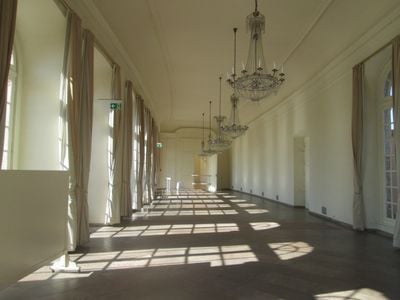
The rooms can be explored through guided tours offered regularly throughout the year. Plan extra time to walk through the gardens, as they offer plenty of space to explore at a comfortable pace.
Nicolas de Pigage bought a phaeton driven by a footman in London in 1775 so Charles Theodore could tour the park without horse dung soiling the paths; main routes were levelled and a prehistoric grave mound removed for it. The vehicle, now at Nymphenburg Palace, inspired Heidelberg student Karl Drais in developing the velocipede.
The community of curious travelers
AroundUs brings together thousands of curated places, local tips, and hidden gems, enriched daily by 93,137 contributors worldwide.