Kaufungen Abbey, Benedictine monastery in Kaufungen, Germany
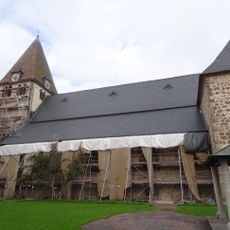
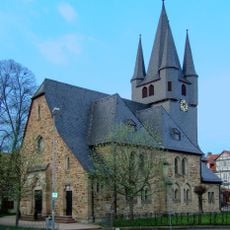
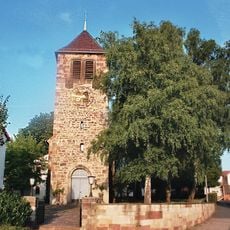
Kaufungen Abbey is a former Benedictine nunnery whose abbey church, now the Stiftskirche, was consecrated on 13 July 1025 and is considered the most significant late Ottonian structure in north Hesse. The church serves as the parish church; in its westwork the Imperial gallery (Kaiserempore) was rediscovered in 1938.
Cunigunde, wife of Emperor Henry II, vowed during a serious illness at the royal estate of Kaufungen to found a monastery; construction began in 1018 and the abbey church was consecrated on 13 July 1025. After Henry's death in 1024 she entered as a simple nun and died there on 3 March 1033. In 1089 the abbey became directly subject to the emperor, and in 1532 Landgrave Philip I gave it to the Hessian Knighthood, which still runs it as the Ritterschaftliches Stift Kaufungen.
The abbey church, now the Stiftskirche, was consecrated on 13 July 1025, the first anniversary of Henry II's death, and serves today as the parish church. It hosts regular classical music concerts. The site continues as the Ritterschaftliches Stift Kaufungen, a foundation of the Hessian Knighthood endowed in 1532 for unmarried female members of noble families.
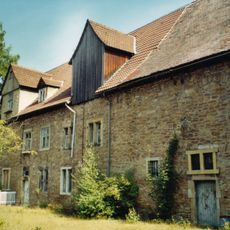
The former abbey lies in Kaufungen, east of Kassel. The Stiftskirche, dedicated in 1025, now serves as the parish church and is the main structure to visit; the surrounding convent buildings belong to the Ritterschaftliches Stift Kaufungen, which still exists today. The church hosts regular classical music concerts, so check local listings for dates before planning a visit.
In the westwork of the Stiftskirche, the imperial gallery (Kaiserempore) was rediscovered in 1938. It is a gallery reserved for the emperor, and its rediscovery showed that the church's late Ottonian layout had survived later alterations.
The community of curious travelers
AroundUs brings together thousands of curated places, local tips, and hidden gems, enriched daily by 93,841 contributors worldwide.