Beethovenpark, Urban park in Sülz, Germany
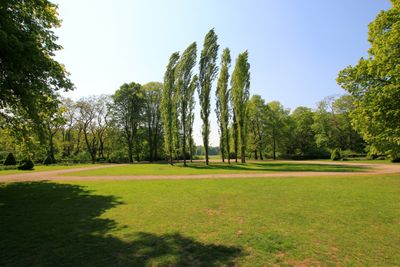
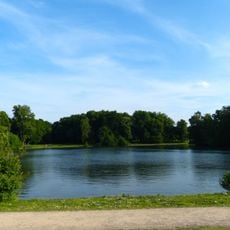
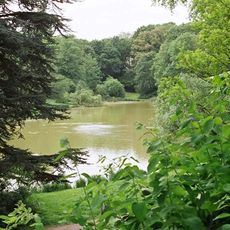
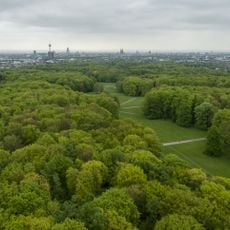
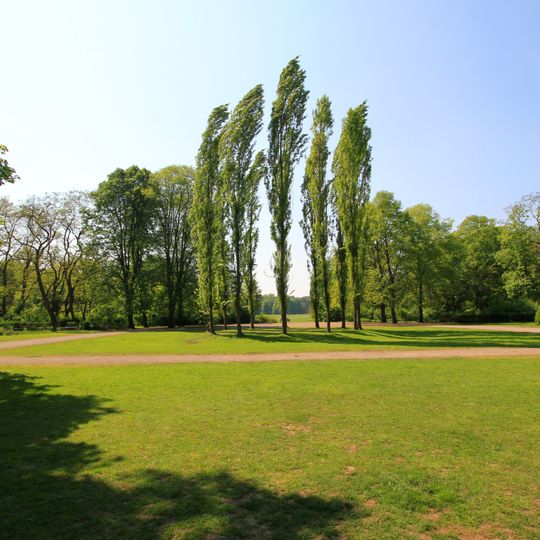
Beethovenpark is a large green space in Sülz featuring open meadows with scattered trees and forest-like sections connected throughout by unpaved paths. The layout creates natural zones that visitors can explore at their own pace without structured routes.
The park was created in 1927 on a former gravel extraction site and later used as a dumping ground for debris from buildings destroyed during World War II. This transformation from industrial extraction to public recreation reveals how the city managed post-war recovery through landscape restoration.
The park takes its name from composer Ludwig van Beethoven, reflecting local appreciation for the musician. A formal garden with symmetrically arranged trees and shrubs surrounds a circle of poplars, creating a space where visitors can pause and reflect.
Two playgrounds at the main entrance on Neuenhöfer Allee offer equipment and water activities with plenty of tree shade for hot days. The open layout and unpaved paths make the park accessible for casual walks at any time of day without feeling crowded.
The Kahlenberg on the eastern side is a long ridge built from wartime debris with a covered observation platform locals call the Mushroom because of its distinctive shape. This unexpected elevation offers a raised viewpoint across the entire landscape.
The community of curious travelers
AroundUs brings together thousands of curated places, local tips, and hidden gems, enriched daily by 91,981 contributors worldwide.