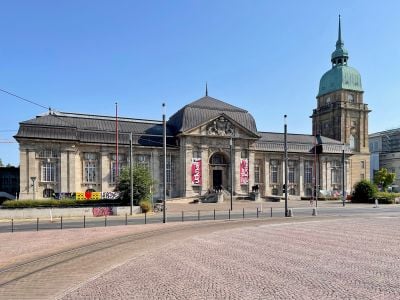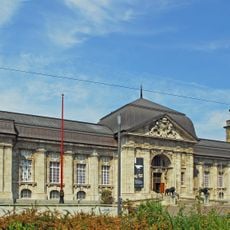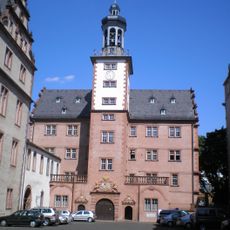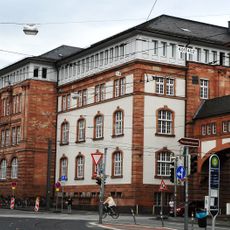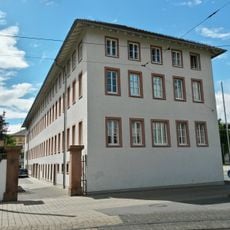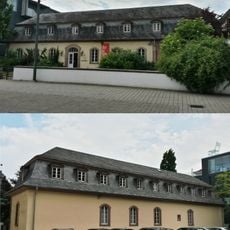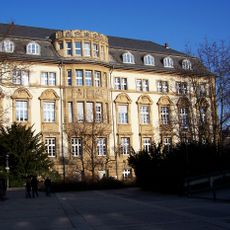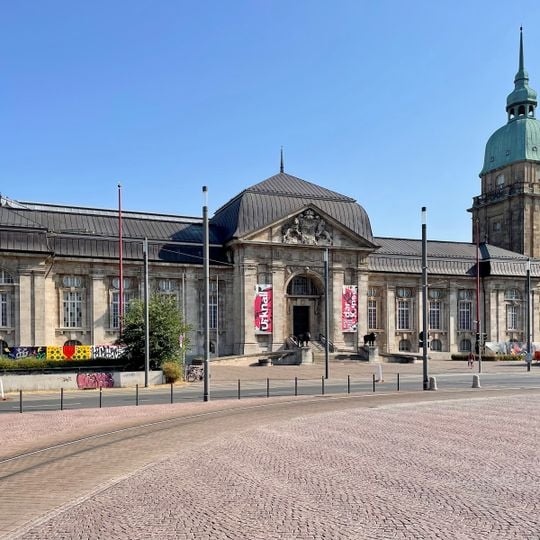
Block Beuys, Installation artwork at Hessisches Landesmuseum Darmstadt, Germany.
Block Beuys is a seven-room installation at the Hessisches Landesmuseum Darmstadt, assembled by Joseph Beuys in 1970 and holding about 310 works from 1949 to 1972. It includes sculptures, works on paper, felt objects and 23 vitrines with relics of actions, among them the central vitrine "Auschwitz Demonstration" (1956–1964).
The collection was established in 1970 in Darmstadt based on works that Karl Stroher had acquired directly from Beuys in 1967. This founding marked the beginning of one of the largest and most important assemblies of Beuys works worldwide.
The collection is named after artist Joseph Beuys and displays his works in a space that reflects his artistic thinking. Visitors can see how Beuys transformed everyday materials like fat, felt, and wood into artistic objects and installations.
The spaces are organized linearly so visitors can follow a clear route and discover the works in logical order. The museum provides clear signage and information panels at most pieces.
Several large-scale spatial installations like Trans-Siberian Railway and FOND II break up the usual flow and create immersive experiences. These monumental works invite visitors to physically move through the space and experience a different kind of art perception.
The community of curious travelers
AroundUs brings together thousands of curated places, local tips, and hidden gems, enriched daily by 94,372 contributors worldwide.