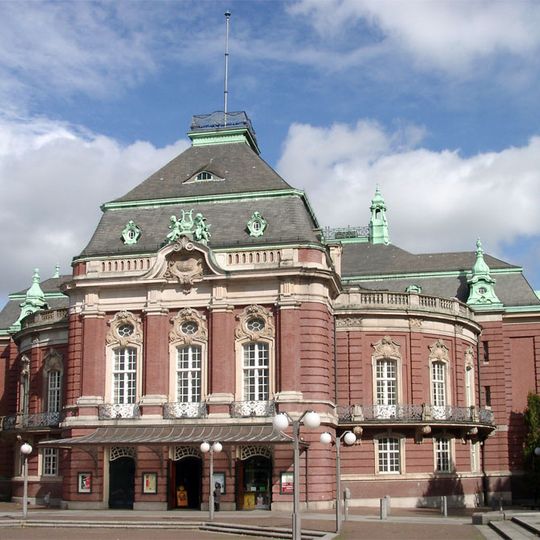
Laeiszhalle, Concert hall in Neustadt, Hamburg, Germany
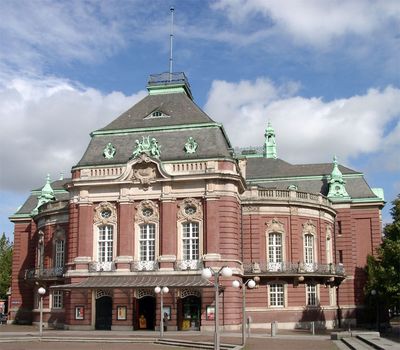
The Laeiszhalle is a concert hall in the Neustadt district of Hamburg, designed with decorative baroque revival facades and housing two main auditoriums under one roof. The building displays curved balconies, stucco details, and a spacious entrance foyer that connects visitors to the performance rooms inside.
Hamburg shipowner Carl Laeisz left 1.2 million marks to the city for a worthy place for serious music, and his widow Sophie raised the sum to 2 million. Architects Martin Haller and Emil Meerwein built the Musikhalle from 1904 to 1908 on a city plot on the Wallring, and it opened on 4 June 1908 as Germany's largest and most modern concert hall. It survived the Second World War intact; the British occupiers then used it briefly as a studio for their radio station BFN.
The hall is named after the shipping company F. Laeisz, whose founder Carl Laeisz left 1.2 million marks to the city for a worthy place for noble and serious music; his widow Sophie raised the sum to 2 million. Since the Elbphilharmonie opened, the Symphoniker Hamburg have been the resident orchestra. In the Brahms-Foyer, Max Klinger's 1909 monument to Johannes Brahms stands among busts of composers and musicians.
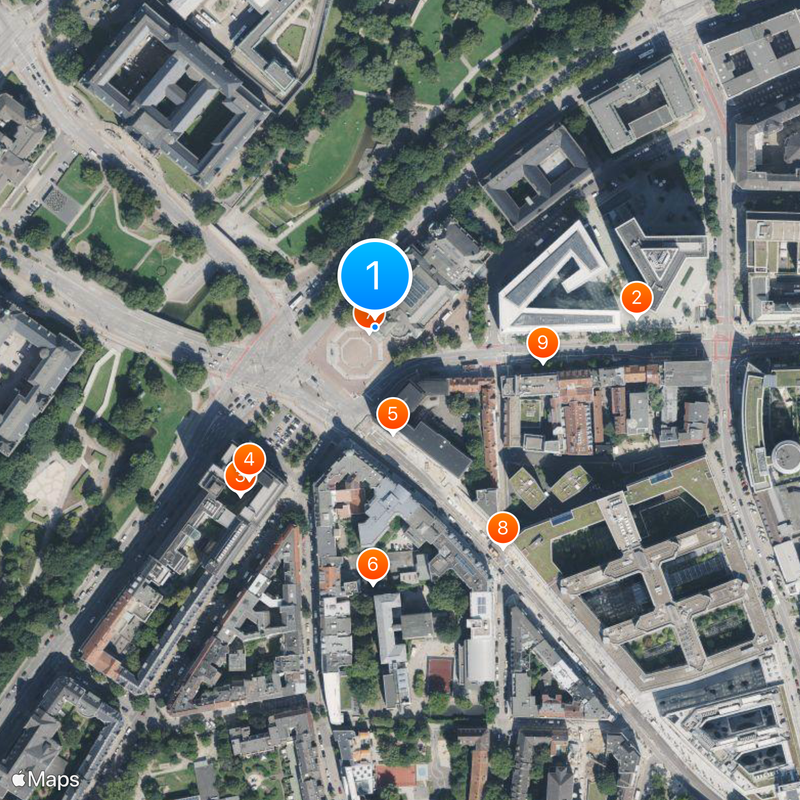
The building sits directly at Johannes-Brahms-Platz in a central location, making it easy to reach on foot or by public transport. Seating offers good sightlines from most positions, and doors typically open about half an hour before performances begin.
The Great Hall seats 2,025 and the Small Hall 640; a third space, Studio E, holds 150, and the Brahms Foyer seats 80 at tables. The Walcker organ of 1908 had 73 stops and a console that could be lowered into the stage; its pipes went to a Wuppertal theatre in 1950.
The community of curious travelers
AroundUs brings together thousands of curated places, local tips, and hidden gems, enriched daily by 93,236 contributors worldwide.