Rottenbuch Abbey, Augustinian monastery in Rottenbuch, Germany.
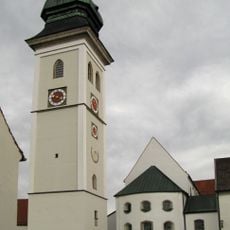
Rottenbuch Abbey is a former Augustinian monastery in the Bavarian village of Rottenbuch. Its church, dedicated to the Birth of Mary, was built from 1085 in the Romanesque style, with a crossing transept and a free-standing tower, a layout unusual for a Bavarian church. In the 18th century the interior was redecorated in High Baroque and Rococo style by painter Matthäus Günther and stuccoist Josef Schmuzer.
The abbey was founded in 1073 by Bavarian Duke Welf I and quickly grew into one of the most influential religious centers in the region. Over the following centuries the original Romanesque church was gradually rebuilt and gained its current Rococo decoration during the 18th century.
The former abbey church, dedicated to the Nativity of Mary, has served as Rottenbuch's parish church since 1803. Its interior was redecorated in the 18th century by painter Matthäus Günther and stuccoist Josef Schmuzer. The Rottenbuch canons also served the pilgrimage church of Mariä Himmelfahrt on the Hohen Peißenberg.
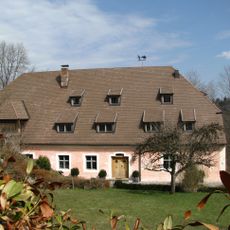
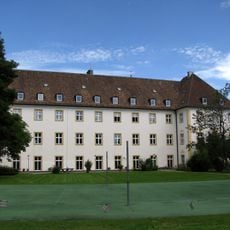
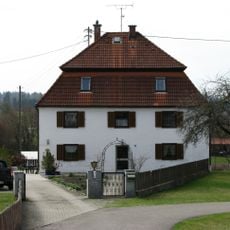
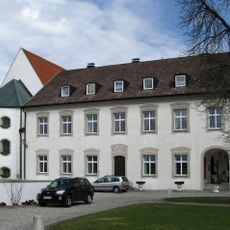
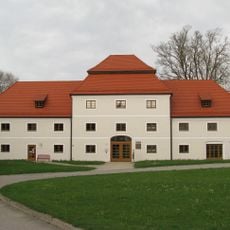
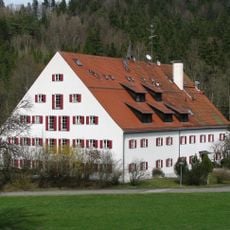
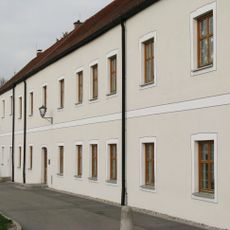
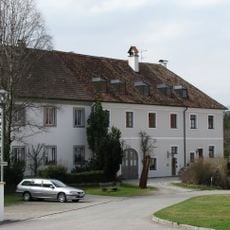
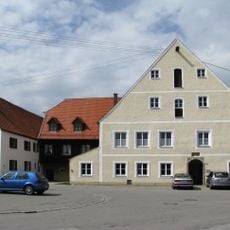
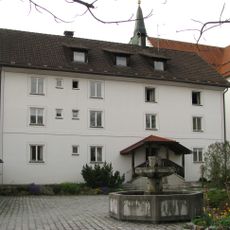
The former abbey church, now the parish church of Rottenbuch, stands about twelve kilometres northeast of the Wieskirche above the Ammertal valley. The surviving monastic buildings now house the Rathaus, the Grundschule and the Dorfmuseum, and are used by the Regens-Wagner-Stiftung; some are private flats. The village is small, so the complex is easy to reach on foot.
After the 1803 secularization, the monastic buildings were torn down and the manuscripts from the library were pulped to make paper, yet the church survived because it continued to serve as a parish church. This is why the church stands today while almost nothing remains of the original monastery complex around it.
The community of curious travelers
AroundUs brings together thousands of curated places, local tips, and hidden gems, enriched daily by 93,181 contributors worldwide.