Rudolph-Wilde-Park, Park and cultural heritage monument in Schöneberg, Germany.
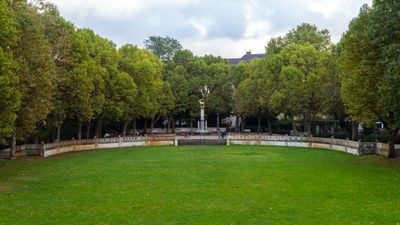
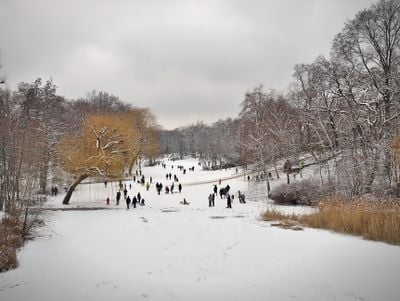
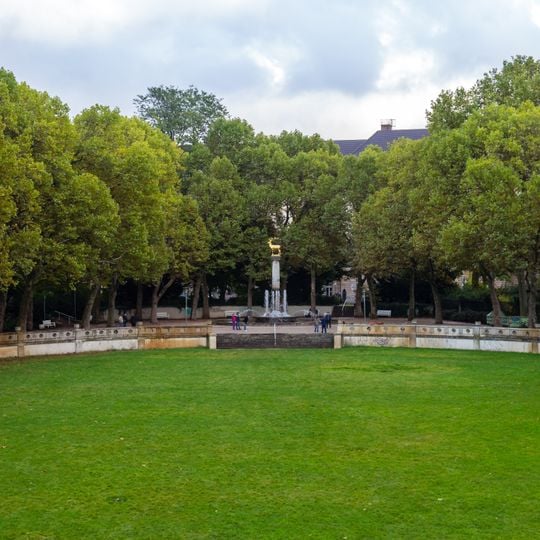
Rudolph-Wilde-Park is a park and cultural heritage site in Schöneberg that stretches through a narrow corridor between the districts of Schöneberg and Wilmersdorf, featuring green areas and water elements throughout. The grounds contain different zones for various activities and connect two city districts together.
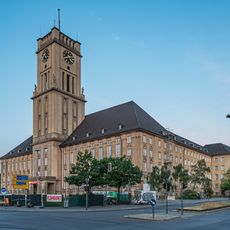
The park was laid out as Stadtpark Schöneberg on the marshy bed of a glacial drainage channel; the Schwarze Graben sewage ditch running through it was filled in during 1887. It is named after Rudolph Wilde, the first mayor, who initiated the town hall built between 1911 and 1914. The U4 line split the grounds into an eastern and a western section, and the station roof became the Carl Zuckmayer Bridge. Subsidence of about 60 centimetres forced renovation of bridge and station between 1995 and 2005.
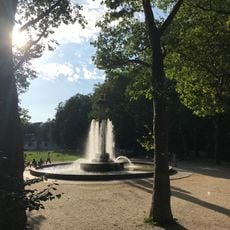
The park is named after Rudolph Wilde, the first mayor of Schöneberg, who pushed for the town hall built between 1911 and 1914. In the eastern section, the Hirschbrunnen fountain and the Milchhäuschen stand in grounds laid out like a spa park. The Carl-Zuckmayer-Brücke honours the writer who lived at its southern end and worked with Bertolt Brecht at the Deutsches Theater in 1924.
The grounds are open 24 hours daily and offer various areas for jogging, sports activities, and resting on numerous benches. Visitors should expect uneven pathways and higher foot traffic during peak hours.
The Hirschbrunnen fountain in the eastern section is topped by a golden horse, not an elk. During the 1995–2005 renovation, the ground had subsided about 60 centimetres, and the fountain and the nearby Milchhäuschen milk house were in danger of sinking.
The community of curious travelers
AroundUs brings together thousands of curated places, local tips, and hidden gems, enriched daily by 94,392 contributors worldwide.