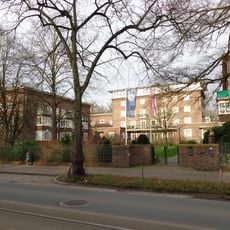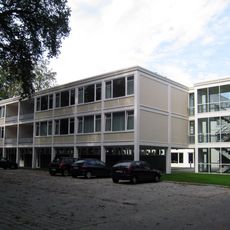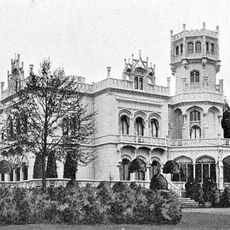
Borgward-Haus, Protected cultural heritage villa in Horn-Lehe, Germany.
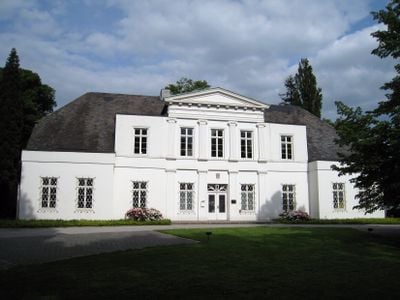
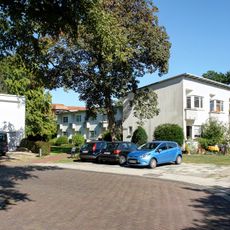
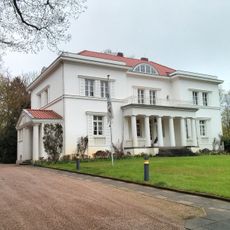
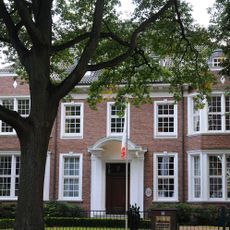
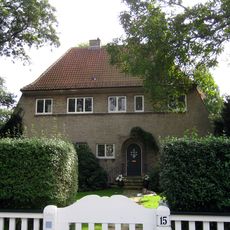
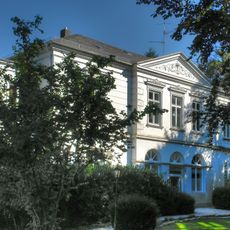
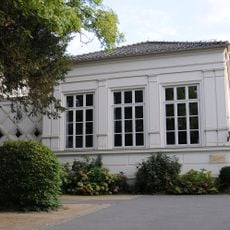
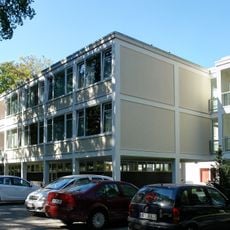
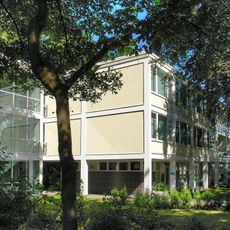
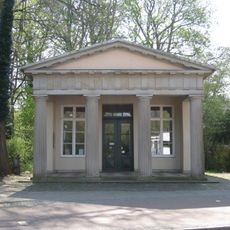
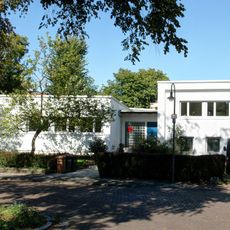
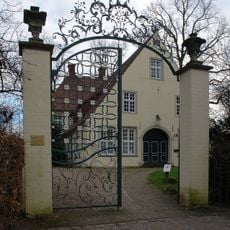
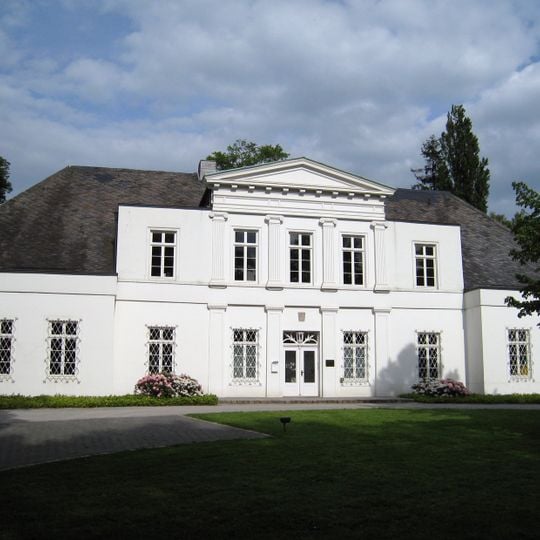
Borgward-Haus is a protected villa in the Horn-Lehe district of Bremen, recognizable by its classical facade and a stone coat of arms carved above the main entrance. The building was converted into office space in 2000, with the original structure kept intact and a new residential building added nearby in a matching style.
The house was built in 1750 by Hieronymus Klugkist, who later became mayor of Bremen, and originally formed the center of a large estate with farmland stretching far beyond the current property. Over the 19th and 20th centuries, urban growth reshaped the surroundings, and the property eventually passed to the Borgward family of industrialists.
The villa stands along Horner Heerstraße, one of the old roads where wealthy Bremen merchants built their summer residences during the 18th and 19th centuries. The stone coat of arms above the main entrance was a visible mark of social rank, meant to be seen by anyone passing on foot or by carriage.
The villa sits along Horner Heerstraße and is easy to reach on foot or by bicycle. The exterior can be seen from the public road at any time, but the interior is not open to visitors since it functions as office space.
Carl F. W. Borgward, the industrialist whose name the house now carries, was known for his cars rather than for any connection to the building's origins, as he simply lived here. During a birthday celebration held at the villa, Mayor Wilhelm Kaisen presented Borgward with a federal honor, turning the private residence into the backdrop of a notable civic event.
The community of curious travelers
AroundUs brings together thousands of curated places, local tips, and hidden gems, enriched daily by 91,289 contributors worldwide.