Bornheimer Hang, Cultural heritage park in Bornheim district, Frankfurt, Germany.
Bornheimer Hang is a park on a 20–30 metre slope between Bornheim, Seckbach and the Ostend, formed as the cut bank of an abandoned northern loop of the Main. The 1,500-metre-long park, laid out in its present form in the late 1920s by garden director Max Bromme and Ulrich Wolf, has a central east–west staircase and two curved paths branching left and right towards the west. Small allotment gardens lie within and below the slope.
The park area was established in the late 1920s as part of modern urban planning efforts alongside residential complexes built between 1926 and 1930. These structures utilized industrial prefabrication methods, reflecting the progressive building techniques of that era.
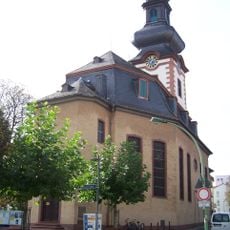
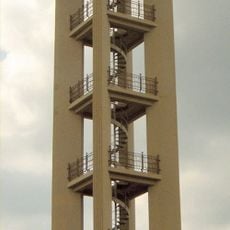
The Heilig-Kreuz-Kirche, built by Martin Weber and completed in 1929 at the eastern end of Wittelsbacherallee, is not inside the park but crowns the slope above it; the architect called it the Hangkrone. From July 2007 to December 2025 it housed the Diocese of Limburg's meditation centre, which closed on 20 December 2025.
The park is easily accessible by public transportation, particularly via U-Bahn line C and nearby bus routes serving the district. The developed pathways and staircases allow comfortable movement through the grounds, though the slopes require some physical effort when climbing.
The area once served as a source of harvested ice, with winter ice cut from the Main River and stored in cellars for food preservation. This practice provided refrigeration long before modern cooling systems became available.
The community of curious travelers
AroundUs brings together thousands of curated places, local tips, and hidden gems, enriched daily by 93,743 contributors worldwide.