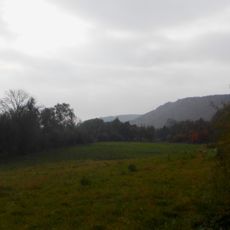
Brunsburg, spur castle in Höxter, Germany
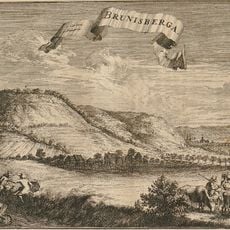
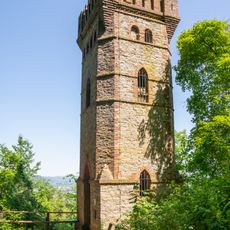
Brunsburg is a spur castle on the Brunsberg, a hill jutting west into the Weser valley near Höxter-Godelheim. Its high medieval core covers 1.9 hectares, enclosed on three sides by a 16–24 m wide rock-cut ditch and a 1.40 m thick ring wall of mortared limestone. Inside, rubble mounds and hollows mark a 48 × 23 m hall, three wells or cisterns, and the bergfried beneath a debris cone.
The Frankish Royal Annals record that Charlemagne marched to the Brunsberg in 775 and defeated the Saxons there, though no fortification is mentioned. Research assumes a Saxon rampart existed on the hill, with the stone-earth wall on the southwest and west edges dated to the Carolingian period. The first documented castle was built by Abbot Widukind of Corvey (1189–1203) to protect the monastery; he issued a charter there in 1198. A 15th-century tradition holds that the castle was destroyed in 1294 by the Bishop of Paderborn and the Count of Schwalenberg, and a 14th-century lime kiln found in excavations supports an end around that time.
The name Brunsburg comes from old German words meaning castle and hill. Today visitors can walk past the walls and imagine how monks, knights, and soldiers once lived and worked here.
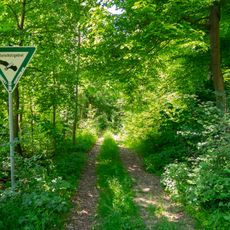
The hill is steep on three sides and offers natural protection along with wide views of the surrounding landscape. Wear sturdy shoes and expect uneven paths and steep trails when exploring the site.
About 200 metres north of the castle, a launch ramp on the Brunsberg serves paraglider pilots, not gliders; the slope's thermals make it a regional take-off point.
The community of curious travelers
AroundUs brings together thousands of curated places, local tips, and hidden gems, enriched daily by 93,172 contributors worldwide.