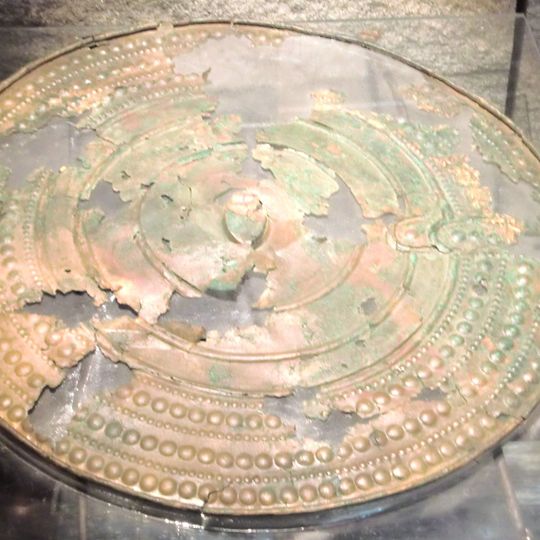
Bronzeschilde von Herzsprung, Bronze Age ceremonial shield in Herzsprung, Germany
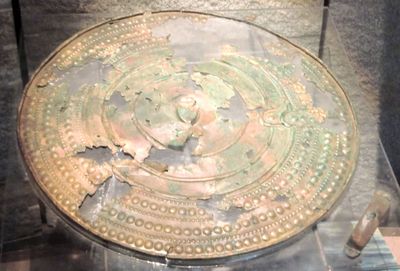
The Bronzeschilde von Herzsprung are two thin bronze sheets discovered in Brandenburg that display concentric patterns and radial lines across their surfaces. Both objects measure roughly 70 centimeters in diameter and show no signs of practical use or damage.
Local farmers uncovered these objects in 1844, buried beneath oak wood blocks in what was then marshland two meters underground. The discovery provides direct evidence of Bronze Age metalworking capabilities in the region.
These objects tell us that Bronze Age peoples valued decorative metalwork for special occasions, showing they had the skills and resources to create objects purely for ceremony rather than daily use.
You can view these objects at the State Museum of Prehistory in Halle, where they are displayed for public access and research. The museum setting allows you to examine the details of the bronze work closely.
The surface of these bronze sheets features a specific pattern of raised bumps that researchers believe may connect to ancient calendar systems. This suggests the objects carried meaning beyond pure decoration, possibly marking time or celestial events.
The community of curious travelers
AroundUs brings together thousands of curated places, local tips, and hidden gems, enriched daily by 92,526 contributors worldwide.