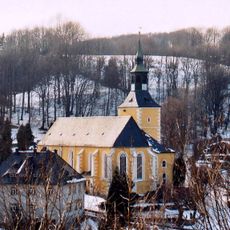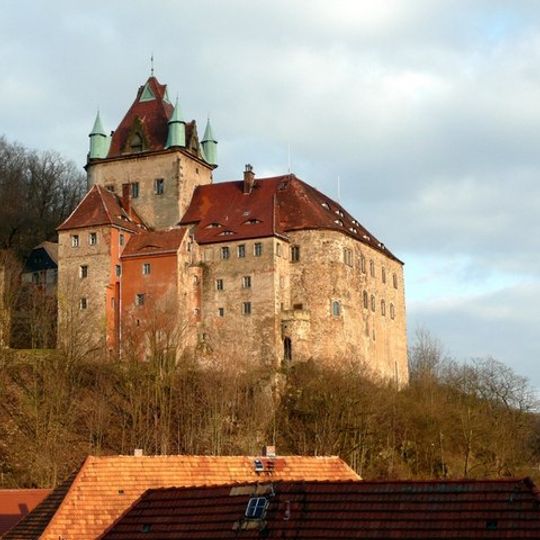
Schloss Kuckuckstein, Medieval château in Liebstadt, Germany.
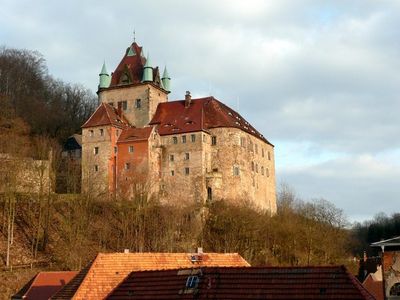
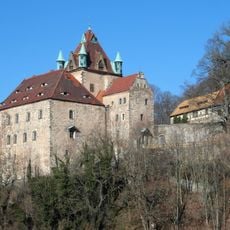
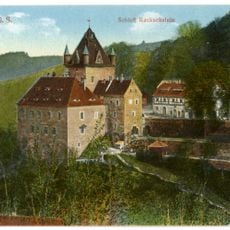
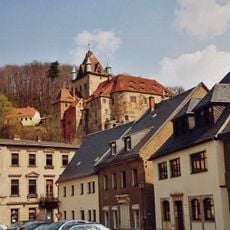
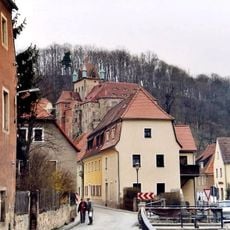
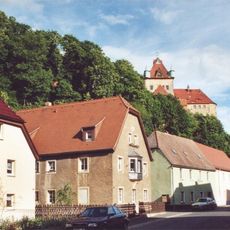
Schloss Kuckuckstein is a castle in Liebstadt, Germany, set on a rocky hill above the Seidewitz river valley at the edge between the Elbe valley and the Eastern Ore Mountains. Its stone structures sit clearly visible on the elevated rock, forming a compact ensemble above the surrounding land.
The castle was first documented on 4 September 1410, when Landgrave Frederick the Younger enfeoffed the brothers Günther and Heinrich von Bünau after the Dohna Feud (1385–1402), during which the earlier castle was destroyed. Rebuilding on the old foundations began in 1453 in the style of Arnold von Westfalen, as an inscription on the palace's outer wall records. Imperial Hatzfeld mercenaries stormed and plundered it in 1643, and under the von Birkholz family, documented until 1741, it was renewed in Rococo style.
The name Kuckuckstein appears only in 1791; until the 16th century the bird was called Gauch in German, so the castle would have been Gauchstein. The cuckoo was a medieval heraldic animal standing for vigilance. From 1800 a Masonic lodge met here, its room furnished in early Romantic style, and the library kept Masonic letters. Novalis stayed in 1798, and Carl Adolf von Carlowitz sponsored Heinrich von Kleist's journal Phöbus.
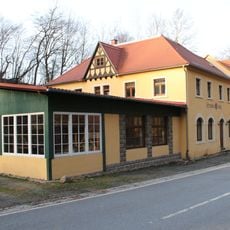
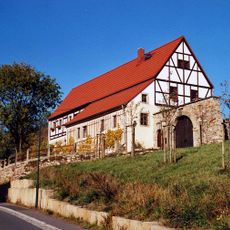
The castle stands on a gneiss rock about 30 m above Liebstadt's market square. You reach it by the castle stairway or the driveway up the slope, crossing a drawbridge into the first small courtyard. Below in the valley lie the former manor and the castle nursery; above are remnants of an English-style landscape park.
Napoleon I stayed at the castle on September 9, 1813, while he was in the region following troop movements. This brief stop makes the castle a direct witness to the Napoleonic campaigns in Saxony.
The community of curious travelers
AroundUs brings together thousands of curated places, local tips, and hidden gems, enriched daily by 94,368 contributors worldwide.