Eulenbachbrücke, Railway viaduct in Velbert-Mitte, Germany
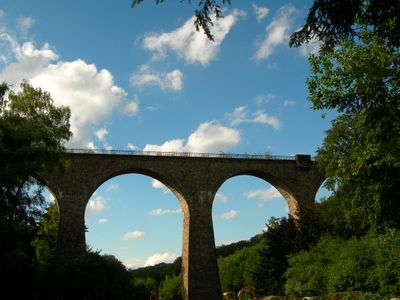
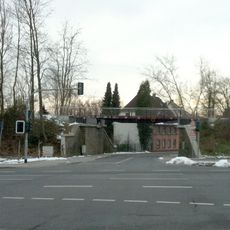
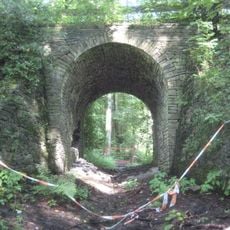
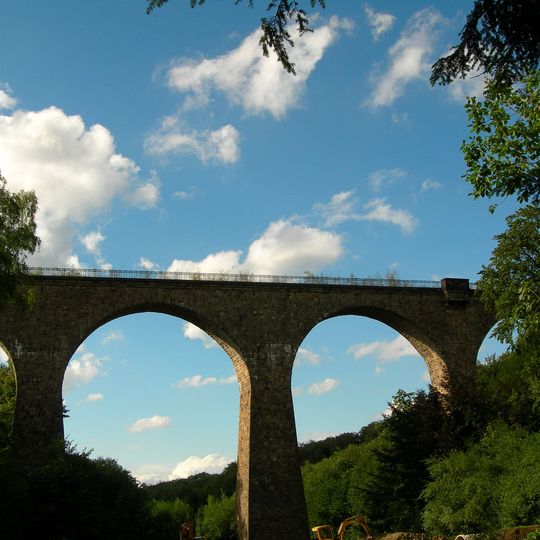
The Eulenbachbrücke is a railway viaduct with seven stone-clad arches spanning 168 meters across the valley and rising 40 meters above ground. The structure displays substantial stonework with clearly visible masonry that once carried rail traffic above the landscape below.
Construction began in 1914 and continued through World War I, with Russian prisoners of war and local factory workers laboring on the project until its completion in 1915. The bridge emerged during the region's period of industrial expansion and reflected the engineering ambitions of that era.
The structure carries a local name stemming from a farmstead that once stood nearby until the 1960s, showing how landscape history becomes embedded in everyday speech. This connection reveals how communities preserve memory through informal naming.
Today the former railway viaduct functions as part of a cycling path where visitors can experience the structure up close. Access is free and open, with the pathway allowing full appreciation of the massive arches and the bridge's height above the valley.
During Prussian administration of the Rhineland, this engineering feat ranked among the tallest stone-clad bridge structures built according to standards of that period. This position in construction history often goes unnoticed by visitors, despite reflecting the technical achievement of the era.
The community of curious travelers
AroundUs brings together thousands of curated places, local tips, and hidden gems, enriched daily by 91,977 contributors worldwide.