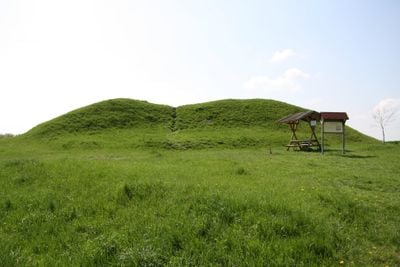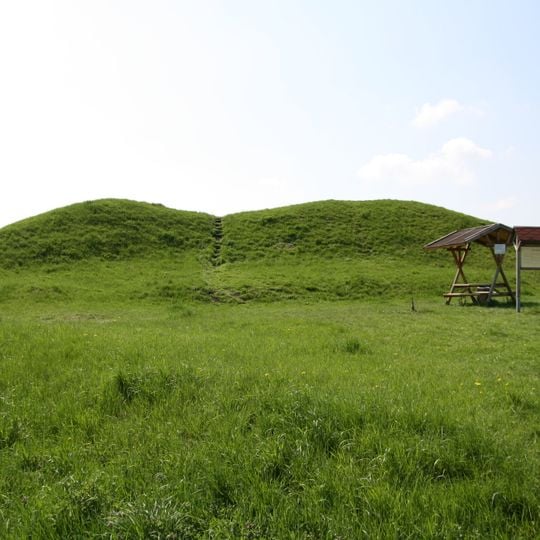
Leubingen tumulus, Bronze Age burial mound in Sömmerda, Germany.
The Leubingen tumulus is a Bronze Age earthen mound standing approximately 7 meters tall and contains a burial chamber measuring 3.90 by 2.10 meters, built with wooden structural elements. Artifacts recovered from this grave, including tools and decorated ceramic vessels, are now housed in the State Museum of Prehistory in Halle.
The burial mound was built around 1942 BC and was scientifically excavated in 1877 by Friedrich Klopfleisch. This early discovery became one of the most important Bronze Age investigations in Central Europe.
The mound held deep meaning for a medieval Slavic community who chose to bury their dead around this ancient earthwork. This layering of two different burial traditions at the same location shows how a place can remain significant to different peoples across time.
The mound is easily accessible and sits in open countryside, making it visible from a distance. Visitors can explore the site freely, and its proximity to the nearby museum provides additional context for understanding the excavated finds.
The individual buried within was interred with lavish grave goods, including gold jewelry and bronze implements, indicating exceptional social standing. Such valuable deposits are rare and make this mound a remarkable window into Bronze Age social hierarchy.
The community of curious travelers
AroundUs brings together thousands of curated places, local tips, and hidden gems, enriched daily by 92,392 contributors worldwide.