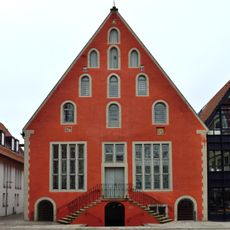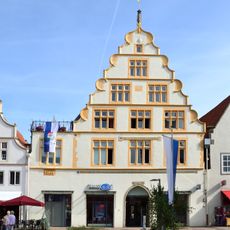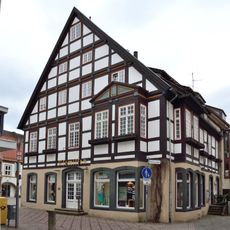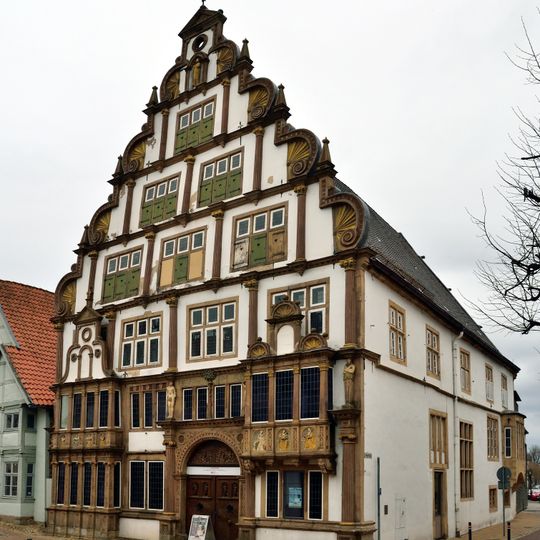
Hexenbürgermeisterhaus, Renaissance townhouse museum in Lemgo, Germany
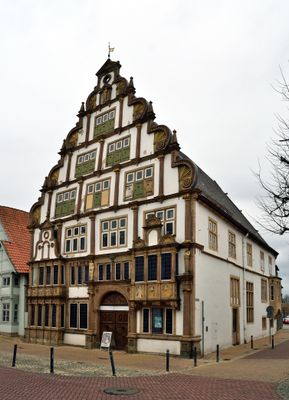
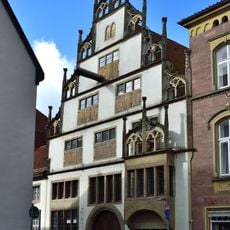
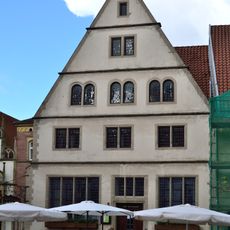
The Hexenbürgermeisterhaus is a Renaissance merchant's residence built in the 16th century with a carefully crafted stone facade. The structure displays characteristic ornamental details including decorative half-columns, cornices, and a corbel-supported bay window on its right side.
Construction of the building took place between 1568 and 1571 under the ownership of merchant Hermann Kruwel and his wife Lisbeth Fürstenau. It gained its current name from Mayor Cothmann, who led the witch persecutions that affected Lemgo during that era.
The name comes from the mayor who oversaw the witch trials that shaped the town's history in the 1600s. Visitors today see how this dark period defined the building's role and meaning in Lemgo.
The museum operates throughout the week with extended hours, giving visitors time to walk through the rooms at a comfortable pace. Guided tours are regularly scheduled to help explain the exhibits and the building's connections to local history.
The interior preserves the original layout of a merchant's house, with a tall entrance hall and a formal room featuring a fireplace. Beneath this room lies a shallow basement that shows how wealthy families organized their living spaces.
The community of curious travelers
AroundUs brings together thousands of curated places, local tips, and hidden gems, enriched daily by 91,266 contributors worldwide.