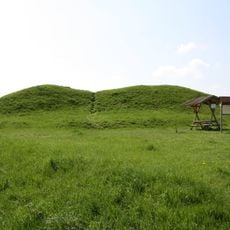
Leubingen tumulus, Bronze Age burial mound in Sömmerda, Germany.
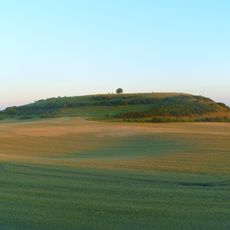
The Leubingen tumulus is a Bronze Age burial mound in Sömmerda that rises as a substantial earthwork with a central stone core. A circular ditch surrounds the entire structure and marks its outer boundary.
The structure dates from the Bronze Age and was originally the burial place of a high-ranking individual of that period. Scientific examination began in 1877 and significantly advanced understanding of ancient burial practices from this era.
The burial chamber held valuable gold and bronze objects, weapons, and ornaments that reveal the high social rank of its Bronze Age owner. Such rich grave goods show how wealthy and powerful this person was in their time.
The archaeological finds from this burial site are displayed in a permanent exhibition at the Halle State Museum of Prehistory. Visiting the museum helps you understand more about the recovered objects and what they reveal about this ancient people.
Building the mound required moving about 3600 cubic meters of earth and around 210 cubic meters of stone, an enormous feat for prehistoric people. These figures show how organized and capable this ancient society was.
The community of curious travelers
AroundUs brings together thousands of curated places, local tips, and hidden gems, enriched daily by 92,550 contributors worldwide.