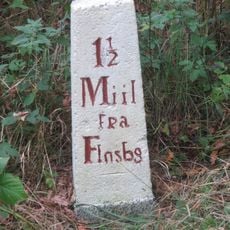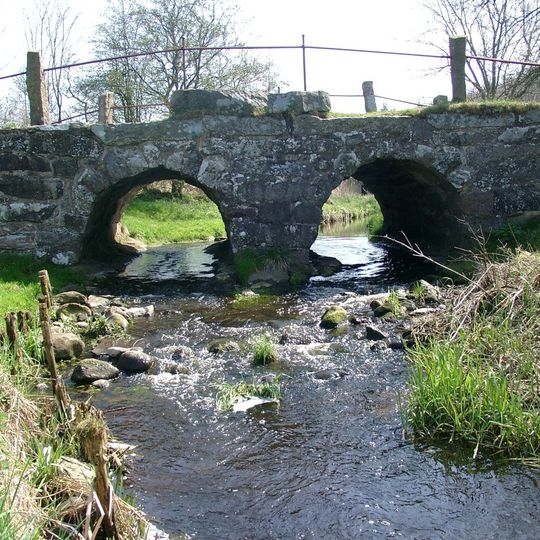
Gejlaa Bridge, historic granite bridge on the danish Ox Road
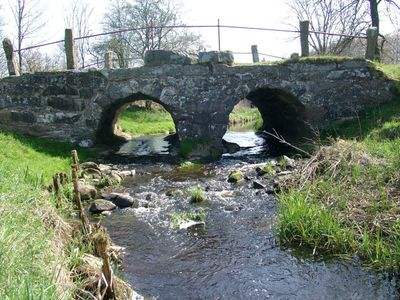
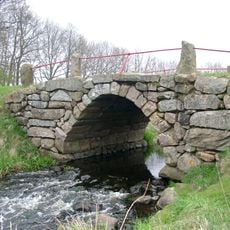
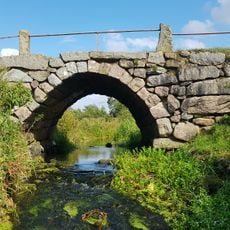
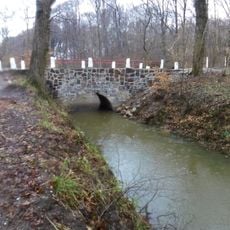
Gejlaa Bridge is a granite stone structure in Aabenraa Municipality featuring two rounded arches spanning a small river. The stones are carefully fitted together without mortar, demonstrating the precise craftsmanship of builders from the early 1800s.
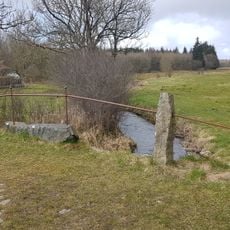
Completed in 1818 by Thomas Fries from Flensburg, the bridge replaced an earlier ford crossing at the same location. It sits along Hærvejen, one of Denmark's oldest roads, which served for centuries as a trade route for cattle and travelers.
The bridge served as a vital crossing point on an ancient trade route where cattle drivers moved livestock through the region for centuries. The structure itself reflects the skill and practicality of local builders who shaped granite to create something that connected communities.
The site is easily accessible on foot with parking available along an old stone wall, making it a good starting point for walks through nearby forests and heathland. The area is particularly pleasant in autumn when wild berries like raspberries, lingonberries, and blueberries grow in the surrounding landscape.
The builder Thomas Fries from Flensburg carved his name and the year 1818 into a stone on the railing, a rare personal signature from a craftsman of that era. This inscription allows visitors today to read directly who built the bridge and exactly when the work was completed.
The community of curious travelers
AroundUs brings together thousands of curated places, local tips, and hidden gems, enriched daily by 92,353 contributors worldwide.