Suez Canal, Ship canal in Isthmus of Suez, Egypt.
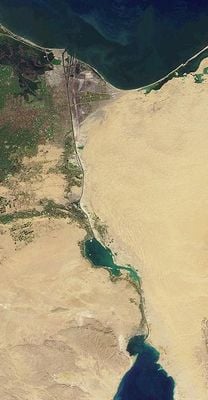
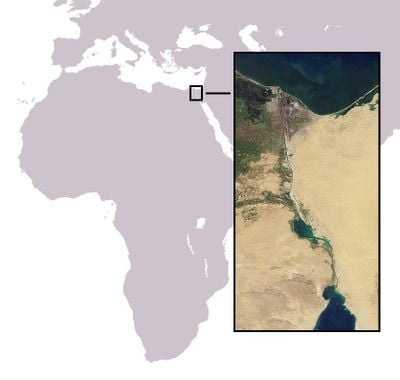
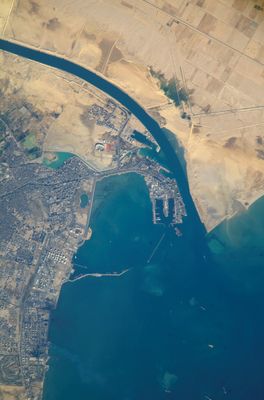
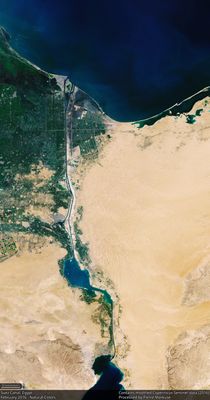
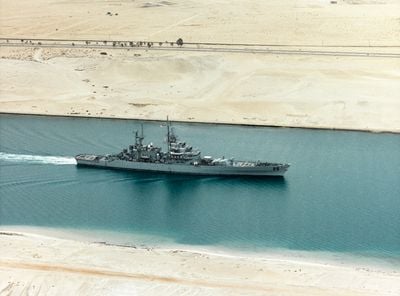
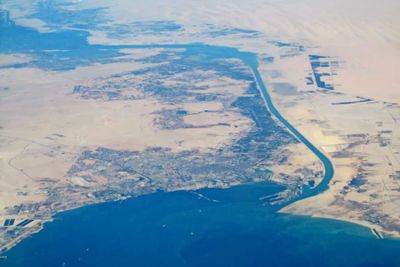
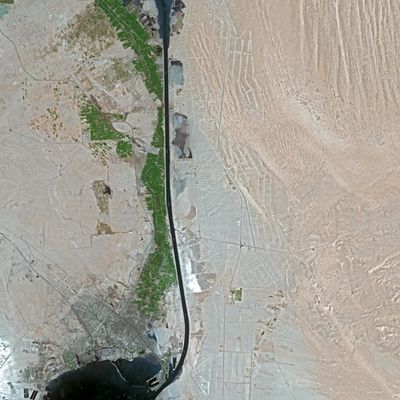
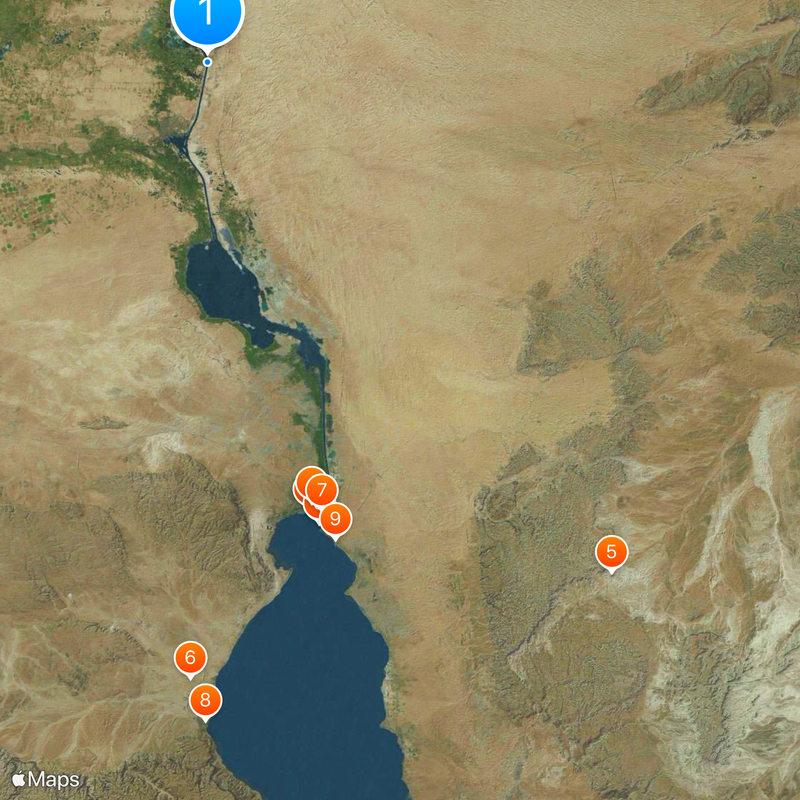
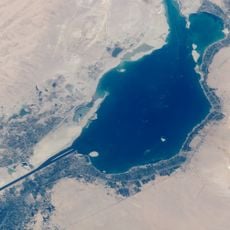
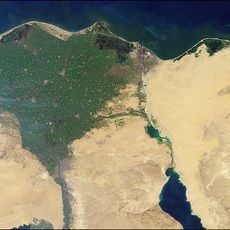
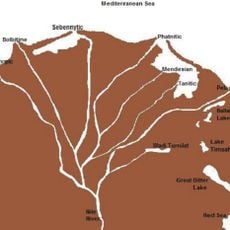
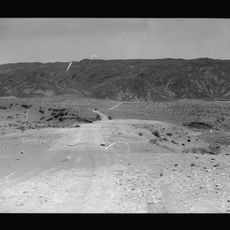
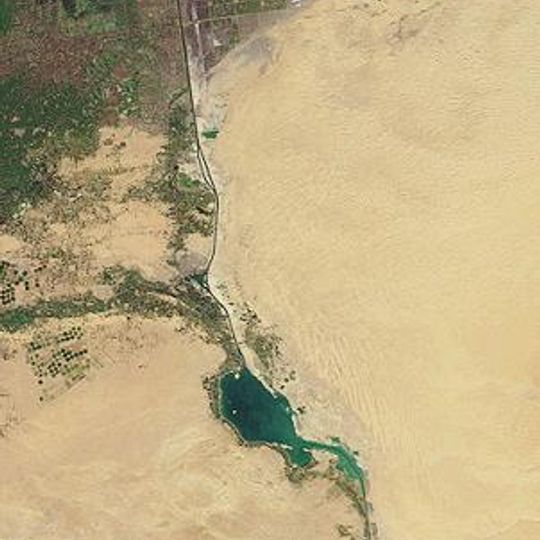
The Suez Canal is a waterway in Egypt linking the Mediterranean Sea to the Red Sea across 193 kilometers (120 miles) of desert through the isthmus. The passage operates without locks since both seas sit at the same level, and the channel reaches depths of around 24 meters (79 feet) at its deepest points.
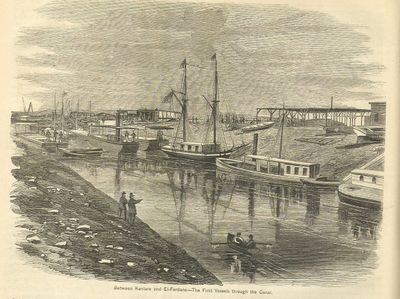
French diplomat Ferdinand de Lesseps began construction of the waterway in 1859, opening it in November 1869 after ten years of work. Several expansions over the following decades allowed increasingly larger cargo vessels to pass and reshaped global shipping patterns fundamentally.
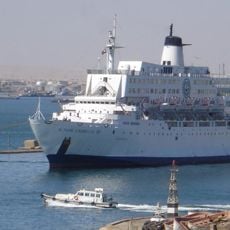
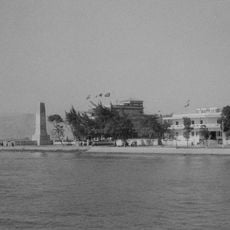
Along the route, sailors from every continent meet daily while transporting goods through Egyptian territory. Ports along the way have grown into hubs where maritime traditions from three continents overlap and crews pause briefly during transit.
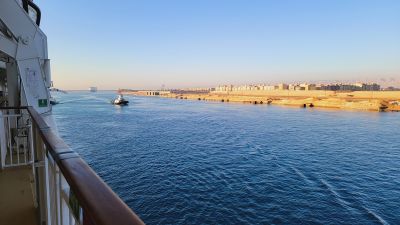
Crossing here shortens the sea journey between Europe and Asia by 7,000 kilometers (4,350 miles) compared to sailing around Africa via the Cape of Good Hope. Those wishing to watch the route can find accessible points along the banks where passing vessels come into view.
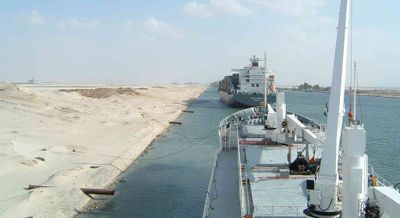
More than 50 cargo ships pass through daily in both directions, moving around twelve percent of global trade across this passage. During periods of high demand, long queues sometimes form at both ends, leading to delays that can stretch over several days.
The community of curious travelers
AroundUs brings together thousands of curated places, local tips, and hidden gems, enriched daily by 90,738 contributors worldwide.