The Great Sphinx, Ancient limestone monument in Giza, Egypt.
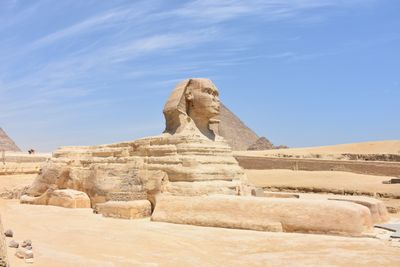
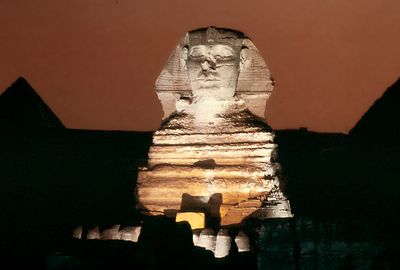
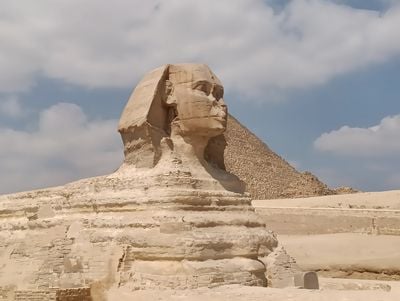
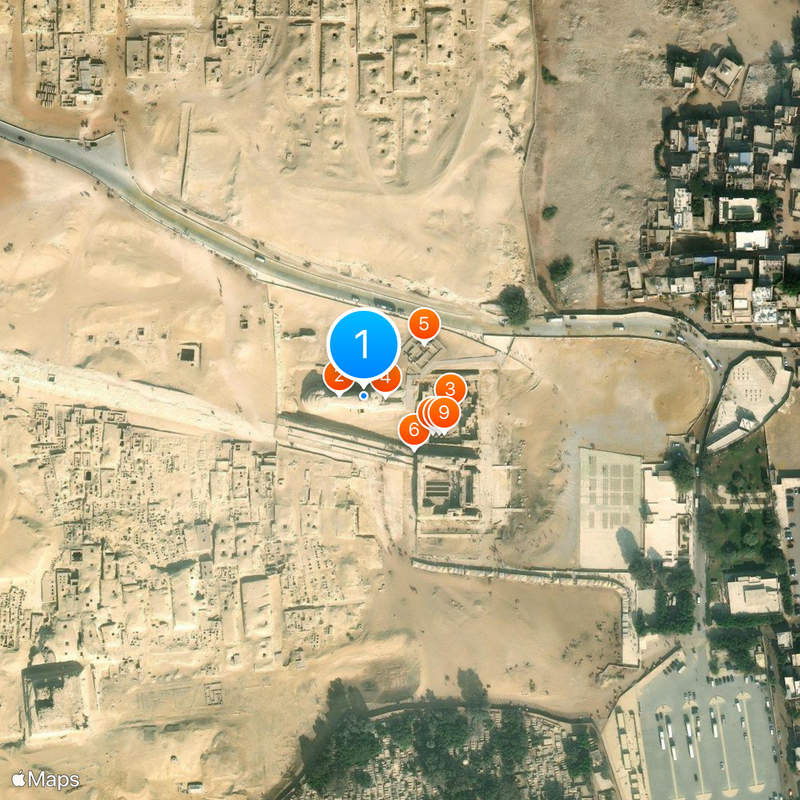
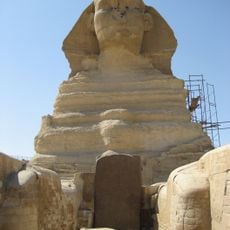
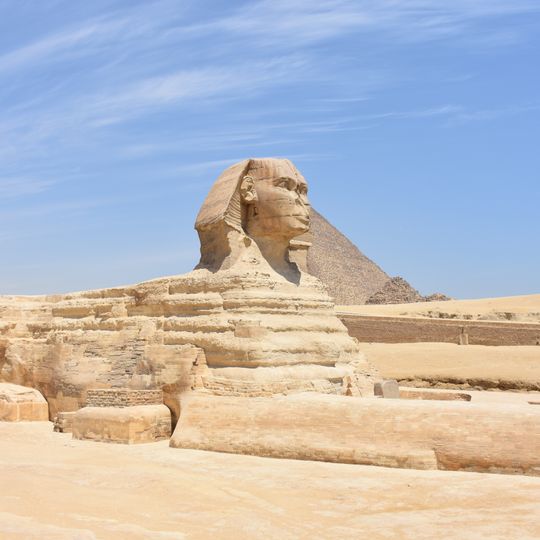
The Great Sphinx is a limestone monument in Giza that rises 66 feet tall and stretches 240 feet long, combining a human head with a recumbent lion body carved from natural bedrock. The sculpture sits on the plateau facing east toward the rising sun, positioned directly in front of the causeway leading to the second pyramid.
Workers shaped it from bedrock around 2500 BCE during the reign of Pharaoh Khafre, carving the monument while building his pyramid. The nose disappeared sometime between the third and tenth centuries, though restoration work began much earlier under Thutmose IV and has continued in stages ever since.
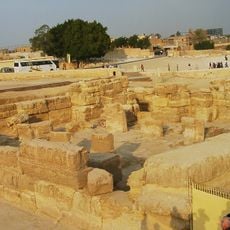
Tour groups gather here throughout the day to photograph the monument from multiple angles, often framing it alongside the nearby pyramids. Local guides share oral histories passed down through families who have worked at the site for generations, keeping old interpretations alive alongside modern archaeology.
The viewing area opens daily from early morning to late afternoon, with entry tickets available at the plateau gates. Morning hours offer softer light for photography and fewer people walking through the space, while late afternoon brings warmer tones across the stone surface.
Red pigment traces on the face suggest the entire sculpture was once painted according to traditional Egyptian color practices. Seismic surveys have revealed a network of passages and chambers beneath the figure, some possibly older than what remains visible above ground today.
The community of curious travelers
AroundUs brings together thousands of curated places, local tips, and hidden gems, enriched daily by 90,798 contributors worldwide.