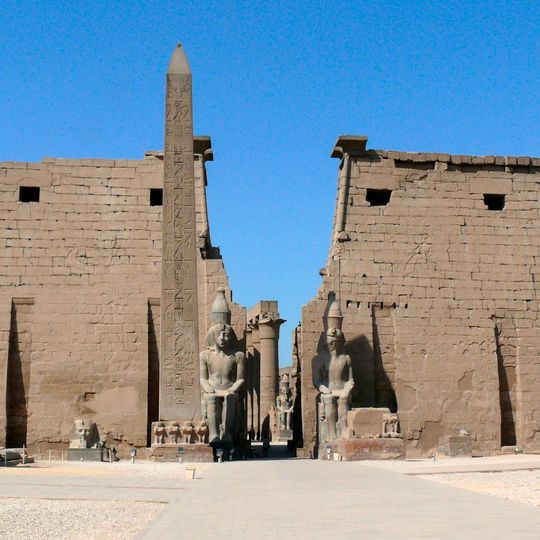
Luxor Temple, Ancient Egyptian temple complex in Luxor, Egypt.
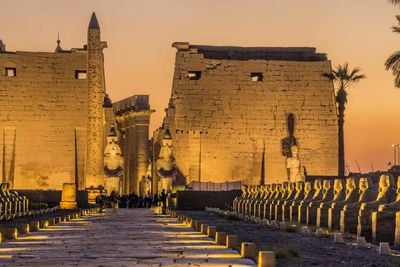
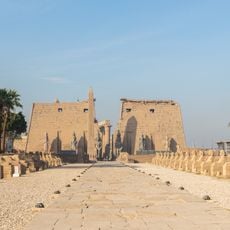
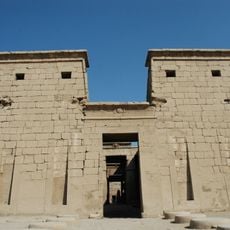
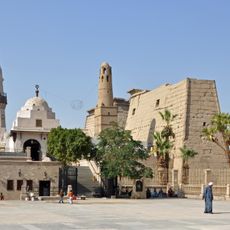
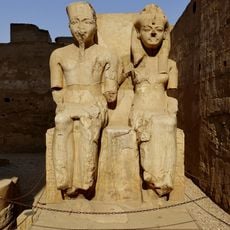
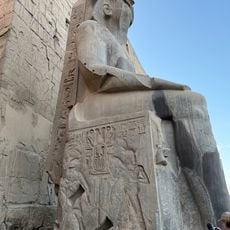
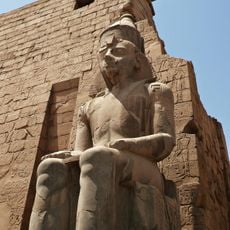
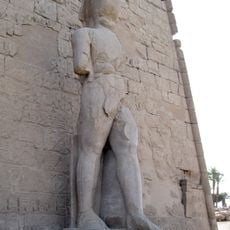
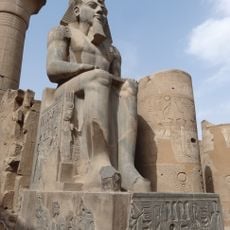
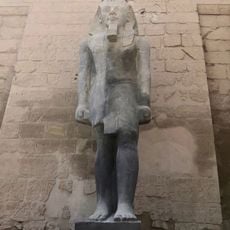
Luxor Temple is a sandstone temple complex on the east bank of the Nile in Luxor, built mainly under Amenhotep III and Ramesses II. Its entrance is flanked by two obelisks, one now in Paris, and four colossal seated statues of Ramesses II. Behind the 24-metre pylon lie a peristyle court, a 100-metre colonnade, and halls with 74 papyrus columns.
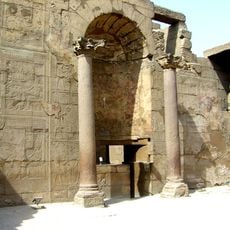
Construction started in the 14th century BCE under a ruler of the 18th Dynasty, and later kings expanded the site over the following centuries. During medieval times, a mosque rose within the walls after the area became buried under sand and people built on top of the remains.
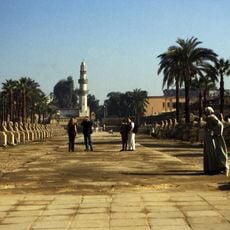
The Egyptian name ipet resyt means "the southern sanctuary"; a mistranslation as "southern harem" arose from the divine-birth reliefs in Hall XIII. The temple hosted the annual Opet Festival, when a statue of Amun was carried from Karnak along the 2.7 km avenue of sphinxes. The Abu Haggag Mosque, active since about 640, stands on the ancient columns.
The site opens daily, and many visitors arrive in the late afternoon when the light softens and the stone radiates less heat. Evening light installations make reliefs and columns easier to see after dark, which helps when exploring the compound once the sun goes down.
The missing second obelisk now stands in a square in Paris, sent there as a diplomatic gift during the 19th century. The mosque inside the compound sits about 11 meters (36 feet) above the original floor level, showing how high sand once buried the site.
The community of curious travelers
AroundUs brings together thousands of curated places, local tips, and hidden gems, enriched daily by 93,173 contributors worldwide.