Château de Valençay, Renaissance château in Valençay, France
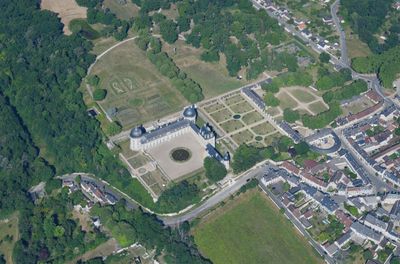
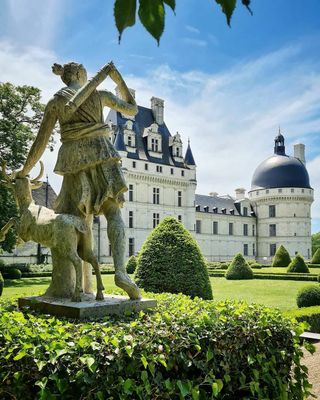
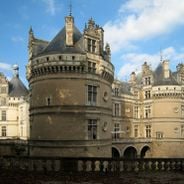
Château de Valençay is a Renaissance castle in the Indre department, built from pale beige stone. Its central block rises four levels under a steep dark slate roof with dormer windows and tall chimneys, with a smaller pavilion to the left and a long lower wing to the right. A massive round tower capped by a domed roof with a small lantern stands at the far right. The facade has rows of rectangular windows and a central arched doorway.
Napoleon instructed Charles Maurice de Talleyrand to buy the château in 1803 for hosting foreign dignitaries during diplomatic talks. The building became a setting for major international negotiations in the early 1800s.
The château's theatre, built for Talleyrand in 1819–1820, keeps its original painted decor and is still used for performances. Talleyrand's chef Marie-Antoine Carême, who worked at Valençay, is among the figures linked to the household. The Spanish princes held here from 1808 to 1813 left traces: the King of Spain's room and a baptismal certificate of 23 June 1810 bearing their signatures in the parish archives.
The estate is open for visits year-round, with marked paths through gardens and forests that are easy to walk. Wear comfortable shoes since the grounds are large and take several hours to fully explore.
During World War II, the castle stored numerous artworks from the Louvre Museum to protect French cultural treasures from potential destruction. This hidden role helped many important works survive the conflict and remain today.
The community of curious travelers
AroundUs brings together thousands of curated places, local tips, and hidden gems, enriched daily by 94,827 contributors worldwide.