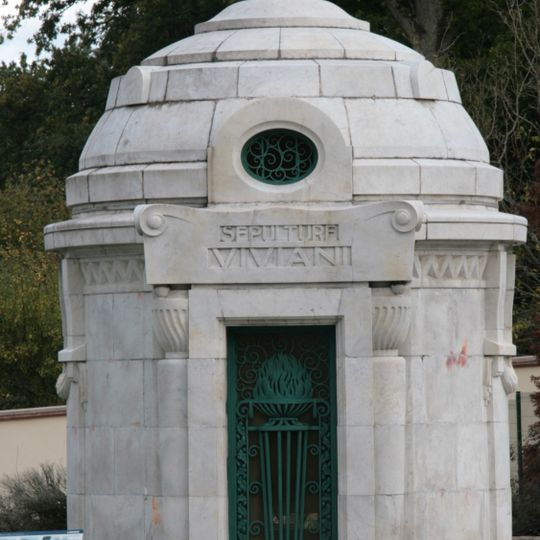
Sépulture d'Isabelle et René Viviani, Historical burial site in Seine-Port, France
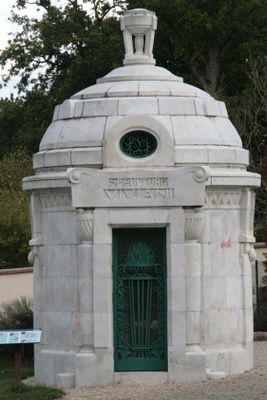
Sépulture d'Isabelle et René Viviani is a circular marble mausoleum with a stepped dome in a cemetery near Seine-Port. The structure is framed by wrought iron gates featuring poppy motifs and displays Venetian enamel mosaics on its surfaces.
René Viviani served as Prime Minister of France from 1914 to 1915 and declared general mobilization at the outbreak of World War I. The burial site was built in 1924, combining architectural design with the artistic craftsmanship of the post-war period.
The monument bears the Viviani name, evoking a Parisian family prominent during the Belle-Époque era. Visitors can observe the craftsmanship displayed through the wrought ironwork and mosaics, representing the artistic output of early 20th-century artisans.
This burial site is located in the Seine-Port cemetery and is visible from the pathways, allowing visitors to view the architecture from various angles. A comprehensive restoration completed in 2014 reinforced the structure and refreshed the colors of the decorative elements.
Edgar Brandt, who created the wrought iron gates, later became known for designing facades along Manhattan's Fifth Avenue. The Art Deco ironwork visible here in Seine-Port represented an early phase of his career before his more expansive American commissions.
The community of curious travelers
AroundUs brings together thousands of curated places, local tips, and hidden gems, enriched daily by 60,000 contributors worldwide.