Pietra di Bismantova, Sandstone inselberg in Castelnovo ne' Monti, Italy
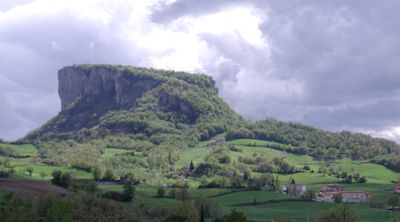
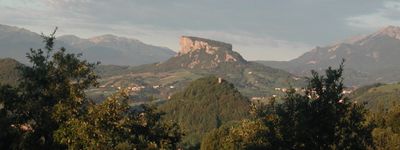
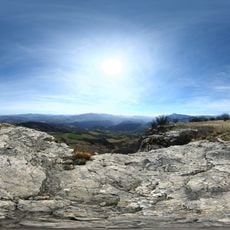
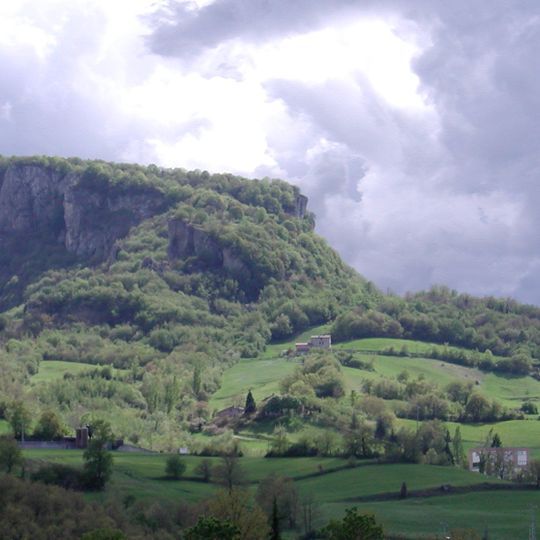
Pietra di Bismantova is a narrow plateau of yellowish calcarenite over a marl base, rising 300 metres above the Reggiano Apennines. Its flat top, about 1 km long and 240 m wide, reaches 1,041 metres above sea level and is covered with hazel shrubs. The vertical cliff face shows horizontal layering and fossil shells from a Miocene sea floor.
The Pietra is first documented in a 1062 charter as Petra de Bismanto, and a Byzantine military structure, the Castrum Bismantum, stood on it by the early 7th century. Dante names it in the Divine Comedy (Purgatorio IV, 25-30), and in 2010 it was included in the Parco nazionale dell'Appennino Tosco-Emiliano.
The name Bismantova may derive from a Celtic phrase meaning mistletoe, moon and a suffix, referring to night-time mistletoe gathering in local oak woods, or from Etruscan words for carved stone and sacrificial altar. Dante placed the mountain in Purgatorio, IV, 26, the first written mention of the name. A documentary, La Montagna Magica, was made about it.
Well-maintained trails lead to the summit, with the climb taking roughly 45 minutes from the parking area at the mountain's base. Sturdy footwear and plenty of water are recommended, particularly on warmer days.
The flat summit is covered with hazelnut shrubs, and the fields, hedges and oak woods lie at the foot of the massif. Farming and forestry have been abandoned in recent decades, so vegetation has hidden paths and stretches of bare rock; mowing and selective thinning now aim to reopen the hiking routes.
The community of curious travelers
AroundUs brings together thousands of curated places, local tips, and hidden gems, enriched daily by 93,340 contributors worldwide.