Segesta, Archaeological site in Calatafimi, Italy
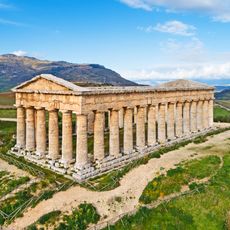
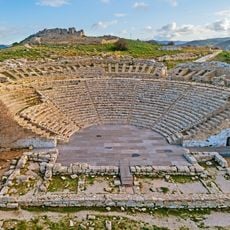
Segesta is an archaeological park near Calatafimi-Segesta in western Sicily, containing the remains of an ancient city with a Doric temple and a Greek theater. The site spreads across Monte Barbaro and neighboring hills, where visitors walk among ruins of residential quarters, city walls and sanctuaries.
Segesta was already inhabited by the 9th century BCE, and Greek tradition, recorded by Thucydides, traced its founding to Trojan refugees who became the Elymians. From 580 BCE the city fought nearby Selinunte, calling on Athens in 415 BCE and later on Carthage, which destroyed Selinunte in 409 BCE. In 307 BCE Agathocles renamed it Diceopolis, and in 260 BCE it allied with Rome as a free city. Vandals destroyed it in the 5th century CE.
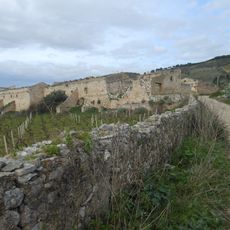
The name traces back to the Elymians, a people who claimed descent from Trojan refugees and founded one of western Sicily's major cities here. Visitors today see remains of settlements, streets and public squares that show how people lived and organized their city on this hillside over many centuries.
The site opens daily, and shuttle buses carry visitors from the temple up to the theater if someone prefers to avoid the uphill walk. Wheelchair users can reach the temple area but should be aware of steep sections in other parts of the park.
The temple was never completed: walls are missing inside, and the columns still carry projections used for lifting blocks during construction. Archaeologists suspect the building was meant to impress politically rather than serve a religious function.
The community of curious travelers
AroundUs brings together thousands of curated places, local tips, and hidden gems, enriched daily by 93,366 contributors worldwide.