Hinata Yakushi Temple, Buddhist temple in Isehara, Japan
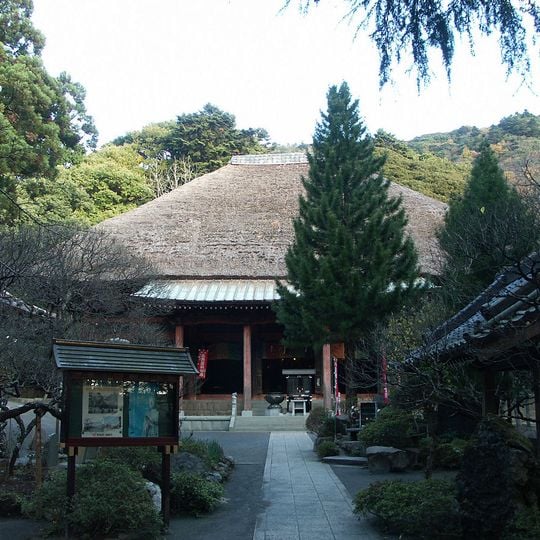
Hinata Yakushi is a Buddhist temple in Isehara featuring a black and vermilion main hall covered with a thatched roof. Inside stands a medicine Buddha statue carved using a hatchet technique.
Tradition credits the monk Gyoki with founding the temple in 716, but no Nara-period remains have been excavated; its actual foundation is dated to around the 10th century. A bell inscription records that Emperor Murakami granted a bronze bell in 952, which was recast in 1153 and again in 1340. The Kamakura chronicle Azuma Kagami notes that Minamoto no Yoritomo visited in 1194 to pray for his daughter's recovery.
The name Hinata Yakushi is the popular one; formally the temple was Ryozen-ji before the anti-Buddhist persecutions of the early Meiji era and is now Hojo-bo, the former head sub-temple. The main image, a Heian-period Yakushi triad, is a hidden Buddha shown on the first three days of the New Year, 8 January and 15 April. The hall's twelve pillars are thought to represent the Twelve Divine Generals.
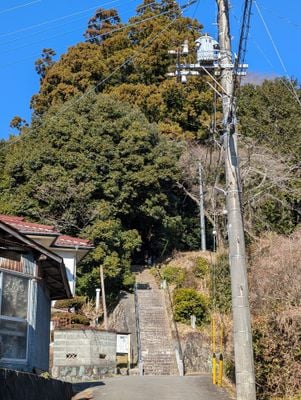
From the Hinata Yakushi bus stop, the Omote-sando entrance is a short walk away; the main hall lies about 15 minutes on foot, up roughly 500 m of stone steps through the woods with a height difference of about 70 m. The Nio gate with its two guardian figures stands near the start of this path. The trailhead for Mount Hinata and the Kanto Fureai no Michi routes is behind the main hall, to the left.
The temple's two cedars are called the Hatakake Sugi: the Kantō deputy shogun Ashikaga Motouji is said to have hung a banner on them to pray for peace and good harvests. Estimated at 800 years old, they are a prefectural natural monument and one of Kanagawa's 100 famous trees.
The community of curious travelers
AroundUs brings together thousands of curated places, local tips, and hidden gems, enriched daily by 93,355 contributors worldwide.