Asahiyama Shrine, Shinto shrine in Koi, Hiroshima, Japan.
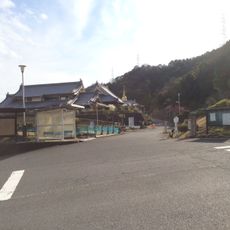
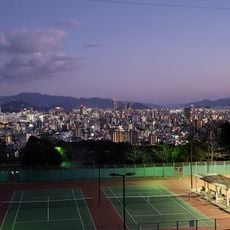
Asahiyama Shrine stands on a slope in the Koi district, and its present halls were built during a 1937 renovation. The nagare-zukuri main hall kept its roof in the 1945 blast, while the other roofs were blown off and rebuilt in 1948 with the salvaged timber. From the grounds you can look out over the old city centre.
Founded at an unknown date, the shrine traces its origin to a stop by Empress Jingū at a landing site here. In 1555 Mōri Motonari prayed for victory before sailing to Miyajima, and the rising sun led him to name the hill Asahiyama and the shrine Asahiyama Hachimangū. The present buildings were fitted out in 1937; the 1945 atomic bomb, 2.80 km away, blew off the roofs of all halls except the main sanctuary, and the shrine was repaired in 1948 with the surviving timbers.
Locals call it the "Koi Shrine": legend says a district chief presented a large carp to Empress Jingū when she stopped here, and the area became Koi-mura, one origin claimed for the name Koi. The shrine is also said to be one model for Hana-yama Shrine in the Zukkoke Sannin-gumi children's books, set in a town modelled on Koi; a monument in the grounds marks this.
The grounds are easily walkable and comfortable shoes are recommended since several pathways cross the shrine area. Before approaching the main buildings, visitors should use the water washing station for ritual purification, which is part of traditional practice at this site.
The shrine survived the 1945 atomic bombing about 2.8 km from the hypocenter: the blast blew off and collapsed the roofs of all halls except the main sanctuary, and the ema hall tilted slightly. A wildfire on Mount Asahiyama was put out by the local fire brigade and the black rain, so the shrine escaped burning. It was repaired in 1948 using the surviving timbers.
The community of curious travelers
AroundUs brings together thousands of curated places, local tips, and hidden gems, enriched daily by 93,972 contributors worldwide.