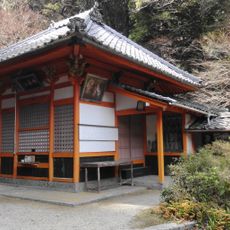
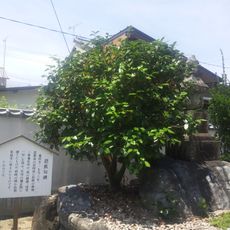
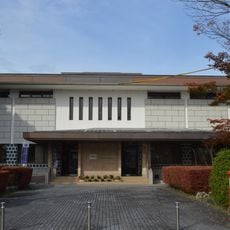
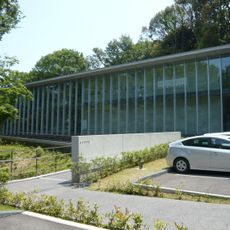
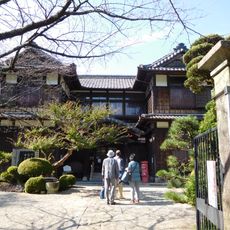
Motoori Norinaga's former residence, Special Historic Site in Matsusaka, Japan
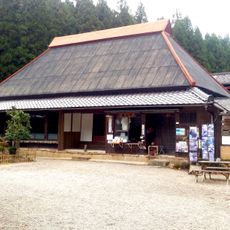
Motoori Norinaga's former residence is a wooden Edo-period house built in 1691 by his grandfather Ozu Sanshiemon Sadaharu as a retirement dwelling. It was moved in 1909 from its original Uomachi site to the grounds of Matsusaka Castle. On the upper floor is the study Norinaga named Suzunoya, reached by eight steps whose lower three are box-shaped and removable.
The building was erected in 1691 by Ozu Sanshiemon Sadaharu, Norinaga's grandfather, as a retirement house in Matsusaka's Shokuninmachi and later moved to Uomachi. Norinaga moved there in 1741 at age 11 with his mother and siblings, and lived there until his death in 1801. In 1909 the house was relocated to the site of Matsusaka Castle and restored; in 1953 it was designated a Special Historic Site together with its original Uomachi site.
The house's name derives from the suzu bell that Norinaga hung beside the scroll in his study, and "Suzunoya" became his pen name, used on book seals and account books. Visitors can see the shop room where he treated patients and the rear room used for lectures and poetry gatherings.
The house is located near Matsusaka Castle and is easy to reach. Inside, exhibitions display objects and documents that document scholarly work here, helping visitors understand life during that era.
The study on the upper floor, named Suzunoya ("Bell Hut"), was converted from a storeroom in 1782 with help from the disciple Mitsui Takanaka. Its lower three stairs are box-shaped and removable, isolating the scholar from daily life. Visitors cannot enter but can look inside from the stone wall.
The community of curious travelers
AroundUs brings together thousands of curated places, local tips, and hidden gems, enriched daily by 93,475 contributors worldwide.