Motomura Shrine, Shinto shrine in Oe-honmachi, Chuo-ku, Kumamoto, Japan
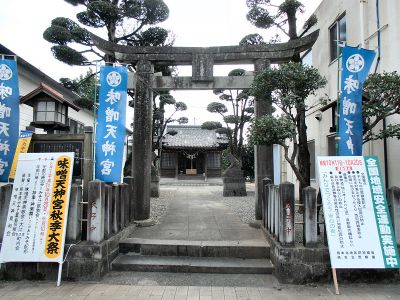
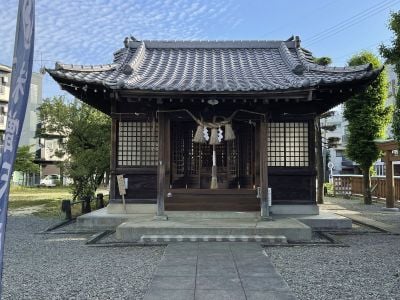
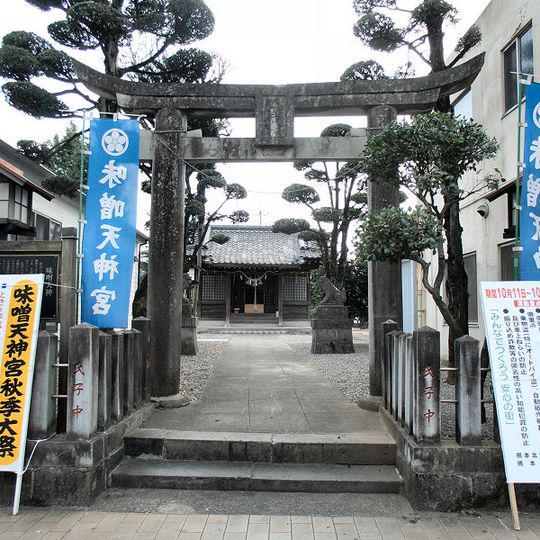
Honmura Shrine stands in Oe-machi, Chuo-ku, Kumamoto. A grey stone torii with a curved lintel and a central plaque marks the entrance; a blue banner reading 和靜天神宮 hangs from its left pillar. A stone-paved walkway runs between low stone posts and fences to a wooden hall with a dark tiled roof.
The shrine began in 713, when Gozu Tennō was worshipped as a healing deity during an epidemic. In 741, when the Higo Kokubun-ji was built, its miso storehouse was established here and the deity became its guardian. According to tradition, when the monks' miso spoiled, prayer and the insertion of bamboo leaves restored it. Sugawara no Michizane was later jointly enshrined. The shrine burned in 1945 and was rebuilt with donations from miso merchants nationwide.
The shrine is commonly called Miso Tenjin, after the deity Myoso Tenjin once enshrined here as a guardian of miso. Before the war, visitors came to receive bamboo leaves from the grounds, which were placed in miso to keep it from turning sour. The annual festival, held on 25 September until the calendar reform of the Meiji era, was moved to 25 October.
Take the Kumamoto City Tram to the Misotenjin-mae stop; the shrine stands in Oe-honmachi, Chuo-ku. The grounds are entered through the grey stone torii seen from the street, and a paved walkway leads straight to the wooden hall.
A surprising local tradition involves placing bamboo leaves into miso barrels, a practice that local stories credit with saving a spoiled harvest. This method is still remembered today, making the place a testament to how practical knowledge and faith have survived across generations.
The community of curious travelers
AroundUs brings together thousands of curated places, local tips, and hidden gems, enriched daily by 93,688 contributors worldwide.