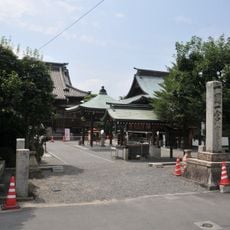
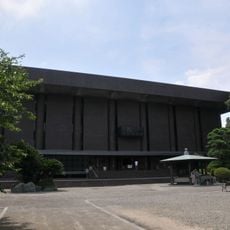
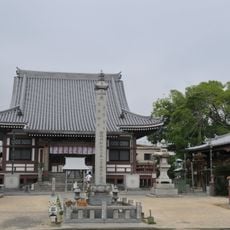
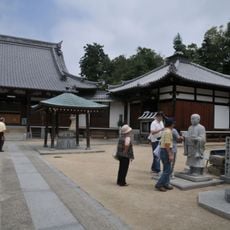
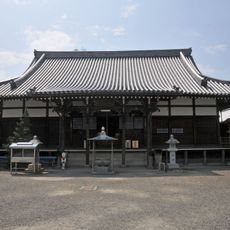
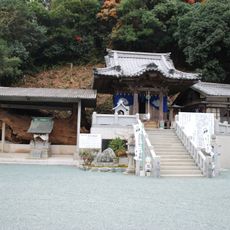
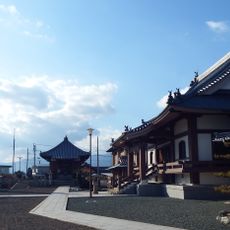
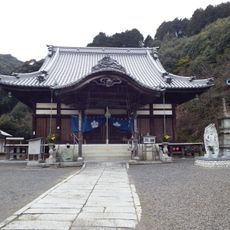
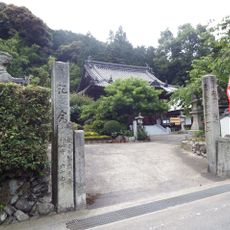
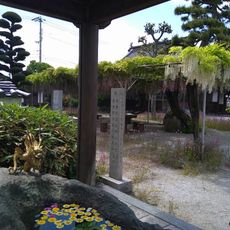
Sendanji, Buddhist temple in Saijō, Japan.
Sendanji, formally Seta-san Iō-in Sendanji and known as Seta Yakushi, is a Kōyasan Shingon temple in Saijō, Ehime. Its main hall stands at about 280 m on the east side of 339 m Mount Seta, while a foothill compound at about 58 m holds the Daishidō, Sanbō Kōjin-dō and, since 2021, a new Kondō enshrining the hidden Yakushi triad and Twelve Heavenly Generals.
According to tradition, the monk Gyōki carved a statue of Yakushi Nyorai from a sandalwood tree on Mount Seta in 724, the temple's founding legend. In the Middle Ages Seta Castle stood on the summit; it fell in 1342 when Ōdate Ujiaki and seventeen warriors died defending the Southern Court. In 1927 the main hall became the Oku-no-in and the Daishidō and Sanbō Kōjin-dō were moved to the foot of the mountain; a new Kondō was built there in 2021 and a bell tower completed in 2024.
The temple is the 36th stop on the Shikoku Mandala Pilgrimage, and its name comes from the sandalwood tree in which Gyoki is said to have carved the Yakushi Buddha in 724. Each summer, on the Day of the Ox (Doyo no Ushi), a cucumber blessing (kiuri kaji) has been held here since the Edo period.
The main hall stands at about 280 m on Mount Seta, reached by a roughly 1 km, 40-minute trail from the lower headquarters. The grounds also hold a rock-carved Fudo Myoo about 4 m tall, and the summit viewpoint and Seta Castle site lie about 400 m further up.
The temple's name comes from the sandalwood (sendan) tree in which Gyoki is said to have carved a statue of Yakushi Nyorai in 724. The honzon is a secret 9-shaku standing image, and the temple is the 36th stop on the New Shikoku Mandala Pilgrimage.
The community of curious travelers
AroundUs brings together thousands of curated places, local tips, and hidden gems, enriched daily by 93,401 contributors worldwide.