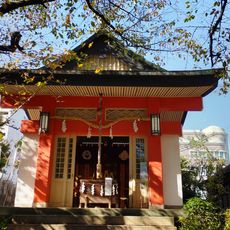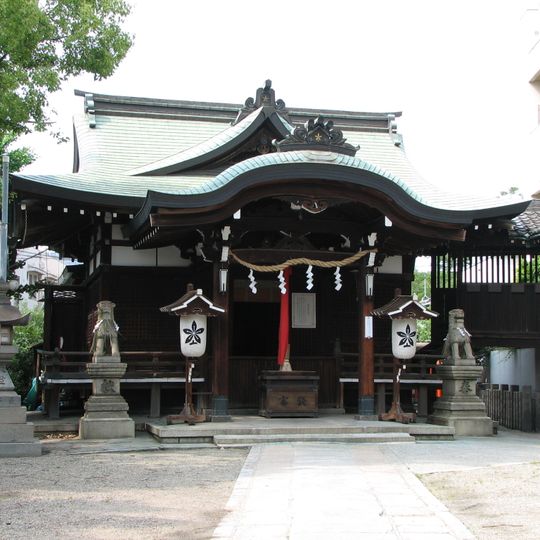
Himekoso Shrine, Shinto shrine in Higashinari, Osaka, Japan
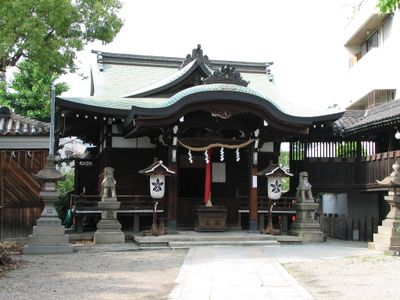
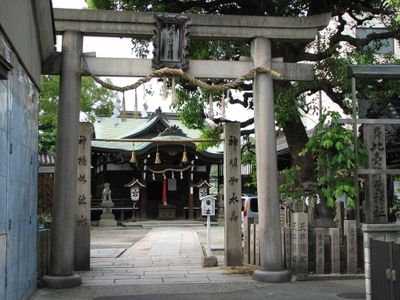
Himekoso Shrine is a Shinto sanctuary in Osaka built in nagare-zukuri architectural style, with a roof that characteristically extends outward. The grounds consist of simple wooden structures on maintained terrain with gravel, small lanterns, and stone statues lining the paths.
Shrine tradition dates its founding to the second year of Emperor Suinin, when Shimotsuhime was worshipped on Akume Hill and called Takatsu Tenjin. The Engishiki listed it as a Myojin Taisha receiving Niiname and Ainame offerings. In the Tensho era (1573–1592) the shrine burned during Oda Nobunaga's attack on Osaka Honganji; in 1788 a rediscovered document led to its revival, and in 1872 it became a village shrine.
The main deity is Shimotsuhime, also called Shitateruhime, with Susanoo, Ajisukitakahikone, Ōobase, Ōsazaki and Tachibana no Toyohi also enshrined. The shrine's name appears in the Kojiki and Nihon Shoki, where the Korean deity Akaruhime is said to reside at Himekoso in Naniwa. A document set of 52 items is an Osaka City designated tangible cultural property.
The shrine is easily reached by public transportation or on foot and has no entrance fee. Visitors should come during daylight hours, walk quietly, remain respectful, and follow traditional rituals such as bowing and clapping hands when praying.
The shrine's identity rests on a disputed claim: in 1788 a man announced he had found old records and treasures of Himekoso Shrine, and on that basis the former Gozu Tenno shrine was renamed Himekoso and given Shimo Teruhi-me as its deity. The Osaka Prefecture Shrine History Materials calls that origin account untrustworthy.
The community of curious travelers
AroundUs brings together thousands of curated places, local tips, and hidden gems, enriched daily by 93,530 contributors worldwide.