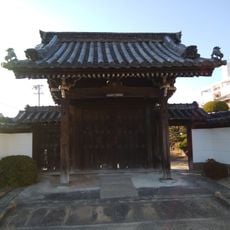
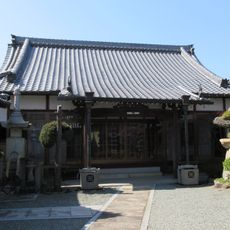
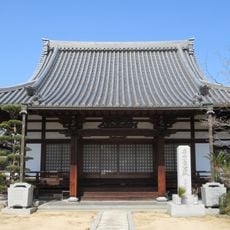
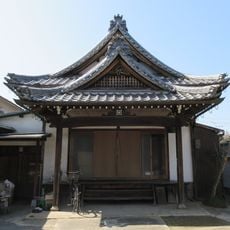
Mio Shrine, Shinto shrine in Japan
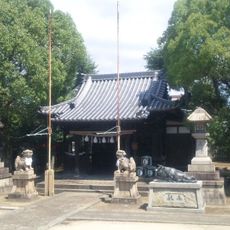
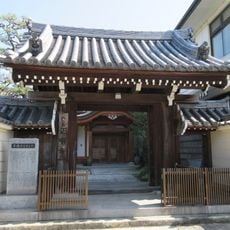
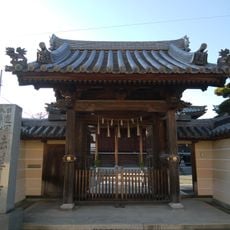
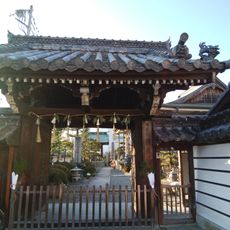
Mio Shrine stands at the foot of Mount Otokoyama in Yamanoi-chō, Himeji. It enshrines Ōnamuchi-no-Mikoto, worshipped here since 565, and its grounds hold the auxiliary shrines Ichikishimahime, Ara, Daishōgun and Takeō. The shrine is known as the original site of the Harima provincial Sōsha, and its main hall was rebuilt in the Heisei era.
The shrine's history begins with the worship of Iwa no Ōkami; in 565 it enshrined Ōnamuchi no Mikoto. In 764 the deity Hyōzu was installed at Mizuo-yama in Iwano, Shikama district. In 787 Sakanoue no Tamuramaro moved that deity to Onoe in the district office, and local people built a small shrine on Otokoyama, making Mio Shrine the former site of the Harima provincial shrine. In 1619 Honda Tadamasa relocated the Oka Ōtoshi shrine here while expanding Himeji Castle.
The shrine's name is read Mizuo, and it shares this reading with another Mizuo Shrine in Himeji's Yasutomi district. Its annual observances are a tondo fire rite in January, a wanusuke ring-passing rite with yudate boiling-water ritual at the summer festival in June, and an autumn festival in November. Four subsidiary shrines stand on the grounds: Ichikishimahime, Ara, Daishogun and Takeo.
From Himeji Station take a Shinki Bus for about seven minutes and get off at Ichinohashi-Bungakukan-mae; the shrine, at the foot of Otokoyama in Yamanoi-chō, is about five minutes on foot to the north. The approach is on foot only, so allow for the walk.
Mio Shrine is said to be the original shrine (motomiya) of the Harima provincial sōja: in 787, Sakanoue no Tamuramaro moved the deity Byōshin to Onoe Nakinomoto, and local people built a small shrine on Mount Otokoyama to keep worshipping it. The shrine also keeps a portable mikoshi renewed in 1983.
The community of curious travelers
AroundUs brings together thousands of curated places, local tips, and hidden gems, enriched daily by 94,306 contributors worldwide.