横蔵寺, Buddhist temple in Kakogawa, Japan
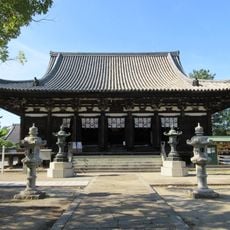
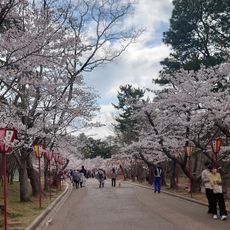
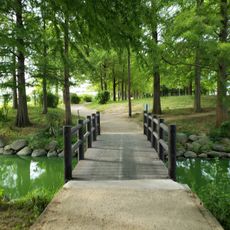
Yokokuradji (Ōzō-ji) is a Sōtō Zen temple on Mount Dōrin in Kakogawa, with a main hall, a Kannon hall, a Jizō hall and a temple gate. In front of the gate stand a pine avenue, a Japanese garden and earthen walls; inside, a pond and many cherry trees fill the grounds. The hibutsu Eleven-Faced Thousand-Armed Kannon, a Kamakura-period statue, is kept in the Kannon hall.
Founded by the monk Hōdō Sennin, the temple became a prayer site under Emperor Kōkō and prospered as a retreat of Emperor Uda after his abdication. In 1578, during Hashiba Hideyoshi's siege of Miki Castle, its buildings burned, leaving only one hall and one monks' quarters. In the Genroku era it converted from Shingon to Sōtō Zen.
The temple's name is linked to the legend of the sculptors Unkei and Tankei: father and son each carved half of a Kannon image, and when the halves were joined at this spot they fit perfectly, so the village became known as Ōtsuji ("meeting"). The hibutsu Eleven-Faced Thousand-Armed Kannon is shown only once every 25 years, and people pray to it when relatives are missing.
The temple stands at 900 Shinzaike, Hiraoka-cho, Kakogawa, about a 10-minute walk from JR Kobe Line Higashi-Kakogawa Station. The grounds hold a pine-lined approach, a Japanese garden and earthen walls, with a pond and many cherry trees inside. The Kannon hall's hibutsu image is shown only every 25 years, so check opening dates before planning around it.
The hibutsu Eleven-Faced Thousand-Armed Kannon in the Kannon Hall is opened to view only once every 25 years. Legend says the sculptors Unkei and his son Tankei each carved half of the image, which joined seamlessly when father and son met at the spot, giving the village the name Otsuji.
The community of curious travelers
AroundUs brings together thousands of curated places, local tips, and hidden gems, enriched daily by 94,837 contributors worldwide.