Baishō-in Temple, Buddhist temple in Nakano, Japan
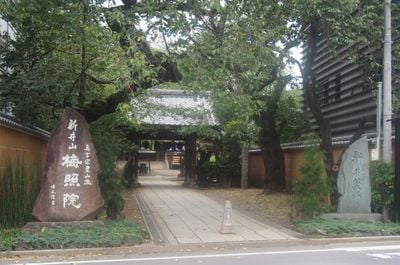
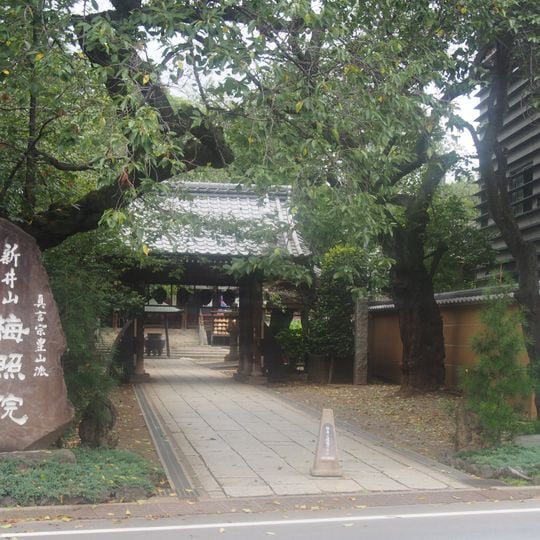
Baishō-in, known as Arai Yakushi, is a Shingon Buzan-ha temple whose main hall and Fudō-dō stand within a large precinct. Its honzon is a secret image of Yakushi Nyorai and Nyoirin Kannon, and the grounds also hold the Shiro Ryū Gongen well, whose water visitors draw for drinking. A paved walkway leads to a gate with a grey tiled roof on dark wooden posts, with a stone marker inscribed 新井山梅照院.
Founded in 1586 by the monk Gyōshun, Baishō-in belongs to the Shingon-shū Buzan-ha school and is counted among the Bushū Four Great Yakushi temples alongside Takaosan Yakuō-in, Hyūga Yakushi and Mine no Yakushi. Its main image, attributed by tradition to Kūkai, is a secret Buddha shown only once every twelve years, in the year of the tiger. The temple is also the burial ground of the Kubo-dera clan, who backed Nitta Yoshifusa's Southern Court during the Nanboku-chō period.
Known locally as Arai Yakushi, the temple holds a hibutsu statue with Yakushi Nyorai on the front and Nyoirin Kannon on the back, shown only in years of the tiger. On the 8th, 18th and 28th of each month, stalls fill the grounds for the temple fair.
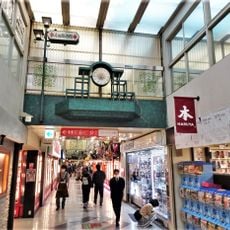
The temple is a six-minute walk from Arai-Yakushi-mae Station on the Seibu Shinjuku Line, or fifteen minutes from JR Nakano Station; buses from Nakano stop at Arai Yakushi Baishō-in-mae, two minutes away. The approach from the station runs through a shopping street. The well water known as Hakuryū Gongen-sui is open to the public for drinking water.
The hibutsu main image is a single statue with Yakushi Nyorai on the front and Nyoirin Kannon on the back. It is shown only once every twelve years, in the Year of the Tiger; the temple's founder, the monk Gyōshun, established the site in 1586.
The community of curious travelers
AroundUs brings together thousands of curated places, local tips, and hidden gems, enriched daily by 94,065 contributors worldwide.