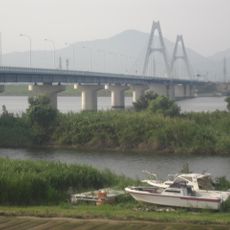
浜高房橋, Former submersible bridge at Akui River in Tokushima, Japan.
The Hamatakabo Bridge crossed the Akui River with a flexible wooden deck structure measuring approximately 210 meters long and 1 meter wide. Its unique design featured removable wooden panels on the walking surface that could be taken apart to prevent flood damage during seasonal water rises.
It was built in 1919 after the Hamatakabo ferry service was discontinued, as local people of Fudo-cho needed a new way to cross the river. This structure provided the community with a direct crossing when the ferry transport was no longer available.
Local people called it the 'Konnyaku Bridge' because it swayed noticeably when crossed, moving like the jelly it was named after. This nickname shows how residents experienced and remembered the structure through its most striking behavior.
The bridge was accessible on foot, but visitors would notice its flexible construction more during crowded crossings or windy conditions. Planning a visit during drier months makes it easier to appreciate the structure without seasonal water concerns.
It remained in use until 2007, when safety concerns and declining crossings led to its removal from service. A memorial stone now stands where the bridge once spanned, honoring its role in the community.
The community of curious travelers
AroundUs brings together thousands of curated places, local tips, and hidden gems, enriched daily by 92,182 contributors worldwide.