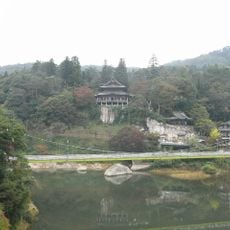
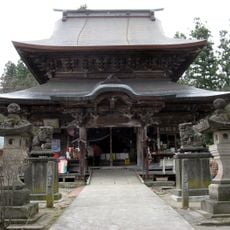
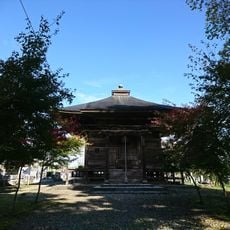
Hōyō-ji, Buddhist temple in Aizumisato, Japan.
Hōyō-ji is a Tendai Buddhist temple in Aizumisato, Fukushima Prefecture, with the mountain name Raiden-zan and the cloister name Myōgyō-in. Its main image is an Eleven-Faced Kannon. The grounds hold a three-storey pagoda with painted panels, a Kannon hall, and a tiger-tail cherry tree, one of the Aizu Five Cherry Trees, in front of the main hall.
According to temple tradition, Hōyō-ji was founded in 720 by Tokudō at Dōdaira Bōgazawa north of Fukebenuma, burned down, and was revived at its present site during the Daidō era (806–810) by Tokuitsu. It was a prayer temple of Emperor Saga and held many branch temples until Erijiji was built. The temple later stood without resident priests for a long period.
The temple is Tendai, not Zen, and its name is tied to the Egawa chōja legend: the childless Egawa Tsunetoshi of Sabukawa village prayed here for descendants. Each year on 7 January the local Suzubayashi district holds the "Snake New Year" rite, a tradition that recalls the temple's long history despite its many years without a resident priest.
The temple is accessible by car and located near major highway access like the Banetsu Expressway, making it reachable from various directions. Visitors should check ahead for special ceremony dates, as certain days may be reserved for observances.
In the main hall stands a wooden shrine and Buddhist altar set dated to 1314, and two wooden Kongōrikishi guardian statues from the Heian period, moved indoors from the temple gate for safekeeping.
The community of curious travelers
AroundUs brings together thousands of curated places, local tips, and hidden gems, enriched daily by 94,225 contributors worldwide.