Izumianashi Shrine, Shinto shrine in Izumiotsu, Osaka Prefecture, Japan
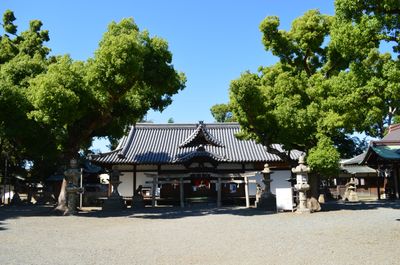
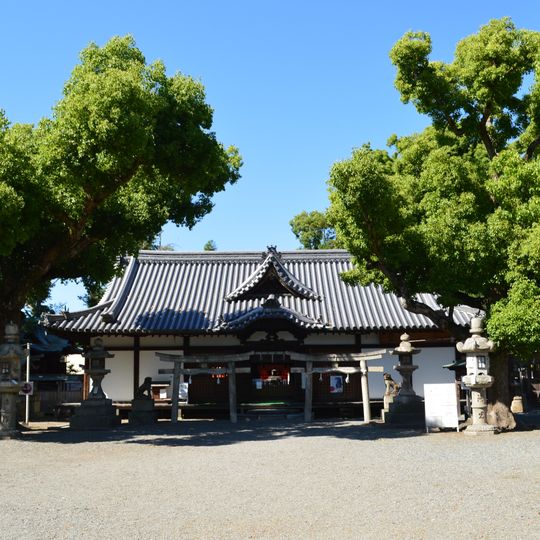
Izumianashi-jinja is a Shinto shrine in Izumiotsu with a main wooden hall surrounded by an old forest containing a 600-year-old camphor tree and approximately 80 wooden statues of historical importance. The shrine features two torii gates arranged unusually at its entrance and is dedicated to a weaving goddess and farming god.
According to shrine tradition it was founded in 672, though other accounts link its origins to Empress Jingū or Emperor Jimmu's eastern campaign. In 738 it received 1,300 koku of shrine land from Emperor Shōmu, and court records show ranks granted in 865 and 868. In 1602 Toyotomi Hideyori had the halls rebuilt under magistrate Katagiri Katsumoto.
The shrine's main deity, Takuhata Chichihime-no-Mikoto, is a goddess linked to weaving, fitting Izumiotsu's textile industry, which began in the Edo period. The annual Takuhata Festival is held on 1 November. Two torii stand side by side before the worship hall, one for each of the two deities enshrined in the main hall.
The shrine stands in Izumiotsu, Osaka Prefecture; the grounds hold the main hall, the worship hall with its two stone torii, and the camphor grove listed among Osaka's top greenery. The main hall and the subordinate Sumiyoshi and Kasuga halls are National Important Cultural Properties, so visitors should keep to the paths and view them from outside.
The shrine's grove of camphor trees, twelve of them designated a natural monument by Izumiotsu in 1999, is listed among Osaka's 100 Green Selections. The main hall enshrines a paired male and female deity, which is why two torii stand side by side in front of the worship hall.
The community of curious travelers
AroundUs brings together thousands of curated places, local tips, and hidden gems, enriched daily by 93,670 contributors worldwide.