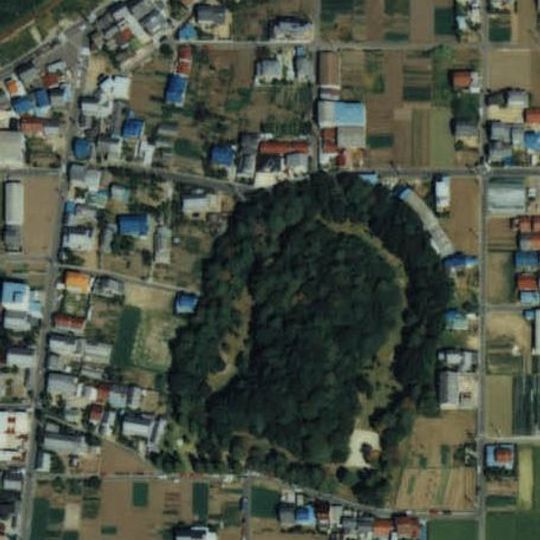
Kotozuka Kofun, Archaeological burial mound in Gifu, Japan
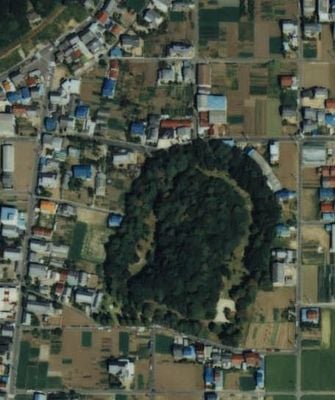
Kotozuka Kofun is a keyhole-shaped zenpō-kōen-fun in eastern Gifu, the only survivor of a cluster of tumuli. Its three-tier mound runs 115 m long, with a 69 m diameter rear circle 10.5 m high and a 74.4 m wide front square 7.5 m high. A double moat rings it: the inner one, 18–20 m wide, is intact, while the outer one survives only in the northwest and east.
Built in the 5th century AD, the mound is the only survivor of the Kotozuka cluster of keyhole-shaped tumuli, the rest destroyed by urban encroachment. It was designated a National Historic Site in 1934. Local legend identifies it as the tomb of Igoto-hime-no-mikoto, concubine of Emperor Keikō.
The name Kotozuka comes from Igoto-hime-no-mikoto, a consort of the legendary Emperor Keikō said in local tradition to be buried here. The mound is the last survivor of the Kotozuka kofun cluster, whose other keyhole-shaped tombs were lost to urban growth.
The mound sits on a low terrace east of Gifu, near the Kakamigahara border. The inner moat survives at 18–20 m wide; the outer moat is mostly filled in, with traces left to the northwest and east. Buses stop at Kotozuka (4 min walk east) and Sahei Shinden (4 min north); the community bus stops at Shinden Kōminkan-mae, 1 min east.
The mound has never been excavated, so its burial chamber remains unknown; the grave goods recorded for the site are haniwa, magatama beads, a bronze mirror, stone spearheads and arrowheads. The outer moat was filled in, but traces survive on the northwest and east sides, while the inner moat keeps its original 18–20 m width.
The community of curious travelers
AroundUs brings together thousands of curated places, local tips, and hidden gems, enriched daily by 93,395 contributors worldwide.