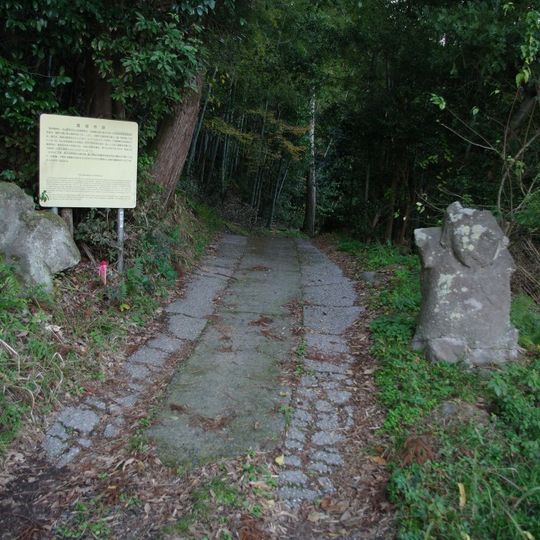
皇徳寺, Buddhist temple ruins in Kagoshima, Japan.
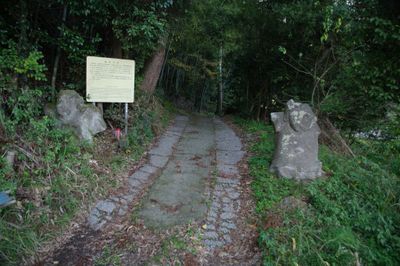
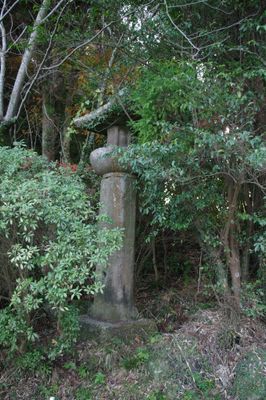
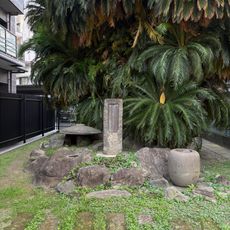
Kōtokuji was a Sōtō Zen temple in the former Yamada village, now part of Kagoshima. Almost nothing of the buildings remains after its 1869 destruction: only the graves of its successive head priests and a pair of Niō guardian statues survive. A weathered stone lantern or pagoda element stands among dense foliage, its tiered cap, rounded finial and lichen-mottled shaft rising from a rough base.
The temple began in the Nanboku-chō period as Kōritsuji, founded at Goshogawara by Prince Kaneyoshi, son of Emperor Go-Daigo. After the prince's death, the Satsuma samurai Taniyama Tadataka moved it and renamed it Eikokuzan Kōtokuji as a memorial temple for the prince's tablet. It was a direct branch of Eiheiji, head temple of Sōtō Zen, and was destroyed in the 1869 haibutsu kishaku.
The name Kōtokuji survives in the Kagoshima district name Kōtokujidai, which derives from the temple. The site was also the family temple of Shimazu Hisayasu, a son of Shimazu Yoshihiro who died young during the Bunroku campaign. Today only the graves of successive head priests and a pair of Niō statues remain.
The site is accessible by public transportation, with bus routes passing nearby and regular service throughout the day. Walking around the grounds is easiest in dry conditions, as you will be moving across open areas with stone remnants.
The temple's name lives on in Kōtokujidai, the Kagoshima city district that took its name from the temple. The site itself preserves almost nothing of the buildings: only the graves of successive head priests and a pair of Niō guardian statues remain after the 1869 anti-Buddhist destruction.
The community of curious travelers
AroundUs brings together thousands of curated places, local tips, and hidden gems, enriched daily by 94,028 contributors worldwide.