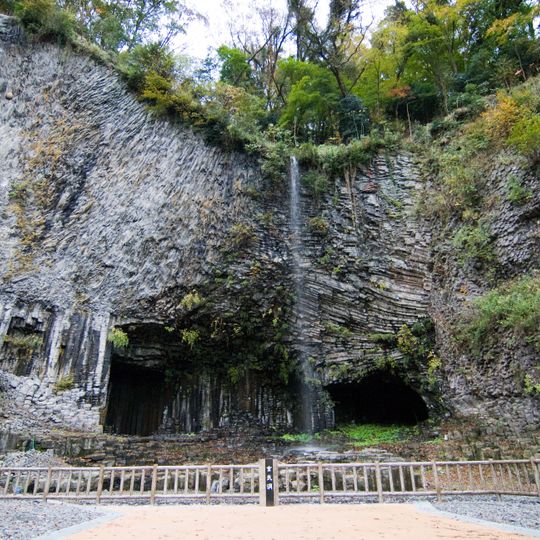
Qenbudo, Basalt caves in Toyooka, Japan
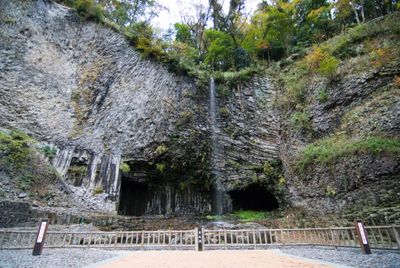
Genbudō is a group of five basalt caves in Toyooka formed by volcanic activity around 1.6 million years ago. The caves display characteristic hexagonal basalt columns that developed as the lava cooled and now shape the landscape.
The Confucian scholar Shibano Kuriyama visited in 1805 and wrote "Gun'yaku sōki"; on a second visit in 1807 he named the cave Genbudō. In 1884 the geologist Koto Bundjirō coined the Japanese word for basalt, genbugan, after this cave. In 1926 Motonori Matuyama found reversed magnetization in its basalt, and in 1929 he published the first theory of geomagnetic field reversal.
The five caves carry the names of the four Chinese directional guardian deities: Genbu (north), Seiryu (east), Byakko (west) and two Suzaku caves (south). The scholar Shibano Kuriyama, who named the main cave in 1807, chose these names; the same cave later gave Japanese geology the word genbugan for basalt.
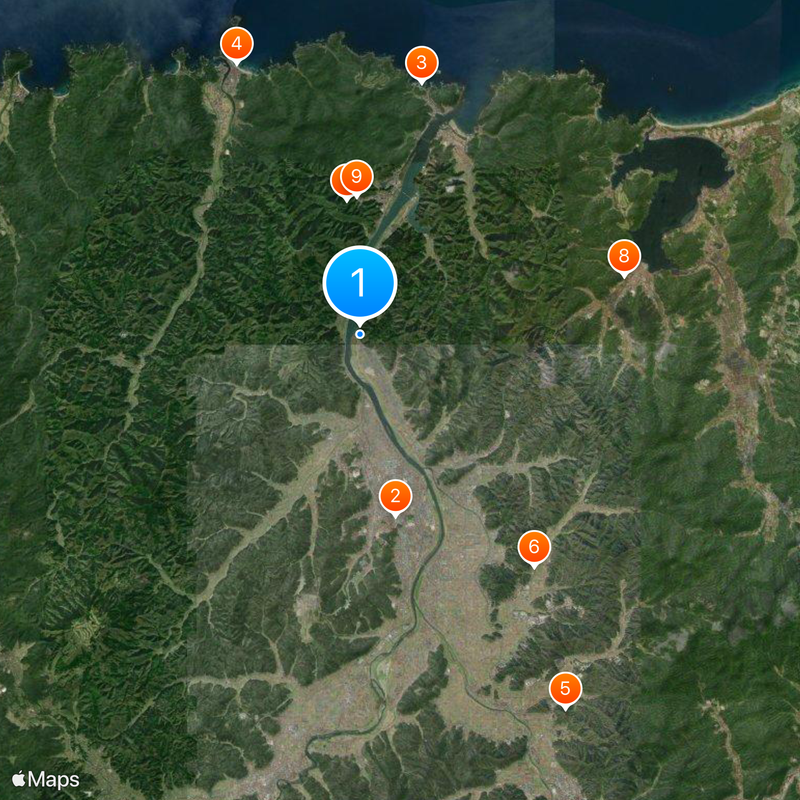
Genbudō Park has charged admission since 1 August 2022, with the fee funding its upkeep. From JR Genbudō Station on the opposite bank, a paid ferry crosses the Maruyama River in about three minutes and is cancelled in bad weather, so check beforehand. From Kinosaki Onsen Station a taxi takes about eight minutes; from Toyooka Station take the city bus to Akaishi and walk about fifteen minutes. Viewing platforms, a rest building, toilets and paths were installed from October 2021.
In 1926 Motonori Matuyama of Kyoto Imperial University found that the basalt here carries a reversed magnetic polarity, and in 1929 he published the first theory of geomagnetic field reversal. The site was named to the IUGS list of the first 100 geological heritage sites in 2022 for this discovery.
The community of curious travelers
AroundUs brings together thousands of curated places, local tips, and hidden gems, enriched daily by 93,458 contributors worldwide.